
Ehrengrab / Tomb of honour?

The crammer (Repetitor) Paul Schneider was given an Ehrengrab in Bonn. How to translate Ehrengrab? If someone died in the war, it could be a cenotaph or a war memorial, but Paul Schneider did not (did he die in his famous chair?). Der große Muret-Sanders and der kleine Muret-Sanders, two large bilingual dictionaries now published by Langenscheidt, offer tomb of honor. I tried various Google searches. The following search
“tomb +of honour” site:uk
produced only two identical quotes from ‘All’s Well that Ends Well’. And this one
“tomb +of honour”
(you can’t specify USA and I haven’t got very far with the Google Hacks book) consisted largely of identical quotes from the English version of the Mexican national anthem
‘For you the olive garlands! For them a memory of glory! For you a laurel of victory! For them a tomb of honor!’
Hmm. A lot of the other quotes are from outside the USA or refer to tombs outside the USA. (Translators use Google a lot but have to be careful that the terms they find are current in the right countries). The term may be OK, but perhaps we just don’t have tombs of hono(u)r.
My search led to a list of prominent persons buried in Zurich, with the following legend:

Legende: UB = Urnen-B-Mietgrab ° = Ehrengrab
UG = Urnen-Reihengrab °° = Schenkungsgrab
EG = Erdbestattungsgrab * = = Fotos der Grabstätten vorhanden
FG = Familiengrab
FUG = Familienurnengrab
GG = Gemeinschaftsgrab Krem. = Krematorium / Ni = Nische
U’hain = Urnenhain
Kirchh. = Kirchhof (Witikon)

More information to distinguish these types of grave I suspect is found in Daniel Foppa’s book.

I know Sir Thomas Browne wrote ‘Urn Burial’ a few centuries ago (‘The treasures of time lie high, in urns, coins, and monuments, scarce below the roots of some vegetables.’), but again, I associate it with Germany nowadays. If you get cremated in Germany, you finish up getting buried anyway. I must get down to making arrangements to avoid this – there is some scheme whereby you can have your ashes sent to the Netherlands. The trouble is, there always seems something better to do.

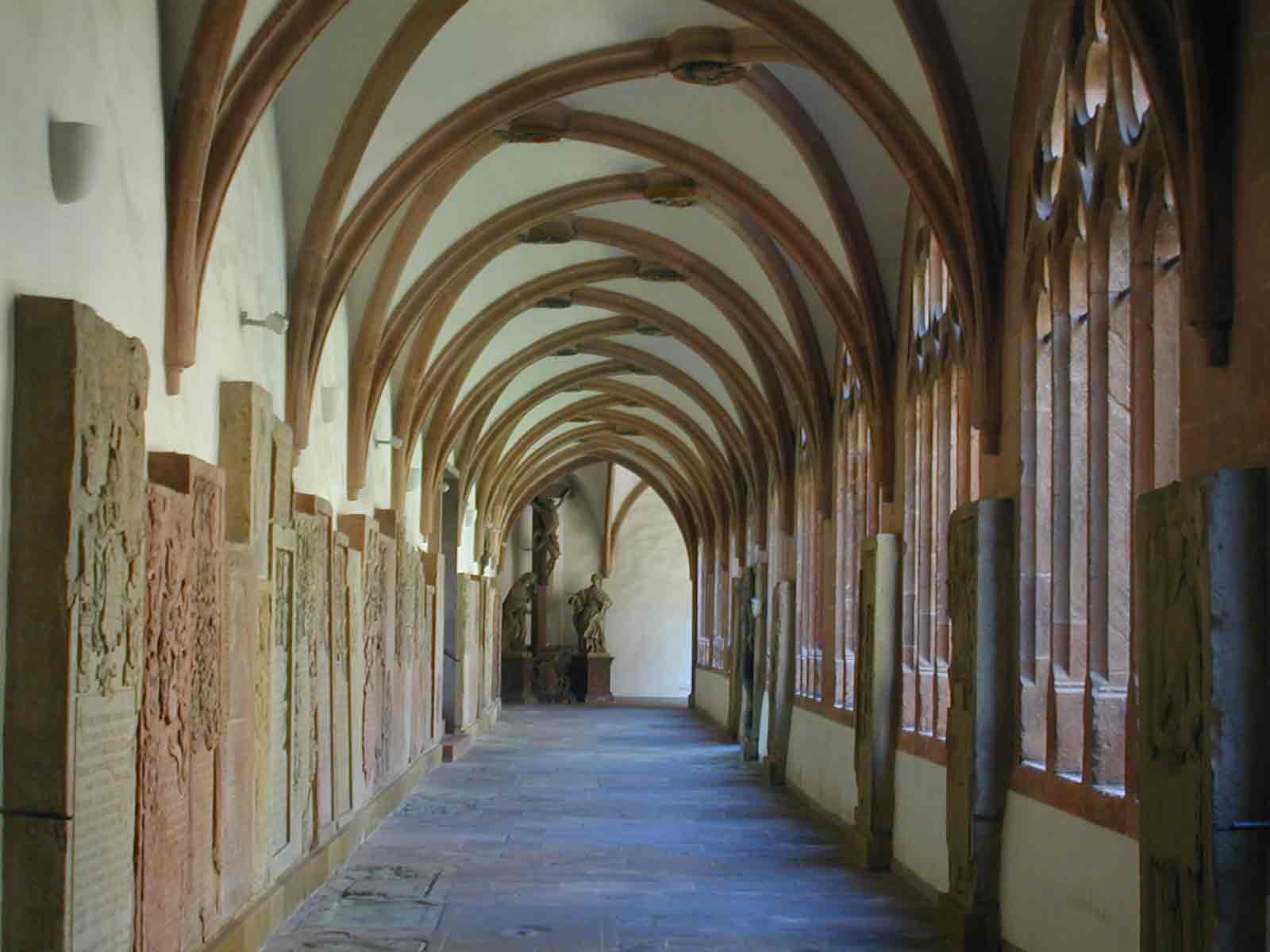
The definition of Ehrengrab in the 8-volume Duden German dictionary (that is not the newest) is ‘Ehrengrab[mal] Grab[mal] als Ehrenerweisung insbesondere für gefallene Soldaten’, which seems to mean it’s sometimes just the monument and sometimes the whole tomb. All this reminds me I have scarcely recovered from translating the monuments in Würzburg Cathedral, which after Mainz has the second-largest collection of such things in Germany: some of them are sepulchral slabs, some tombs or monuments.
cloister3w.jpg

Note to disLEXia: an article about crammers (in German) that inter alia cites a thesis with a photograph ‘Der Repetitor Schneider liest’, showing him raising both arms to heaven.

Ehrengrab / Tomb of honour?

The crammer (Repetitor) Paul Schneider was given an Ehrengrab in Bonn. How to translate Ehrengrab? If someone died in the war, it could be a cenotaph or a war memorial, but Paul Schneider did not (did he die in his famous chair?). Der große Muret-Sanders and der kleine Muret-Sanders, two large bilingual dictionaries now published by Langenscheidt, offer tomb of honor. I tried various Google searches. The following search
“tomb +of honour” site:uk
produced only two identical quotes from ‘All’s Well that Ends Well’. And this one
“tomb +of honour”
(you can’t specify USA and I haven’t got very far with the Google Hacks book) consisted largely of identical quotes from the English version of the Mexican national anthem
‘For you the olive garlands! For them a memory of glory! For you a laurel of victory! For them a tomb of honor!’
Hmm. A lot of the other quotes are from outside the USA or refer to tombs outside the USA. (Translators use Google a lot but have to be careful that the terms they find are current in the right countries). The term may be OK, but perhaps we just don’t have tombs of hono(u)r.
My search led to a list of prominent persons buried in Zurich, with the following legend:

Legende: UB = Urnen-B-Mietgrab ° = Ehrengrab
UG = Urnen-Reihengrab °° = Schenkungsgrab
EG = Erdbestattungsgrab * = = Fotos der Grabstätten vorhanden
FG = Familiengrab
FUG = Familienurnengrab
GG = Gemeinschaftsgrab Krem. = Krematorium / Ni = Nische
U’hain = Urnenhain
Kirchh. = Kirchhof (Witikon)

More information to distinguish these types of grave I suspect is found in Daniel Foppa’s book.

I know Sir Thomas Browne wrote ‘Urn Burial’ a few centuries ago (‘The treasures of time lie high, in urns, coins, and monuments, scarce below the roots of some vegetables.’), but again, I associate it with Germany nowadays. If you get cremated in Germany, you finish up getting buried anyway. I must get down to making arrangements to avoid this – there is some scheme whereby you can have your ashes sent to the Netherlands. The trouble is, there always seems something better to do.

The definition of Ehrengrab in the 8-volume Duden German dictionary (that is not the newest) is ‘Ehrengrab[mal] Grab[mal] als Ehrenerweisung insbesondere für gefallene Soldaten’, which seems to mean it’s sometimes just the monument and sometimes the whole tomb. All this reminds me I have scarcely recovered from translating the monuments in Würzburg Cathedral, which after Mainz has the second-largest collection of such things in Germany: some of them are sepulchral slabs, some tombs or monuments.

cloister3w.jpg

Note to disLEXia: an article about crammers (in German) that inter alia cites a thesis with a photograph ‘Der Repetitor Schneider liest’, showing him raising both arms to heaven.

German notaries: vocabulary/Notare in Deutschland: Wortschatz

Can be called civil/Civil law notaries or Latin notaries. Civil law here means ‘kontinentaleuropäischer Recht’, legal systems based on Roman law.
In some Länder (German states), being a notary is a separate profession (Nurnotar), in others someone may be an attorney and a notary (Anwaltsnotar).
Notaries may witness signatures: this is called öffentliche Beglaubigung. Or they may draw up and execute a whole deed: öffentliche Beurkundung. It’s very misleading to translate either of these as notarize, the U.S. term for a notary public witnessing a signature. It’s also unclear whether beglaubigen or beurkunden is meant. I would say ‘notarially certified / certified by a notary’ for the first and ‘notarially recorded’ (for want of anything better) for the second.
Then there is the Beurkundungsgesetz, which could be translated as the Notarial Recording Act. That gives a better idea of its contents than Documents Act.
Another translation point that often throws translators who don’t know the law is the rule in section 3 of the Beurkundungsgesetz: a notary is forbidden from acting in matters if, for example, he has acted for the person in an unofficial capacity before. This is referred to in shorthand as ‘Vorbefassung’. Here is an example of its use:
‘Der Notar hat zu Beginn der Beurkundung nach einer Vorbefassung im Sinne
des BeurkG gefragt; diese wurde verneint.’

German notaries: vocabulary/Notare in Deutschland: Wortschatz

Can be called civil/Civil law notaries or Latin notaries. Civil law here means ‘kontinentaleuropäischer Recht’, legal systems based on Roman law.
In some Länder (German states), being a notary is a separate profession (Nurnotar), in others someone may be an attorney and a notary (Anwaltsnotar).
Notaries may witness signatures: this is called öffentliche Beglaubigung. Or they may draw up and execute a whole deed: öffentliche Beurkundung. It’s very misleading to translate either of these as notarize, the U.S. term for a notary public witnessing a signature. It’s also unclear whether beglaubigen or beurkunden is meant. I would say ‘notarially certified / certified by a notary’ for the first and ‘notarially recorded’ (for want of anything better) for the second.
Then there is the Beurkundungsgesetz, which could be translated as the Notarial Recording Act. That gives a better idea of its contents than Documents Act.
Another translation point that often throws translators who don’t know the law is the rule in section 3 of the Beurkundungsgesetz: a notary is forbidden from acting in matters if, for example, he has acted for the person in an unofficial capacity before. This is referred to in shorthand as ‘Vorbefassung’. Here is an example of its use:
‘Der Notar hat zu Beginn der Beurkundung nach einer Vorbefassung im Sinne
des BeurkG gefragt; diese wurde verneint.’

Notaries / Notare

Notaries in Germany (France, Italy, Spain and so on) are trained lawyers who draw up documents and execute them. You might go to a notary in connection with buying a house or making a will. Notaries in the USA administer oaths and certify documents. To quote Gifis’ Law Dictionary, ‘secretaries in law offices, bank officers, insurance and real estate agents, small town grocery clerks, drug store clerks, etc. are often licensed notaries’.

Translators should be careful not to downgrade the German notary or upgrade the U.S. notary in their texts. It might suffice to write ‘German notary’ or ‘U.S.-amerikanischer Notar’.

Notare in Deutschland, Frankreich, Italien, Spanien usw. sind Juristen, in den USA sind sie oft Anwaltssekretärinnen. Übersetzer sollten der Unterschiede bewußt sein.

The question was asked at the ATA conference: if, translating out of English into another language, I encounter a ‘notary’ in Britain or Ireland, can I be certain it is like the U.S. notary rather than the civil law notary? The answer is not simple, but in brief, no. There are notaries in England and Wales who are Latin notaries and whose documents will be recognized by foreign courts as evidence. There are also commissioners for oaths, the equivalent of the U.S. notary, but these are also solicitors. A solicitor is automatically a commissioner for oaths. So although the function of witnessing the signature is not very elevated, it is done by lawyers. (I think but am not certain that these commissioners for oaths are called notaries in some parts of the country). More of this in a later entry

Notaries / Notare

Notaries in Germany (France, Italy, Spain and so on) are trained lawyers who draw up documents and execute them. You might go to a notary in connection with buying a house or making a will. Notaries in the USA administer oaths and certify documents. To quote Gifis’ Law Dictionary, ‘secretaries in law offices, bank officers, insurance and real estate agents, small town grocery clerks, drug store clerks, etc. are often licensed notaries’.

Translators should be careful not to downgrade the German notary or upgrade the U.S. notary in their texts. It might suffice to write ‘German notary’ or ‘U.S.-amerikanischer Notar’.

Notare in Deutschland, Frankreich, Italien, Spanien usw. sind Juristen, in den USA sind sie oft Anwaltssekretärinnen. Übersetzer sollten der Unterschiede bewußt sein.

The question was asked at the ATA conference: if, translating out of English into another language, I encounter a ‘notary’ in Britain or Ireland, can I be certain it is like the U.S. notary rather than the civil law notary? The answer is not simple, but in brief, no. There are notaries in England and Wales who are Latin notaries and whose documents will be recognized by foreign courts as evidence. There are also commissioners for oaths, the equivalent of the U.S. notary, but these are also solicitors. A solicitor is automatically a commissioner for oaths. So although the function of witnessing the signature is not very elevated, it is done by lawyers. (I think but am not certain that these commissioners for oaths are called notaries in some parts of the country). More of this in a later entry