Liseuse has a second weblog, Il quaderno dei vocaboli.
Mainly in Italian, with some English and German.
The sidebar has links to a large number of glossaries. Good stuff.

Liseuse has a second weblog, Il quaderno dei vocaboli.
Mainly in Italian, with some English and German.
The sidebar has links to a large number of glossaries. Good stuff.
Deutscher Artikel in der FAZ.
bq. Die britische Niederlassung der Frankfurter Großbank wurde am Dienstag wegen mutmaßlichen Mobbings gegen eine ehemalige Angestellte zu einer Entschädigungszahlung von 800.000 Pfund (1,2 Millionen Euro) verurteilt.
On July 15 I wrote about the word Mobbing (workplace bullying).
Today the Guardian reported on a case at Deutsche Bank in London under the heading City woman wins £800,000 damages over bank bullies. The article even uses the word mobbing, albeit in inverted commas:
bq. The court heard that four female co-workers had targeted Ms Green, who was a company secretary assistant at the bank, and she was regularly the target of their lewd and vicious comments.
One colleague told Ms Green she stank and blew raspberries at her as she walked by; she was regularly ignored and was forced to lock her work away in her drawers, or it would vanish. Her name was also removed from the firm’s global intranet directory.
She was the victim of a campaign of bullying or “mobbing” by the group of women, the court heard.
The court said that the managers took a very weak line.
bq. The judge said he was satisfied the bank was in breach of its duty of care to Ms Green. The bullying was a long standing problem, line managers knew or should have known about it and acted, and there were other victims, he said.
“The management was weak and ineffectual,” Mr Justice Owen said. “The managers collectively closed their eyes to what was going on, no doubt in the hope the problem would go away.”
Herbert Hopf kindly wrote out for me the titles of three EU directives which contain measures on harassment at work, inter alia:
– Council Directive 2000/43/EC of 29 June 2000 implementing the principle of equal treatment between persons irrespective of racial or ethnic origin
– Council Directive 2000/78/EC of 27 November 2000 establishing a general framework for equal treatment in employment and occupation
– Directive 2002/73/EC of the European Parliament and of the Council of 23 September 2002 amending Council Directive 76/207/EEC on the implementation of the principle of equal treatment for men and women as regards access to employment, vocational training and promotion, and working conditions
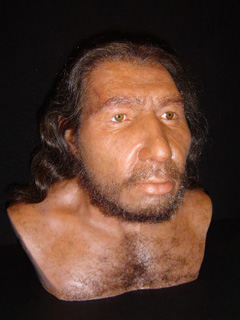
Almost exactly 150 years after the Neanderthaler was found, we still don’t know much about them, but we do know what their language sounded like – or at least, one Ruth Omphalius thought up a Neanderthaler language for a German TV series. It has two-word ‘sentences’ and is loosely based on Inuktut, the language of the Inuit. “Igunartok!” is a general curse and approximates what the Neandertaler said on the occasion of a famous meeting (and not ‘Cro-Magnon man, I presume?’).
Neanderthalers always spoke with exclamation marks at the end, and their words started with capital letters, like German nouns.
Akrigeuyak! you idiot
Pokreitok! fool
Piktauyok! good
Nutkarpok! shut up
etc. etc.
(On this page, click on Mediathek. Look for Bilderserie: Sprechen Sie neandertalisch! – and in the clip Clantreffen im Neanderthal you can hear them speaking. If you ever meet any Neanderthalers, which is not very likely, you can recognize them from the mysterious background music that always accompanies them).
(Indirectly via Handakte WebLAWg, where Rainer Langenhan links Neanderthalers to more recent residents of Düsseldorf)
Udo Vetter:
Neanderthal man / Der Neandertaler: