The Folks in Germany/Das Völkische in Deutschland

The German Book Office New York issues lists of German non-fiction books whose rights can be bought for translation into English (it has fiction lists too). Here’s a link to Spring 2009 (PDF).

The Folks in Germany in the Empire and the Weimar Republic.
Folk groups, which had an ideology that was based on racist nationalist…Stefan Breuer, expert in the area of radical flows of the 19th and 20th century…


Völkisch movement
(Wikipedia)

I also had my doubts about the Children’s Oddesy – on the run from the Third Reich in the promised land (by Jutta Vogel).

Mind you, this is a context where perfect translation doesn’t matter too much.

German and UK prisons compared/Vergleich Gefängnisse in Deutschland und England

In her weblog, Frances Crook, Director of the Howard League for Penal Reform, reports on visits to prisons (Tegel and Neustrelitz) and compares them with the equivalent in the UK (A note from a visit to German prisons).

There are 160 staff who include officers who run the programmes, apprenticeships, farm with pigs, do training (they take dogs from a local rescue and train them), and they offer real qualifications.

Young people undergo a “diagnostic test” on reception and a sentence plan is devised to address their “deficits”.

All well and good, and the most noticeable thing was how physically fit and articulate the young people were. They were all tall, looked as though they got decent food and exercise, and engaged in conversation with us, even trying out school English. Such a contrast to some of the poor little things I have seen in English, and Scottish, prisons. Generations of poverty in the UK have taken their toll and I am not sure things have improved much since Lord Kitchener complained about the health of his conscripts a century ago.

On the whole, she was impressed, but she was shocked by the Fixierung (Fesselung) at Neustrelitz.

Via German Joys

Infinite Jest/Unendlicher Spaß

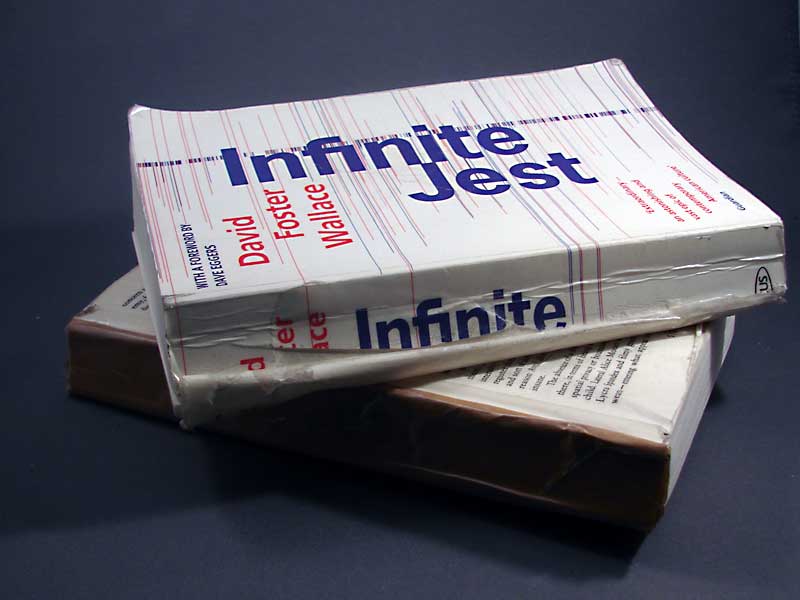
I’ve now finished this novel. I took some advice from the internet to split it in two and also split the footnotes in two, although my copy did not have as many pages as the hardback, but the pages were more closely printed. The only reason I went on reading till the end was because some of the reviews said that people who have read the whole thing then want to start reading it again. I can reveal that the only reason for this is that the plot is left completely in the air, so maybe people want to read again to see if they can find any clues.

Clues to potential later events, including spoilers, at Notes and Speculations. Many other links too here.

This book appeared in a German translation earlier this year. The translation was clearly very good. At the time, there was also high praise for the novel – see Iris Radisch here (German).

Wer den Beckmesser spielen wollte, müsste sagen: Als Roman ist das Ding aus dem Ruder gelaufen. Aber es handelt sich, gerade deshalb, um große Kunst. Es ist komisch bis zum Kalauer und erschütternd bis zum schwer Erträglichen. Wer es gelesen hat, ist danach ein anderer.

I have severe doubts about that.