Frankfurter Küche/Frankfurt kitchen

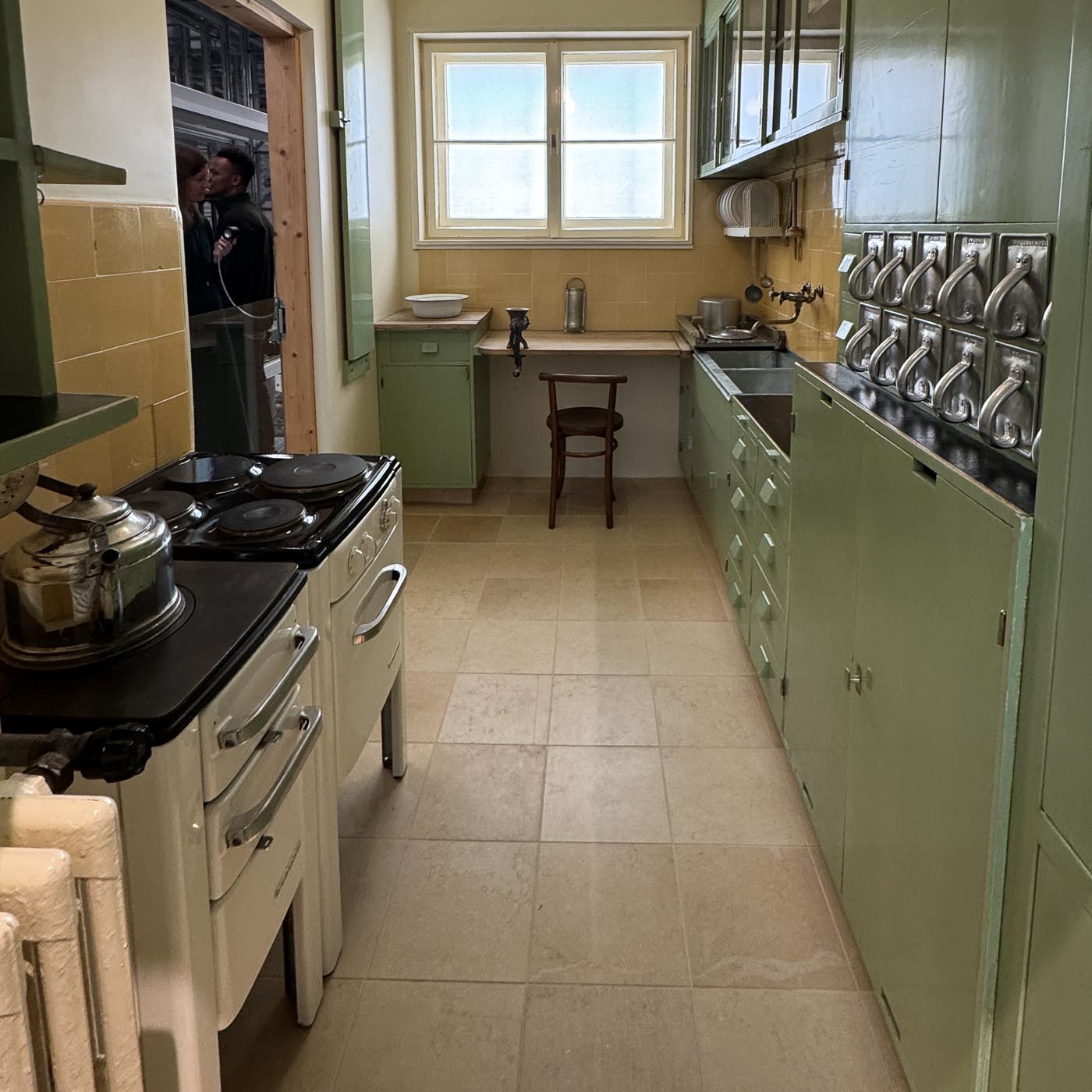
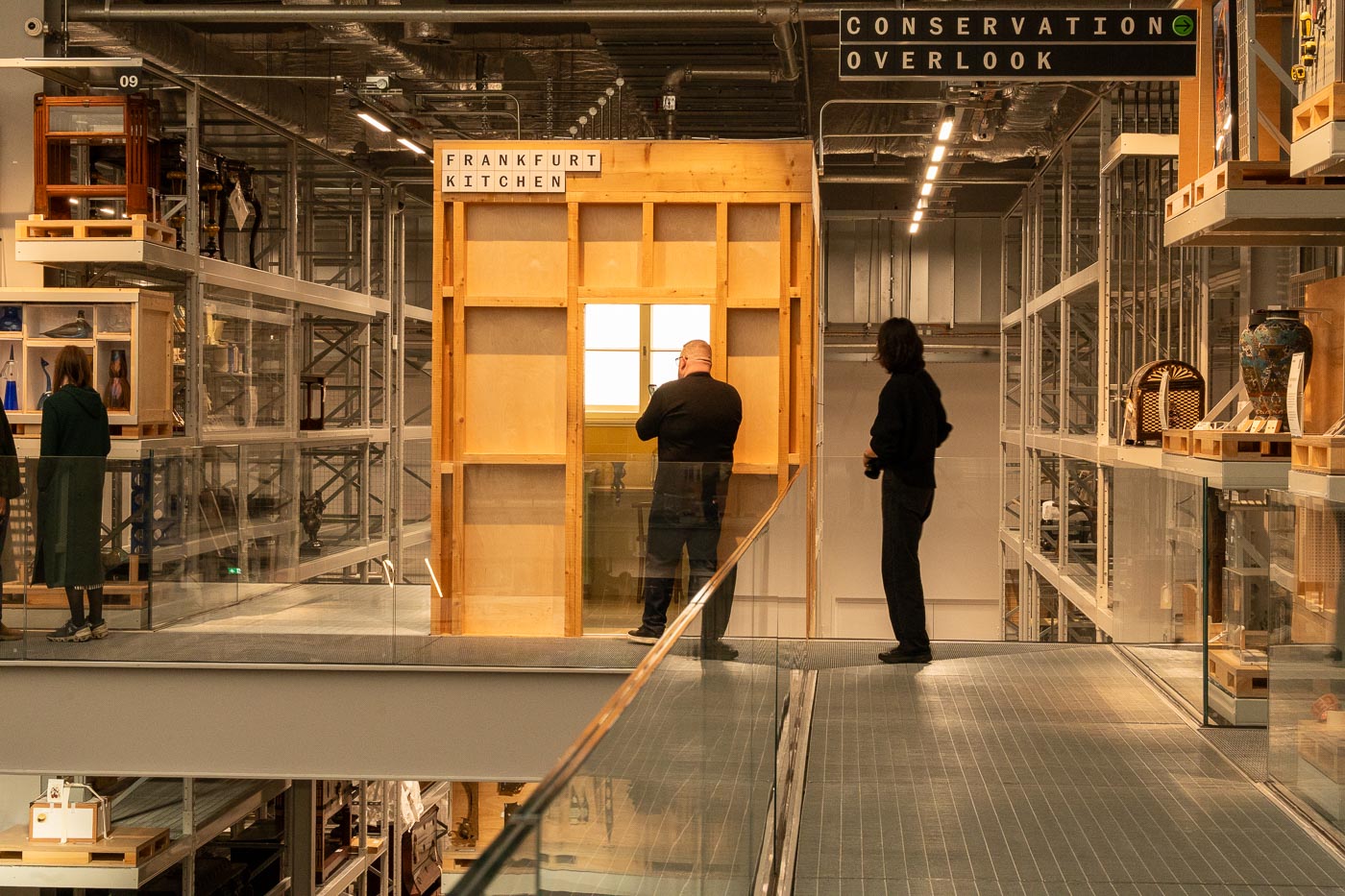
The Frankfurt Kitchen, the original fitted kitchen, was designed in 1926 by Margarete Schütte-Lihotsky. 10,000 of them were installed in Frankfurt am Main. I knew the V & A had one, but when I went to see it a few years ago, of the three people I asked, only one had heard of it and none of them knew where it was. Now the V & A Storehouse in Stratford can display it.

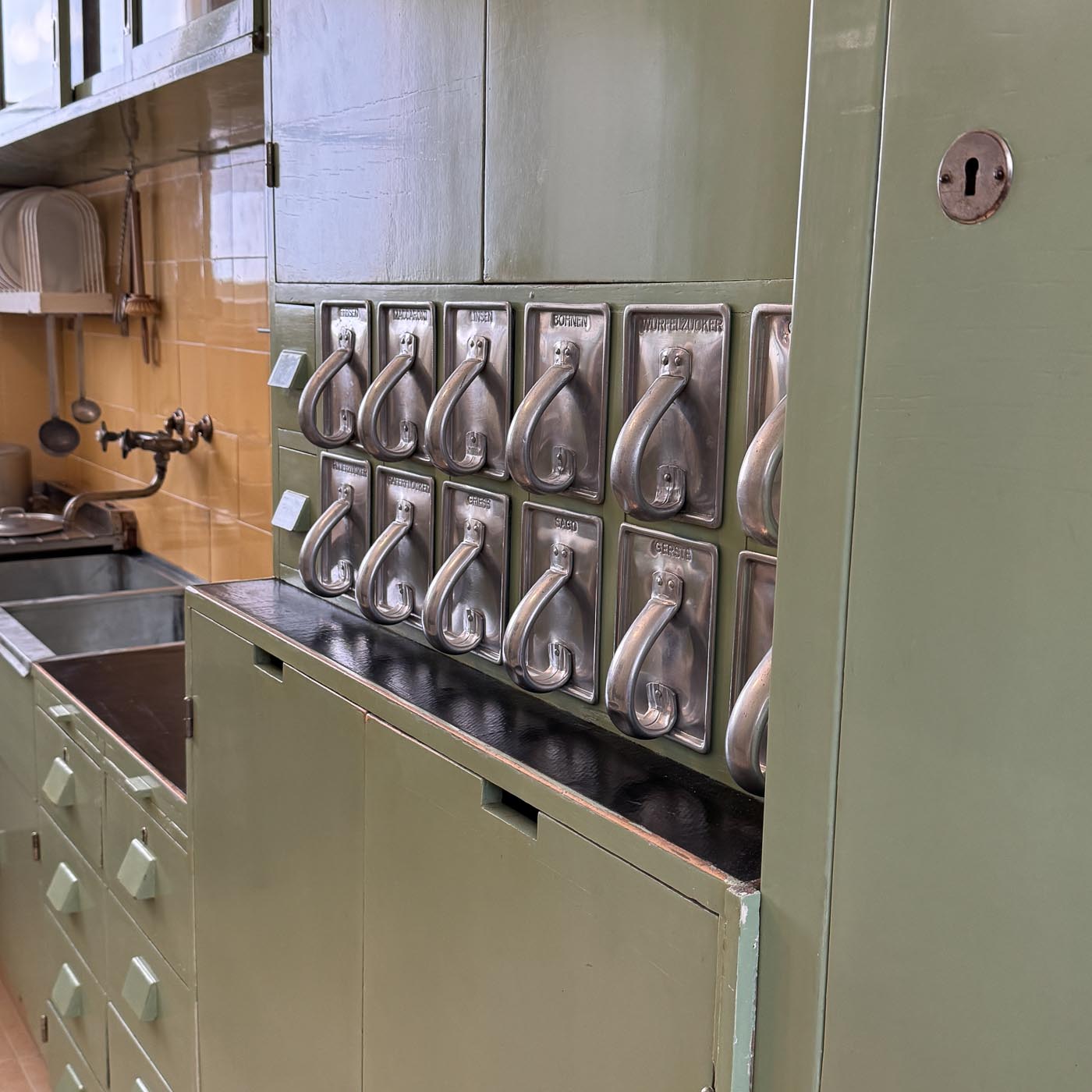
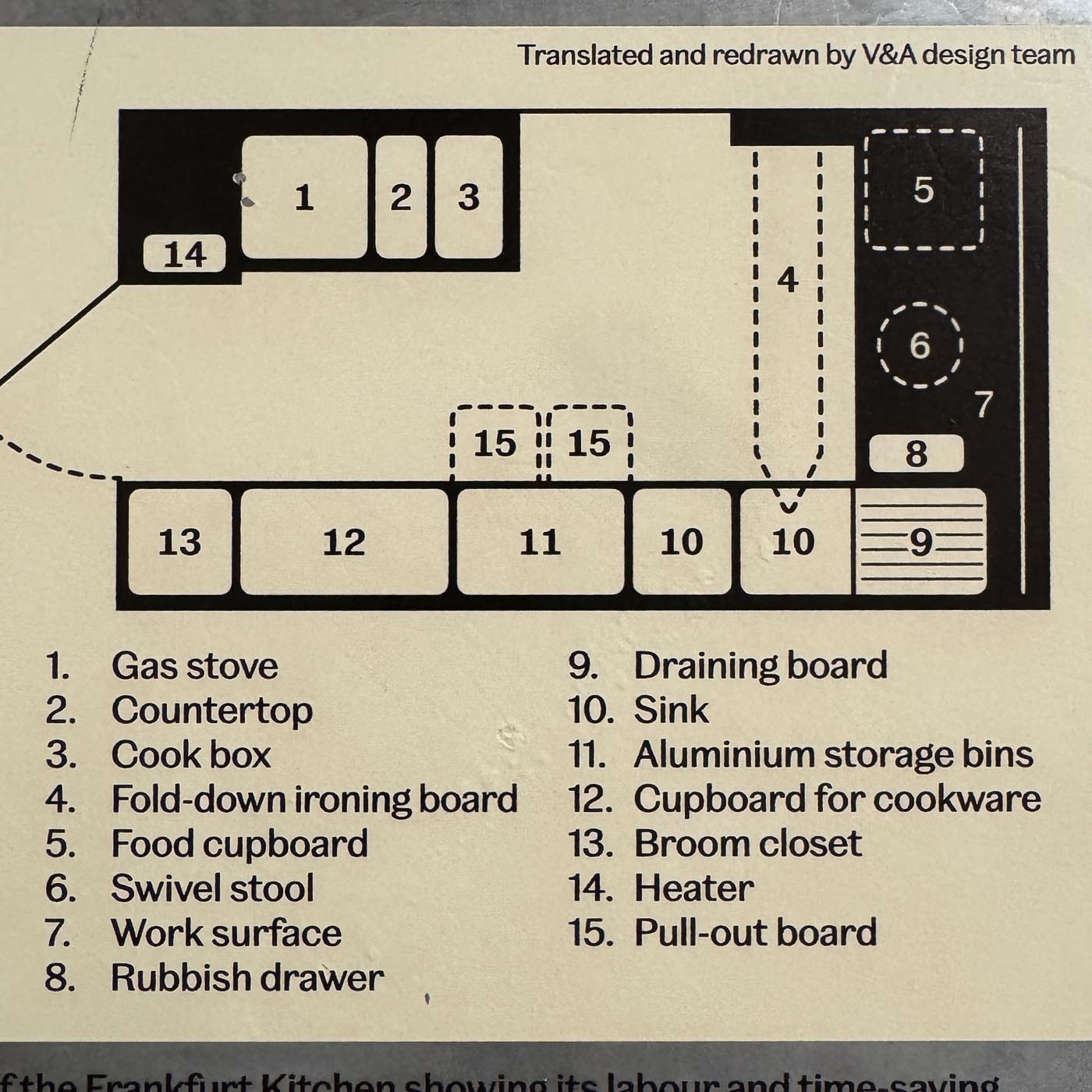
The V & A kitchen is not identical to the one in the diagram: it has solid fuel and electric stoves, not gas, and it has a chair rather than a swivel stool. It was designed to minimize the steps taken by the housewife. On the right-hand side there are drawers for various dry goods such as lentils, sugar, flour. The names are printed on them. They are called Schütten in German – I’ve seen it translated as dispensers. I actually have a couple made of toughened glass which a friend gave me.

Goodbye to Palandt

Bye-bye, Palandt! – post at the Dispute Resolution Germany blog, on July 27th:

C.H. Beck, Germany’s leading legal publisher, today announced that several of its publications will finally be renamed in light of the Nazi past of the jurists whose names they currently bear. All of these publications are household names for law students and practitioners alike.

The campaign for these names to be changed was pretty much a niche thing for many years and gained traction and public visibility only fairly recently.

I didn’t realize that Palandt was a member of the Nazi party. According to German Wikipedia, Beck Verlag chose him as the editor (of the BGB commentary) at short notice in 1938. Palandt (1877-1951) wrote the foreword and introduction until the tenth edition in 1952. In 1945 he removed the pro-Nazi bits. He was allegedly not responsible for the overall editing.

I haven’t got a Palandt at the moment, but I have sometimes bought reduced-price older editions in Germany and found them very useful, but not predictably frequently. Probably there are ways of consulting it online – it was never very easy as a full-time freelance translator to go to a library to consult it, as time was scarce.

After much criticism, Beck Verlag has eventually decided to change the name from Palandt to Grüneberg. The same fate befalls Maunz, Schönfelder (killed in Italy in 1944) and Blümich (I don’t think I’ve encountered Blümich).

40% German blog (and podcast)

I’m just logging in to make a gesture towards posting in 2021, post Brexit and mid-Covid.

I have only just discovered Nic Houghton’s blog 40% German, subtitled Pretzels, Beer and Confusion.

Nic is a Geordie who has been living in Germany since 2011 and writes about that. Topics include:

Annoying the Germans: Small Talk
The Eye of the Beer Holder
The Two Sides of Germany’s Cutting Edge
Germany’s Class System
How Healthy is Germany?
Königreich of Kebabs

and all those other topics I have wondered about over the years.

The first thing that caught my attention was a post on integration, Integrating the Germans. A recent discussion with local Bavarian villagers about immigrants to their village not really joining in turned out to be referring to people from Nuremberg who wanted to enjoy the village social life without contributing to it themselves.


This put in stark relief, in my mind at least, the problem of integration. How can anyone in Germany expect peoples from vastly different cultures to integrate into German life, if we still have problems integrating Germans into German life. It also made a mockery of the expectations that some people seem to have that immigrants from all over the world will suddenly become their particular brand of “German”. I’m not sure it can boiled down into some checklist. Politicians in the past have tried, making bold statements about the need for a Leitkultur or a Guiding culture that defines for immigrants the way they should behave, but which culture? Is it the one from the North or the South, the East or the West?

He also has a podcast, Decades from Home, together with Simon Maddox, which I’m listening to now.

Decades from Home is a podcast that looks at the weird and wonderful of German life from the perspective of two non-Germans.

With over two decades of living in Deutschland between them your hosts, Nic and Simon, find news articles and tell stories that show the many different sides to German life.

Flurbereinigung/Land consolidation

It seems my blog has today been running (running down?) for 16 years so here is a birthday post.

Mittagsstunde by Dörte Hansen (2018), a novel full of Plattdeutsch with the theme of Flurbereinigung reminded me of this strange process. (Hansen’s first novel, Altes Land, has been translated as This House is Mine – one wonders how the dialect was handled). In East Germany small plots of land were joined to form collectives, but in West Germany (and Austria I gather – and also in France and the Netherlands) there was a similar consolidation of small plots but not for socialist reasons.

The process was enabled by a 1953 statute, the Flurbereinigungsgesetz. I don’t think it is done much or at all now.

Very small plots of land resulted from Realteilung, the physical partition of land when inherited by several people – I don’t think the system of inheritance always meant equal partitition, though. Land consolidation was agreed by a group of people and was accompanied by changes to roads and waterways.

Wikipedia (German)

Wikipedia (English)

The effects of this process in practice, both during and after the reorganization of land, are something we didn’t have in the UK.

One aspect that has become known here is the effect of consolidation on vineyards. Wikipedia:

A very negative example of Flurbereinigung occurred in the first half of the 70’s at Kaiserstuhl (Baden-Württemberg), when great terraces where created with an inclination in direction to the hillside. The idea was to store water in the area, but heavy rains in the Pentecost week in 1983 led to flooding. Moreover, due to the inclination of the terraces in springtime (blooming time of the wine) cold air was settles, leading to frequent frost damage to the crops. [3]

And here a 2014 article from the Daily Beast (whatever that is): Germany’s Wine Revolution is Just Getting Started:

Ulli is paving the way for a new wave of wine growers who are ignoring Flurbereinigung and looking to the Prussian tax maps to scout, purchase, and salvage historically great vineyard sites, work them by hand (as opposed to restructuring them to work with machines), and produce dry-tasting wines reminiscent of those created in the 19th century.

I’m afraid that’s all for today, folks.

Travelling in Germany in earlier years

I eventually got round to reading Vanity Fair when I had watched the excellent TV adaptation last year – I did not realize the book was over 900 pages long. Previous attempts had failed after about 4 pages because I thought there were no interesting characters, so I missed its light treatment of society and politics and Waterloo.

There are some parts where the characters travel to the German principalities in the summer, as was apparently common. They went by boat from near the Tower. Here from Project Gutenberg

Am Rhein

The above everyday events had occurred, and a few weeks had passed, when on one fine morning, Parliament being over, the summer advanced, and all the good company in London about to quit that city for their annual tour in search of pleasure or health, the Batavier steamboat left the Tower-stairs laden with a goodly company of English fugitives. The quarter-deck awnings were up, and the benches and gangways crowded with scores of rosy children, bustling nursemaids; ladies in the prettiest pink bonnets and summer dresses; gentlemen in travelling caps and linen-jackets, whose mustachios had just begun to sprout for the ensuing tour; and stout trim old veterans with starched neckcloths and neat-brushed hats, such as have invaded Europe any time since the conclusion of the war, and carry the national Goddem into every city of the Continent. The congregation of hat-boxes, and Bramah desks, and dressing-cases was prodigious. There were jaunty young Cambridge-men travelling with their tutor, and going for a reading excursion to Nonnenwerth or Konigswinter; there were Irish gentlemen, with the most dashing whiskers and jewellery, talking about horses incessantly, and prodigiously polite to the young ladies on board, whom, on the contrary, the Cambridge lads and their pale-faced tutor avoided with maiden coyness; there were old Pall Mall loungers bound for Ems and Wiesbaden and a course of waters to clear off the dinners of the season, and a little roulette and trente-et-quarante to keep the excitement going; there was old Methuselah, who had married his young wife, with Captain Papillon of the Guards holding her parasol and guide-books; there was young May who was carrying off his bride on a pleasure tour (Mrs. Winter that was, and who had been at school with May’s grandmother); there was Sir John and my Lady with a dozen children, and corresponding nursemaids; and the great grandee Bareacres family that sat by themselves near the wheel, stared at everybody, and spoke to no one. Their carriages, emblazoned with coronets and heaped with shining imperials, were on the foredeck, locked in with a dozen more such vehicles: it was difficult to pass in and out amongst them; and the poor inmates of the fore-cabin had scarcely any space for locomotion. These consisted of a few magnificently attired gentlemen from Houndsditch, who brought their own provisions, and could have bought half the gay people in the grand saloon; a few honest fellows with mustachios and portfolios, who set to sketching before they had been half an hour on board; one or two French femmes de chambre who began to be dreadfully ill by the time the boat had passed Greenwich; a groom or two who lounged in the neighbourhood of the horse-boxes under their charge, or leaned over the side by the paddle-wheels, and talked about who was good for the Leger, and what they stood to win or lose for the Goodwood cup.


There is more.

I’ve also look ed at Travellers in the Third Reich. The rise of fascism through the eyes of everyday people, by Julia Boyd. This collects reports by British and American visitors to the new Germany in the 1930s. There is a wide variety of anecdotes (the US athletes from poor backgrounds who went to the Berlin Olympics were amazed by the amount of food they could eat on the boa – one marathon runner had to give up the race after one mile because he had put on so much weight during the voyage).

From the introduction:

Students form a particularly interesting group. It seems that even in the context of such an unpleasant regime, a dose of German culture was still considered an essential part of growing up. But it is hard to find an explanation for why so many British and American teenagers were sent off to Nazi Germany right up until the outbreak of war. Parents who despised the Nazis and derided their gross ‘culture’ showed no compunction in parcelling off their children to the Reich for a lengthy stay. For the young people in question, it was to prove an extraordinary experience, if not exactly the one originally proposed. Students certainly numbered among those who, on returning from Germany, tried to alert their families and friends to the lurking danger. But public indifference or sympathy with Nazi ‘achievements’, cheerful memories of beer gardens and dirndls, and, above all, the deep-seated fear of another war, meant that too often such warnings fell on deaf ears.