Books for translators

The Danish study I discussed in the last post mentioned one book written by translators: Found in Translation. How Language Shapes our Lives and Transforms the World (Kelly & Zetzsche 2012). The purpose of that book is to inform non-translators about the importance of translation and interpreting.

A book I have mentioned (with extracts) in the past is The Prosperous Translator, by Eugene Seidel and Chris Durban. That would be very useful for people starting out as translators.

Another recent book worth considering is 101 Things a Translator Needs to Know, by the WLF Think Tank. Here’s the book’s website, where you can find all about the book and the co-authors.

WLF Think Tank is an ad hoc organisation, a virtual body of experienced practising translators that has met as the WordLink Forum at frequent intervals since 1995 to discuss the state of the profession. Its members include keynote speakers at translation conferences, teachers of translation and prominent exponents of the profession on three continents.

On the book:

101 Things a Translator Needs to Know is a book for beginners.
It’s also a book for seasoned professionals, students and teachers.
For freelancers and staff translators.
For amateurs and experts, generalists and super-specialists – be they certified and sworn, recognised, authorised or simply tantalised by translation’s potential for a varied and enriching career.
It’s a compilation of insights from a broad spectrum of successful translation professionals with some 500 years of collective experience in fields ranging from highly technical to literary. No gripes, no grouses, just a selection of insights into what translation involves and practical tips about how a professional translator needs to think, work and act when dealing with clients and colleagues.

Although this isn’t a book by bloggers, it would probably be unthinkable without the internet. Surely some of the contributors have met each other at conferences over the years, but they and others are familiar to me from translators’ mailing lists, which are good sources of information about the profession (and were probably even better sources when they were a new idea).

Translator stars and heroes: a Danish study of translators’ weblogs

Helle V. Dam has written an article on translators’ weblogs. It appeared in a collection in 2013 – the whole 20-page article can be found as a PDF online: The Translator Approach in Translation Studies – reflections based on a study of translators’ weblogs. . It’s part of a number of research projects in translation studies that are focused on the translator and possibly to be called ‘translator studies’.

I saw it on Richard Schneider’s blog at uepo.de: Selbstbeweihräucherung oder PR für die Übersetzerbranche? (German article with several extracts from the article, in English).

The study is based on the front pages of 20 weblogs on 8 October 2012, including the translators’ self-presentations where present.

The 20 weblogs studied are ‘drawn from the blog trekker page of the American Translators Association’ on 8 October 2012. Here is the blog trekker page at the date of this post. There are well over 100 blogs there – 168 on the day it was consulted for the study (not all translators’ blogs though – but why is Fucked Translation missing?), so the selection is not random. There’s quite an emphasis on self-promotion in the blogs, so one wonders whether the selection was made after the focus was chosen. Perhaps so. But since Transblawg, one of the first translation blogs, started in 2003 there has been a huge blooming of the translator weblog worlds, and self-promotion and promotion of other translators is certainly a feature that has often struck me. Here’s something on the choice of bloggers:

In the selection of respondents, every effort was made to ensure a sample of translators with a strong professional profile, thus presumably at the high end of the translatorstatus continuum.

Statements like the following seem based on the particular selection:

Translators blog, they blog extensively and enthusiastically, and as we shall see, they quite learly blog for empowerment. They also blog to boost their businesses (cf. Dam in progress), but the focus and aim of the present study is to investigate what blogging translators say to enhance their own and their profession’s status. … Applied to the present study, I assume that blogging translators contribute to changing (or perpetuating) existing perceptions of themselves and their profession – including their occupational status – by talking or writing about these issues in a certain way.

I wonder how far translator blogs can change the perceptions of translation – it depends on who reads the blogs.

There are paragraphs on income and pay rates, skills and expertise, and visibility/fame:

The translators in the sample, however, are clearly networkers and use their blogs to create an authentic community of blogging translators. They link to each other’s blogs, they comment on each other’s blog posts, they write guest posts on each other’s blogs, they share jokes, experiences and knowledge, and they also refer very explicitly to each other in their blog posts …

I won’t summarize the whole thing but I was particularly interested in the topic of self-promotion and the way translators create ‘translator heroes’.

The bloggers in the sample also mention and promote translators outside the blog community.
For example, in a report from an ATA conference, one blog author refers to a non-blogging translator as follows: “star translator and international speaker Chris Durban” (15, 3). This leads us to a different, but related, feature of the blogs: the construction of professional ‘stars’. … Not only do they emphasize the star qualities of some translators, such as the “star translator” Chris Durban in the above quote, they also cite interviews with translators whom they consider important and write glowing, obituary-like blog posts in which fellow translators are raised to stardom.

Dam mentions what is known as BIRGing (basking in reflected glory).

It does tend to irritate me that there are certain people and books that one feels a certain community of translators regards as sacrosanct so that criticism of them would appear petty and peevish. I’m not sure how far this kind of thing originates in American blogs – but not all the blogs in the sample are U.S. ones.

And then there are those blogs or sites that appear from nowhere offering a prize for the best language blog and inviting everyone to vote in order to increase their own traffic by buttering up translation bloggers.

The wider societal impact of translation is also often commented on. For example, several of the translators-cum-bloggers devote entire blog posts to describing a recently published book with the suggestive title Found in Translation. How Language Shapes our Lives and Transforms the World (Kelly & Zetzsche 2012). As one blogger says:

“It’s absolutely delightful that we finally have a mainstream book about our profession that’s accessible and interesting to those who are not in the profession. Ultimately, as a profession, we want the general public to know that what we do matters, and this book will leave little doubt that what we do matters a great deal.” (11, 2)

There is a final caveat, along the lines of the oozlum bird:

A discipline that studies its own practitioners is, however, neither very common nor unproblematic. Law scholars, for example, do not study lawyers but stick to studying the law. The reasons are obvious. By studying the law, legal scholars increase the body of knowledge in their discipline and thus enable its practitioners, and their own students, to become increasingly skilled and knowledgeable. Should translation scholars not be doing the same, studying translation (including translation tools, the development of translation competence, etc.) rather than translators? Are translation scholars not letting down translation students and practitioners if they study translators rather than increase the existing knowledge about translation? As we have seen, translators suffer from a low-skill image even as it is; if translation scholars do not focus on increasing the knowledge base of translation, they may in fact do more harm than good to the profession.

As for myself, my blog is not part of a blogging network, but I admit to wishing to appear knowledgeable about legal translation. I started it in 2003 after I had stopped teaching, and my original idea was to include a lot of the information I’d collected as a teacher of law and legal translation in a more permanent form than in a mailing list, together with trivial information about my life in Fürth. At the time when I started blogging, other translators often had more diary-like forms. Blogs vary from the ones analysed here. For instance, Richard Schneider’s blog I regard as a source of translation news rather than a record of the blogger’s own translation life. Or Martin Crellin’s German blog, False Friends, Good and Bad Translation discusses translation problems and errors.

Finally, here are the blogs referenced and links to them:

About Translation, by Riccardo Schiaffino
Catherine Translates, by Catherine Jan (author now an in-house copywriter)
Financial Translation Blog, by Miguel I. Llorens (author died in September 2012 but blog still there)
Musings from an overworked translator, by Jill R. Sommer
Naked Translations, by Céline Graciet
On Language and Translation, by Barabara Jungwirth
Patenttranslator’s Blog, by Steve Vitek
Thoughts On Translation, by Corinne McKay
Translate This, by Michael Wahlster
Translating is an Art, by Percy Balemans
Translation Times, by Judy and Dagmar jenner
Translation Tribulations, by Kevin Lossner
Translationista, by Susan Bernofsky (note change of address)
The Translator’s Teacup, by Rose Newell
Fidus Interpres, by Fabio Said (I htink this one is dead – was very prolific and has gone into book form)
The Greener Word, by Abigail Dahlberg (I fear this is dead – I liked it as a subject-specific translation blog)
The Interpreter Diaries, by Michelle Hof
Mox’s Blog, by Alejandro Moreno-Romos
Say What? by Alexander C. Totz (Apparently dead – author has started two non-translation blogs)
Words to good effect, by Marian Dougan

Beck’sches Formularbuch Deutsch-Englisch

Beck’sches Formularbuch Zivil-, Wirtschafts- und Unternehmensrecht (Buch + CD-ROM) Deutsch-Englisch DE-EN

The third edition of this quite useful tome came out in 2014. It has a CD-ROM. I have the 2007 edition and I must admit I’ve scarcely used it, but it appears a lot better than some other such works.

If you find a contract or form that you need, you will also find a bilingual list of vocabulary and notes. The notes are on the German law. There is no discussion of the choice of English terminology, although I can see I would not always use the same. My copy is over 1100 pages long. It might be worth getting hold of a second-hand copy, as there won’t have been massive changes, will there?

This recommendation came with the Kater Verlag newsletter. There, you can click through to the Kater-Scan, which gives a better impression of the contents. But Beck-Verlag also offers details plus Inhaltsverzeichnis and Leseprobe online (Harte Patronatserklärung: Hard Letter of Comfort!)

Book of the month: Slugs of Britain and Ireland

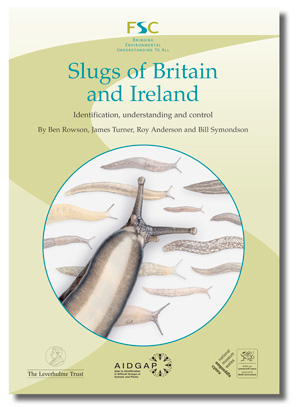
Slugs of Britain and Ireland. Identification, understanding and control. By Ben Rowson, James Turner, Roy Anderson and Bill Symondson. FSC Publications First edition 2014, ISBN 978 1 908819 13 0
See field-studies-council.org

aidgap-slugs-cover

On the basis of ‘If you can’t beat them, join them’ I decided to find out more about slugs. Fortunately, this book has just been published (superseding the 1983 edition).

Possibly a juvenile Large Black Slug

Possibly a juvenile Large Black Slug

If you’re interested in slugs of Britain and Ireland, this is the book for you. You know who you are.

Some information that was new to me: slugs have been considered to cure consumption and sore throats if you swallow them.
Slugs have a bad press.
They evolved from snails and although they have uncoiled, they still have a ‘right-handed’ asymmetrical body like their snail ancestors.
Life as a slug. Slugs are hermaphrodites, which makes mating complex. It can last from under a minute to many hours. They can probably all self-fertilize, but the worst pests are usually outcrossers.
Slugs must have arrived in Britain or Ireland without human help at least 5,000 years ago to be native. (I’m not sure how they came). We share some slugs with Iberia and the Pyrenees.
More money is spent on dormouse and newt surveys every years than has ever been spent on slug recording.

There is a lot of information on identifying slugs, with pictures. There is also advice on how to get rid of slugs, and slugs are given flags according to how much of a pest they are. There are appendixes with lists of Latin and English names (Spanish Stealth slug, Budapest Slug, Dead Man’s Fingers, Rusty False-Keeled Slug, Vulgar Slug and so on). Also details on how (and why) to dissect a slug.

Perhaps by its nature, the book is rather dry in parts, but there are headings like ‘Why be a slug?’

Curiously, it appears that a long-awaited guide has also appeared in Germany at virtually the same time. Die Landschnecken Deutschlands covers both snails and slugs, of which there are 242 species in Germany. Members of the Schnecken-Forum were excited about this. I haven’t seen the book itself, but no doubt it would make me envious of the wealth of slugs and snails on the Continent.

A Song of Ice and Fire (Game of Thrones)

I have actually read all the novels of this series to date. I must be mad! but you knew that anyway. However, it has the advantage that when other TV presenters say to Jon Snow ‘You know nothing’, I get it.

After finishing the first volume, I intended to watch the Game of Thrones DVDs only and stop reading, since the plot seemed better than the writing, but somehow I went on reading and have only seen two or three episodes of the TV version.

The reasoning behind starting these books was: masses of people read fantasy literature and science fiction, and I don’t fancy it at all, but have I given it a fair trial? Lord of the Rings (read in early sixties at school) was annoying, Harry Potter (read from late nineties because students expected it) quite good. I suppose most of the problem with these books is the way some readers totally identify with the characters and the world created. There is an instinctive desire to disagree with them. Thus it was when I was at dinner table where someone ran down Harry Potter but had not read it that I realized I’d have to try it, so I authorized myself to opine.

There were things I didn’t like in general about fantasy literature as I imagine it to be. One thing was the shallow characterization: events and atmosphere more important than character.

I was also misled when I read the review by John Lanchester, because I overlooked the fact that Lanchester actually likes fantasy literature and thus was biased. I would have liked to read a review by a non-fantasy-lit. type, but that was not going to happen.

One advantage Martin has is his use of a medieval model, so we know about knights and battles and the importance of birth. There are some more fantastic elements like the white walkers and the children of the forest, and live dragons and direwolves, but the main framework doesn’t need masses of explanation because the map is roughly Great Britain plus a bit more and the families are like medieval dynasties.

It is also quite helpful that most of his characters have names spelt unexpectedly, because that means you can look them up on the Web and find them (Margaery, Robb, Sansa, Arya, Petyr and so on).

One thing that worries me is the concern of fans that Martin might die before finishing the series. OK, he took six years over the last volume. But he is 65 and overweight!
Game of Thrones author rebuffs health fears with the finger and F-word. Where does this leave me? It’s about time I started doing something sensible.

Here are some notes I took of the style, which is often pseudo-medieval, sometimes pseudo-British and sometimes somewhat American.

much and more
little and less
three-and-ten
wroth (sic)
mine own
the babe
elsewise
pot shops (sic)
poison ivy (in a world based on the UK)
nuncle
mayhaps
I misremember, I mislike
leal service
for the nonce
that ought not pose much difficulty
good-daughter

turnips (are these rare in the USA? they are constantly being eaten)
whilst (felt to be quintessentially British)
yellow onions (surely a US expression)
oft

Occasionally odd use of shall, but I can’t trace that now.

People in East London: Dora Diamant et al.

doradiamant

Dora Diamant (originally Polish, name Dymant) lived with Franz Kafka in the last six months of his life, when he was dying of tuberculosis. It is said of her that he died in her arms and she burnt (some of) his work. She met him in July 1923 and he died in June 1924. She later married Lutz Lask and had a daughter. After 1939 she was interned as an enemy alien and later ran a restaurant and theatre in Brick Lane. She died in East London at the age of 54. She is buried in the East Ham (Marlow Road) Jewish Cemetery, originally in an unmarked grave. Kathi Diamant, no relation, became interested in her and wrote a book summarizing her research, Kafka’s Last Love. The Mystery of Dora Diamant, 2003.

Other famous graves: Ted Kid Lewis:

kidlewis

and a Jack the Ripper suspect:

kozminski

More information from the cemetery staff, who sometimes sit on these chairs but don’t want their picture taken:

chairs