A number of discussions have turned up on ProZ recently. I fear they are too complex to make anything sensible out of in the time I have available, but I can at least showcase them.
- Adrian MM directed my attention to further or alternatively.
This was some time ago and the query seems to have died the death after I added a comment. The asker had particulars of claim to translate into German:
Further or alternatively, it is averred that it was an implied term of the Contract that payment of the Commission for the Services would be paid within a reasonable period of time.
Further, or alternatively, the Defendant has failed to pay the said invoices.
Further or alternatively, it is averred that the place of performance of the obligation by the Claimant as the commercial agent was its place of domicile namely the Registered Address
I presume this is from England and Wales but am not certain. The averred suggests Scotland to me.
I suppose we are wondering why not simply alternatively? That would be hilfsweise, that is, if the first argument fails then the court may consider the second. This formulation further or alternatively seems to open the option to the court to regard the argument as either additional or alternative. Personally I think that hilfsweise and eventualiter are synonyms so I am not convince by hilfsweise oder eventualiter. But does weiterhin oder hilfsweise make sense?
The suggestion außerdem oder hilfsweise seems to me to be the correct translation. It reflects the English. It may be bad practice in English (I think not), maybe further alternatively was meant, but that’s not what it says. It may not make sense in German civil law (rather a tough area to think about for me) but it’s not German civil law. There is some argument at ProZ that a statement of fact cannot be preceded by hilfsweise, but actually that doesn’t make sense at all.
By the way, it seems there is a blog called Further or Alternatively:
FOA read PPE at Oxford and is now a barrister based in London. “Further or alternatively” is a phrase used by barristers to introduce a new argument that may or may not be consistent with the previous ones: FOA may or may not be consistent with your other reading.
2. More recently, the thorny topic of how to translate i.V., i.A. and ppa. has cropped up.
The asker gives three examples:
I have compiled the following list https://www.proz.com/kudoz/german-to-english/human-resources…
ppa signed by the holder of a general power of attorney
i.A. signed in the absence of the authorised signatory
i.V. signed on behalf of another authorised signatory having the same powers of representationThe context is Commercial Guidelines within a corporate group (Germany). Various types of power of representation are discussed in those guidelines.
The asker’s client wants specific translations commented on by native speakers. The powers of attorney sometimes need to be distinguished from each other.
My feeling is that the kind of definition offered above is the only possibility. We just don’t do this signature stuff in such an anal way in English. Above all, the US or UK use of pp. or ppa. is just not the same. A further problem for translators is that the usage in German is not reliable – although as this is a question on behalf of one specific customer it would be possible to unify it. And most of the time we don’t linger on the specific legal relationship between writer and signatory, though admittedly it may become important in some circumstances.
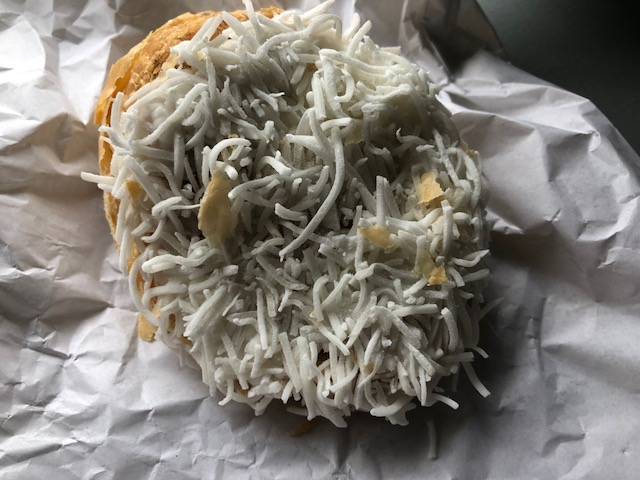
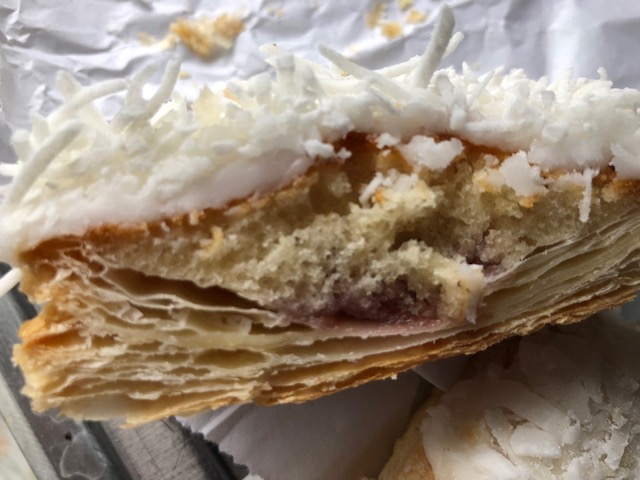
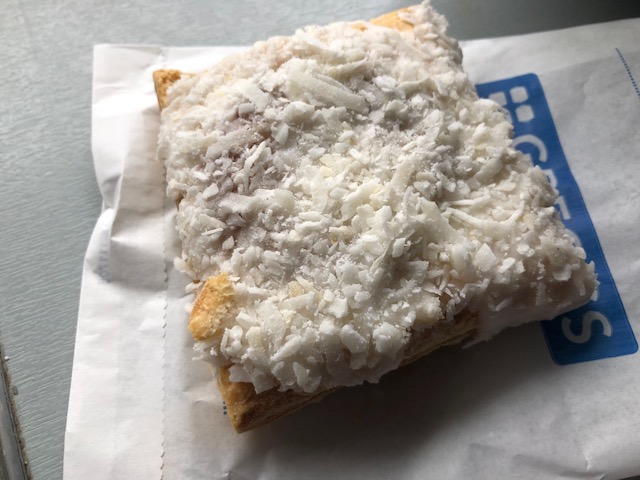
3. Spagatkrapfen – well, I really must get on with my own translation which has nothing to do with food! Spagatkrapfen is a kind of Austrian cake which I understand to consist of flaky pastry shaped on a metal contraption and deep-fried, creating two halves which are sandwiched together with cream and jam. I cannot call this a doughnut or a cruller (yeast dough) or even a cream horn (which looks very similar but is not in two halves and is baked rather than fried). A colleague suggests the French bugnes but it seems their dough is also not pastry, though they are deep-fried (thanks, Claire).




 T
T