Cockney a language? Surely not!

When this blog was in an unintended hiatus, it was possible to retrieve the posts through a reader’s feed reader. But this one comment that appeared at that time was lost – but the commenter, the blogger of Language Miscellany, has now been found. His interesting post was about the possibility that Tower Hamlets council might declare Cockney one of the local languages – for International Mother Tongue Day on 21 February (not long to go now). This was reported in 2023. Cockney in Tower Hamlets is the post:

On 15 March 2023, Tower Hamlets Council discussed a petition started by Grow Social Capital CIC and Bengali East End Heritage Society and signed by 31 people. The petition asked the Council ‘to ensure that the Cockney language, identity, and its unique cultural heritage related to the East End of London be recognised as a community language and be celebrated annually on 21st February on International Mother Language Day, and for Cockney to be included in any community language provisions by the Council.’

It does not seem to me that Cockney is a language, and even Estuary English is not. I should say I may be a Cockney myself, as I was born in the Mothers Hospital in Hackney, just before the NHS came into existence, but at that time the bells of Bow Church were not actually ringing for a few years after WWII, or so I was told. The exact dates and which bells were ringing is confusing. But new bells were ringing from 1961.
Continue reading

London Borough of Havering

I live in Upminster – there was once a pearly king of Upminster, and the image on the front page of this weblog shows part of his costume, including the windmill at the left. Upminster, Hornchurch, Romford and Rainham have been the London Borough of Havering since 1965, although my address says Essex. A vociferous core of locals are convinced we actually are in Essex. Not so Andrew Rosindell, the Romford MP, who must know we are in London, as he wants and has always wanted (he was born after 1965) the borough to become part of Essex. Excellent article on Rosindell and Havering by diamond geezer. The occasion is Rosindell leaving the Conservative Party and joining Reform, where he hopes Nigel Farage will help him.

diamond geezer nicely sets out how London would change without Havering:

A huge lump would be chopped off London’s eastern edge, reducing the area of the capital by 7%. The easternmost point in London would become the Dartford Creek flood barrier rather than a muddy field far beyond the M25. London would be five miles narrower than before. One-sixth of London’s Green Belt would vanish overnight.

London would lose 260,000 residents, reducing its population by just 3%. It’d become a younger city, a more left wing city and a less white city. A greater proportion of its residents would rent. It might also become a happier city because the moaners had left.
Continue reading

Bart’s North Wing, Great Hall and Hogarth Staircase

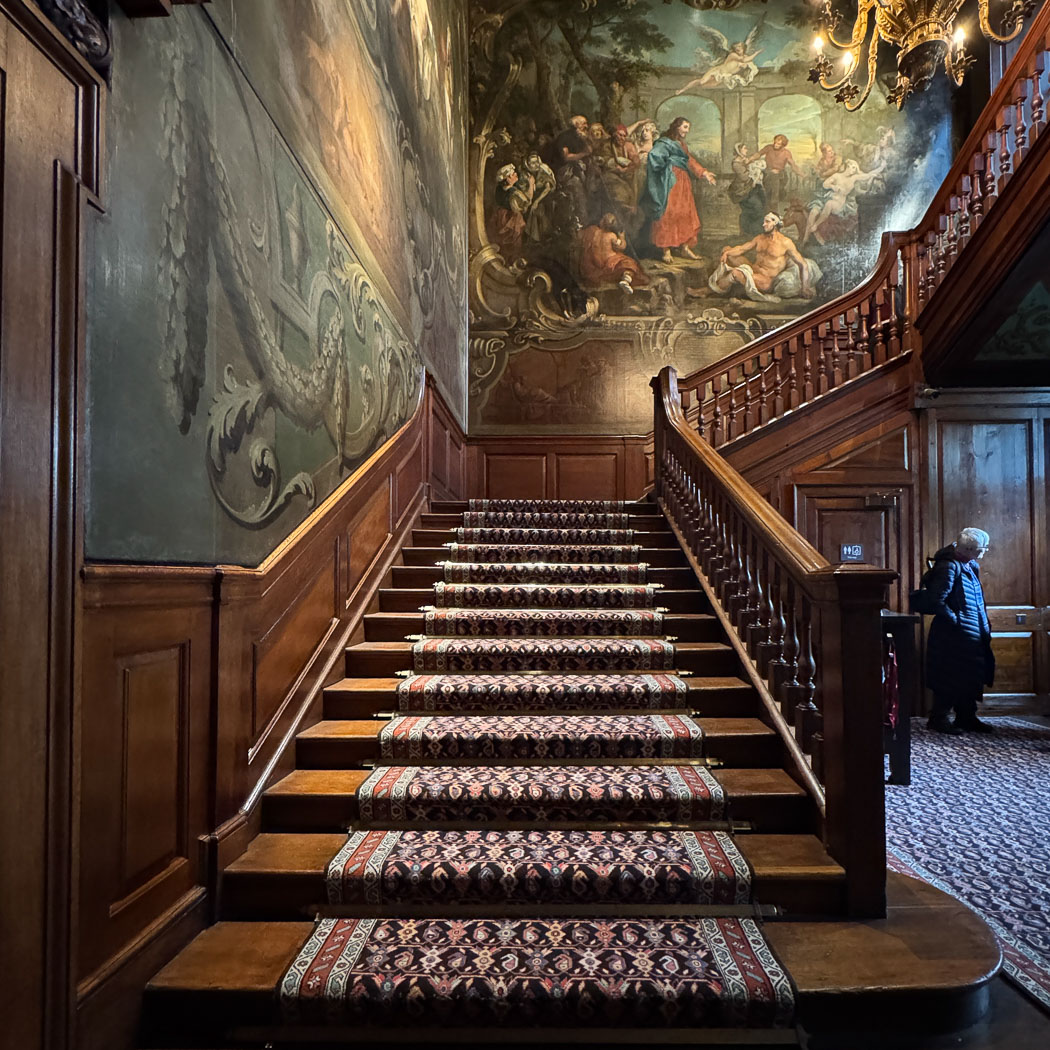
I have already written about the Pool of Bethesda, Hogarth’s paintings in the staircase of the North Wing of St. Bartholomew’s Hospital. That was ten years ago, when it was certainly possible to see the staircase, but now it has been totally refurbished and can be visited on Mondays and Tuesdays: Bart’s North Wing, the Great Hall and Hogarth Staircase. I read that Hogarth requested that the pictures should not be varnished, because that would make them harder to see, but his request was ignored. I do not know what has been done to them now but it is a beautiful refurbishment.

Continue reading

Frankfurter Küche/Frankfurt kitchen

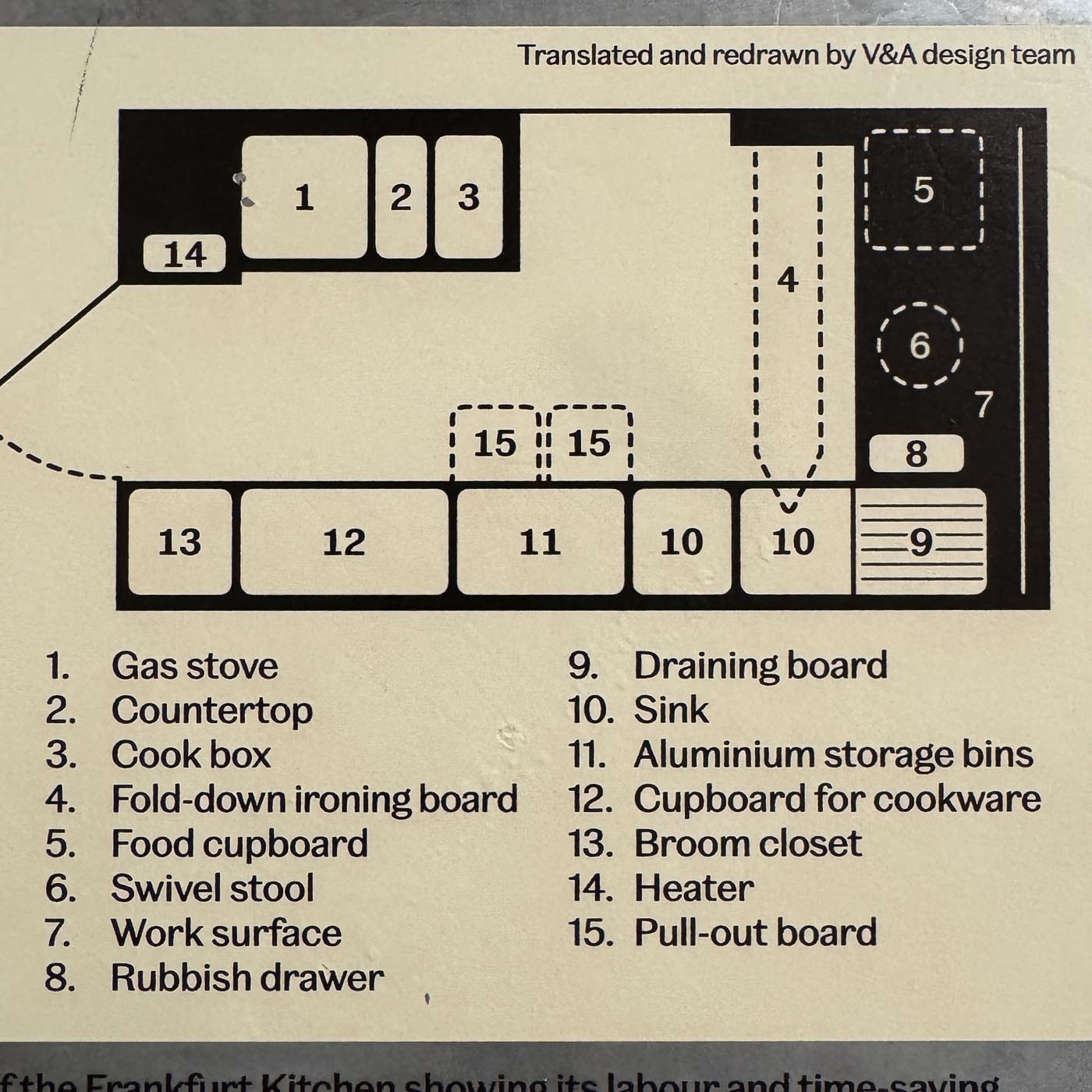
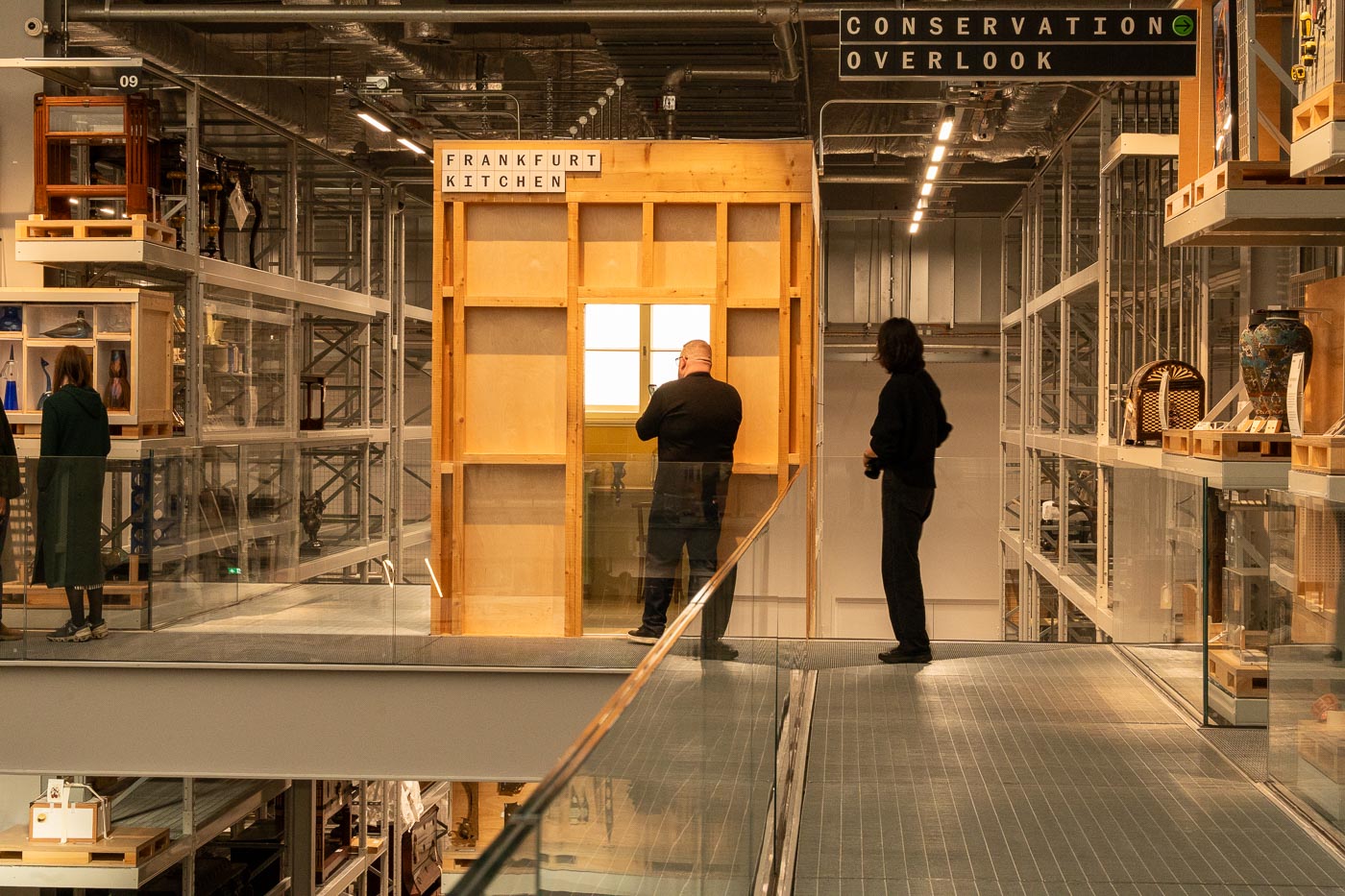
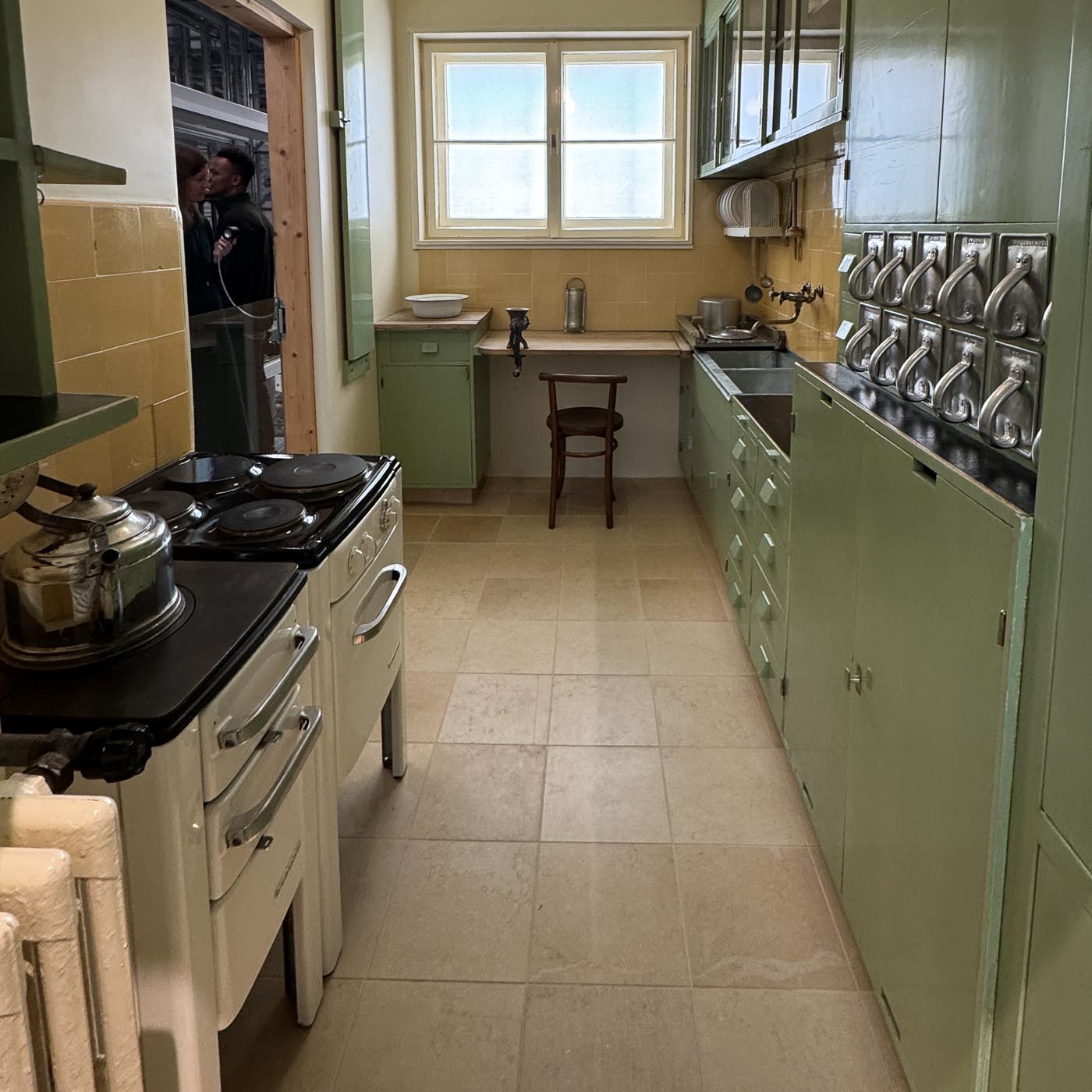
The Frankfurt Kitchen, the original fitted kitchen, was designed in 1926 by Margarete Schütte-Lihotsky. 10,000 of them were installed in Frankfurt am Main. I knew the V & A had one, but when I went to see it a few years ago, of the three people I asked, only one had heard of it and none of them knew where it was. Now the V & A Storehouse in Stratford can display it.

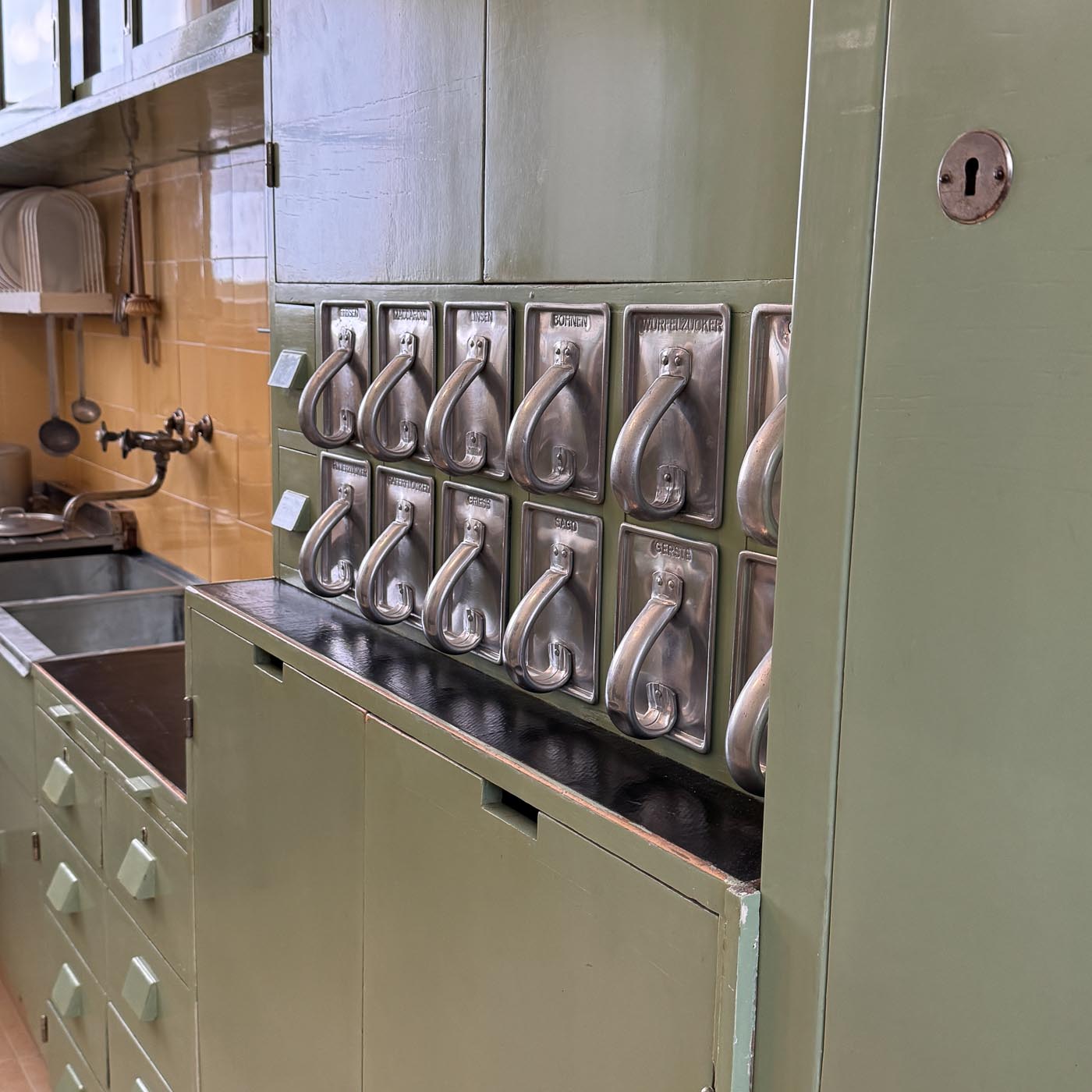
The V & A kitchen is not identical to the one in the diagram: it has solid fuel and electric stoves, not gas, and it has a chair rather than a swivel stool. It was designed to minimize the steps taken by the housewife. On the right-hand side there are drawers for various dry goods such as lentils, sugar, flour. The names are printed on them. They are called Schütten in German – I’ve seen it translated as dispensers. I actually have a couple made of toughened glass which a friend gave me.

George Skeggs

Time for some local trivia again. In August I was at an exhibition at the National Portrait Gallery and unfortunately I did not have my camera in my hand when I saw this gentleman rushing up the stairs in my direction – I only saw the crown of his hat, the shoulders of his suit and his cream chrysanthemum (I think) buttonhole. I managed to get a shot of him shortly afterwards but he was moving very fast so I could not imagine getting him to set up the photo again. Not many people make a good photo from the bird’s eye view.

George Skeggs, as I later discovered

More recently, I have learnt (from the Web) that this is George Skeggs and so I may see him again at more leisure.

George Skeggs, more commonly known – although there’s nothing even remotely common about him – as ‘Soho George’ is one of the last true Soho legends. Self-described as a ‘heterosexual Cockney artist, Hogarthian rake loves individuality,style, sleeps in front of a mirror, ex-gigolo old man held together with polygrip & rubber bands’, George has more style in his big toe than most of us will ever have in our entire lifetimes. Not only possessed of a unique and sophisticated elegance, he’s also a brilliant surrealist artist and chronicler of the history of Soho on twitter @SohoGeorge.

Photos

Some photos from the South Bank.

German tent offering allergens.
Laurence Olivier: Is this a bottle of milk that I see before me?
Trump protest: Welcome not walls, with hair.