Formulare für das Land Brandenburg online (über Handakte WebLAWg)
A number of different forms relating to building/planning permission. Should be useful for translation.

Formulare für das Land Brandenburg online (über Handakte WebLAWg)
A number of different forms relating to building/planning permission. Should be useful for translation.
Khaled Alzayed hat ein Übersetzungsblog angefangen. Über die Häufigkeit der Einträge kann man noch nichts sagen.
Matthias Thibaut has an article in Handelsblatt today on Nigel Boardman, a partner in Slaughter and May.
bq. Boardman spricht leise, behutsam, wie gedruckt. Später zeichnet er die Pyramide der Rechtsanwaltskarriere aufs Papier. Rechtskompetenz kommt ganz unten, ist gerade genug, den Anfänger aus dem Ursumpf herauszuholen. Wer rechtliche Lösungen für wirkliche Probleme findet, der erst wird Business Berater. Tatsächlich interessant wird es, wenn man nicht nur bei Rechtsproblemen um Rat gefragt wird, sondern zum persönlichen Berater avanciert, erklärt Boardman. Ganz oben kommt sogar Kreativität ins Spiel, die man mit dem Beruf des Rechtsanwalts eigentlich weniger in Verbindung bringt. Und erst hier, an der Spitze der Pyramide, sagt Boardman hart, kann man wirklich Freude an diesem Job haben.
(Via Jurabilis)
Fib
o
nacci
stuff is like
haiku, but in fact
the fib is easier to do.
Gibt es Fibs auf Deutsch schon?
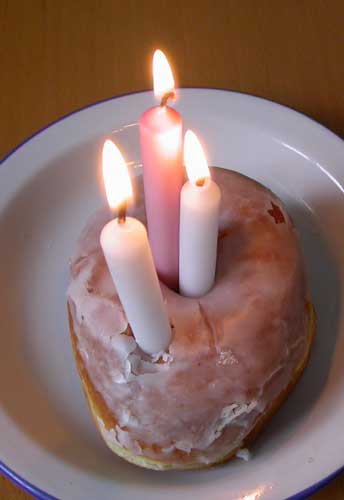
The invention.
bq. That led me to a six line, 20 syllable poem with a syllable count by line of 1/1/2/3/5/8 the classic Fibonacci sequence. In short, start with 0 and 1, add them together to get your next number, then keep adding the last two numbers together for your next one. Its a wonderful sequence, and its one that is repeated in nature (most famously in nautilus shells).
(via The Independent)
This is how you sell the locals the idea that the whole pedestrian precinct is about to be relaid.
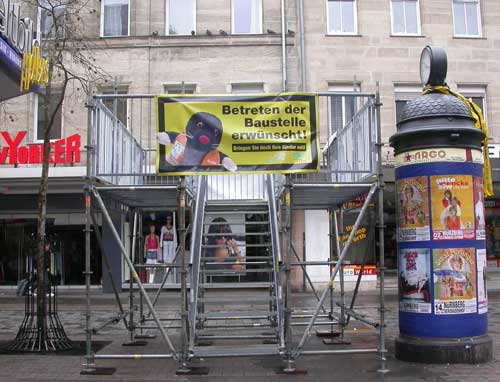
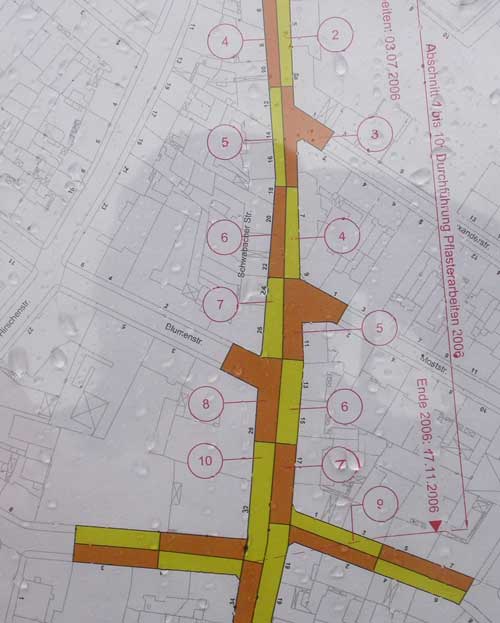
You can climb up the scaffolding and look at plans (with the sun behind you).
You can buy the cuddly mole for 5 euros in the happy shops about to have all their custom disrupted.
Before this, you planned such a stunning new design with unusual stones that none of the bidders on the project were capable of presenting a correct tender in good time. After that, you decided to have simpler stones.
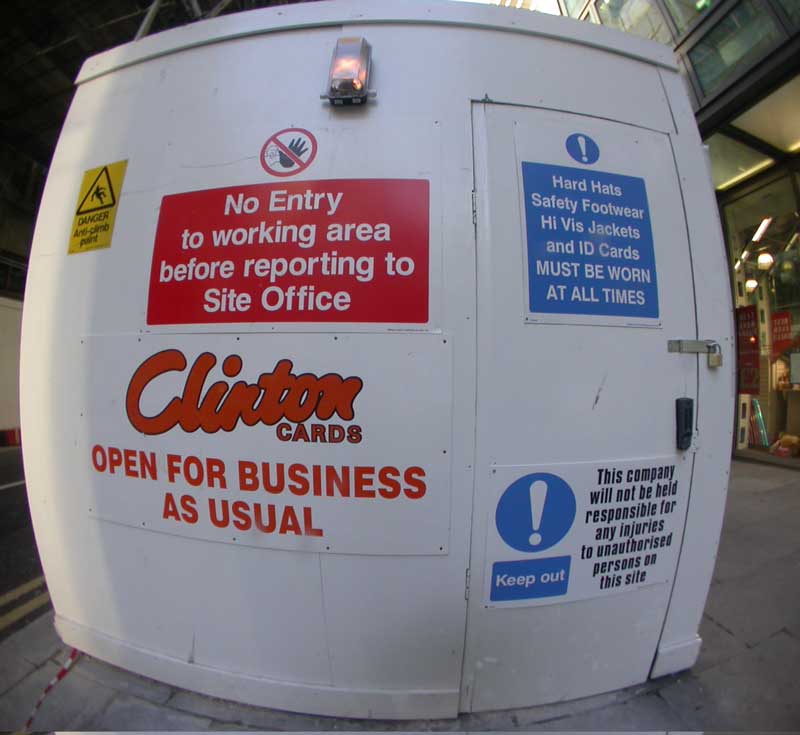
LATER NOTE: This picture was taken in the City of London in December 2004 and is in response to Paul’s comment (click to enlarge):