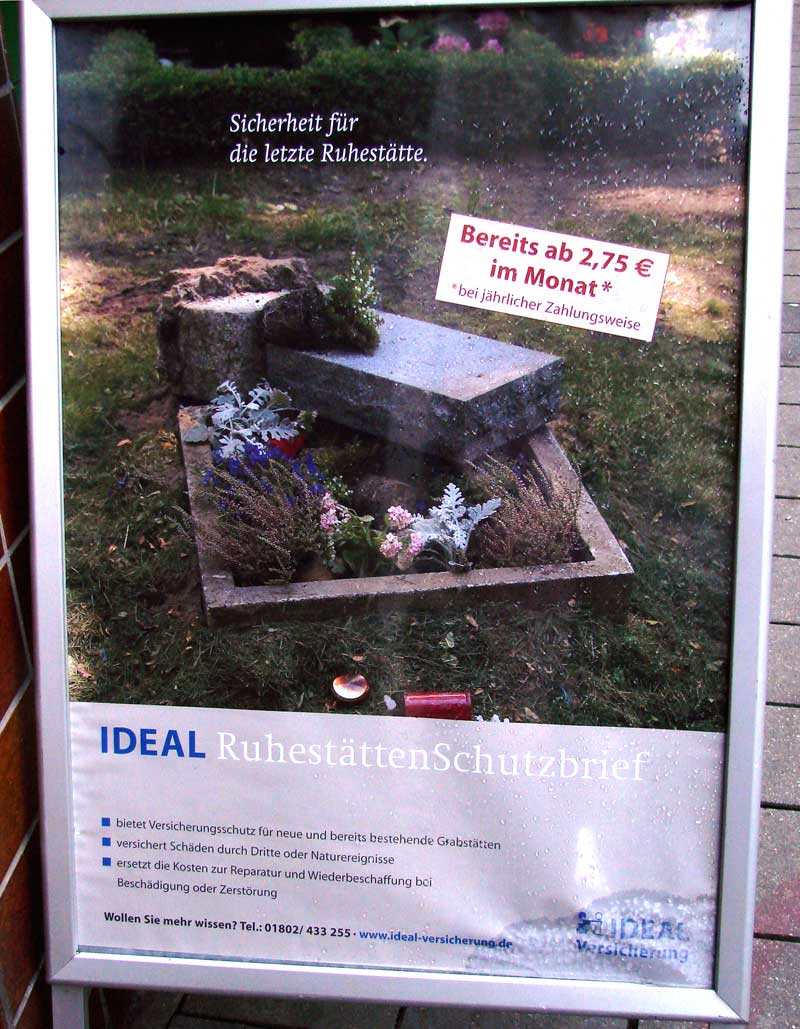
Click to enlarge. Also see earlier entry.

I wonder what Ludwig would have said.

The Grotian Moment blog, which blogs the Saddam Hussein trial, has been given a first unofficial translation of the judgment.
It does appear preliminary – perhaps there were communication problems between translation and paper (‘this safe town was rich in fruit gardens irritated from the Tigris river’), but it looks good. The Grotian Moment site comments:
Over the next few days, critics will undoubtedly pick apart various aspects of the Dujail Opinion. The English translation is a bit awkward, the text is redundant, and the prose certainly wont be compared to the opinions of Oliver Wendell Homes or Learned Hand. But even the harshest critics of the Tribunal will have to admit that it did a competent job writing its Opinion, and that the Opinion does answer many of the questions about the fairness of the process.
The ‘Iraqi High Court’ referred to is given here as the Iraqi High Court Criminal Law.
(Via the German American Law Journal blog)
The German Embassy in London’s musical advent calendar:
Probably the best musical online Calendar on the web, this year’s German Embassy Advent Calendar is packed with ultra-modern arrangements of traditional German Christmas Carols. We are delighted to present a musical Xmas feast with a whole range of different musical styles and interpretations, performed by professional musicians.
(Via Keys Corner)
And Cécile Blumenbär and Chris Rowson (translator) in Dresden, who are Rare Roses: Der himmlische Schall a CD (and there is a separate booklet with all the texts) – first of all, the familiar German Christmas carols, 27 of them, to sing along to, then some Christmassy concert pieces:
Der himmlische Schall is in two parts. The first contains a selection of the enchanting music of the German Christmas tradition. Some are lovingly decorated with variations, others presented with evocative simplicity.
Festive concert pieces of the European Baroque form the second part. The mystical voice of the flute combines with the varied sounds of the digital harpsichord to conjure the sounds and spirit of Christmas.
You can hear some of their music on their website, or you can buy it in their online shop, or you might be lucky and be given it, like me.
This article by Ingolf U. Dalferth appeared in the NZZ in November. It’s about this new Bible in ‘fair’ language (translated into English elsewhere as ‘inclusive language’):
Bibel in gerechter Sprache. Herausgegeben von Ulrike Bail, Frank Crüsemann u. a. Gütersloher Verlagshaus 2006. 2400 S., CHF 44.60
Apparently it was done by a team of 32 translators and supposed to appear on Reformation Day, but the Protestant church in Germany (probably the one that calls itself the Evangelical Church) objected. According to Professor Dalferth, it was intended to smooth out all the peculiarities of the original (he compares it with the ‘powerful language’ of the Luther Bible and the ‘philological precision’ of the Zurich Bible.
Ganz anders diese Neuübersetzung, die nicht richtig, sondern «gerecht» zu übersetzen beansprucht. Sie traut den Lesern gar nichts zu, sondern schreibt ihnen unablässig vor, wie sie verstehen sollen, was sie lesen. Gewiss, Übersetzen ist eine schwierige Kunst. Aber Kunst ist auch «das Gegenteil von ‹gut gemeint›», wie Gottfried Benn lakonisch notierte. Gut gemeint ist die «Bibel in gerechter Sprache» zweifellos. Keinen Augenblick wird man über die Überzeugungen der Übersetzerinnen und Übersetzer im Unklaren belassen, doch ob man auch das Zeugnis der biblischen Texte vernimmt oder liest, was in den hebräischen und griechischen Originaltexten steht, weiss man nie.
The aim of the translators, he writes, was not to do justice to the problems of exegesis, history and theology, but to follow liberation theology, feminist theology and the dialogue between Christians and Jews. This ‘just’ language does less than justice to the original.
The text includes ‘shepherds and shepherdesses’. There is a precept to love your neighbour and his wife. Even the apostles are treated as if they included women. The end of the people of Israel may not be referred to.
Weil der Gottesname Jahwe (das Tetragramm) seit biblischer Zeit von orthodoxen Juden aus religiöser Scheu (und nicht etwa, weil er «unaussprechbar» wäre) nicht mehr ausgesprochen wird, wird er auch in dieser Übersetzung gemieden und durch wechselnde andere Bezeichnungen ersetzt: «der Ewige, die Ewige, Schechina, Adonaj, ha-Schem, der Name, Gott, die Lebendige, der Lebendige, Ich-bin-da, ha-Makom, Du, Er Sie, Sie Er, die Eine, der Eine, die Heilige, der Heilige».
In a Zeit article, Robert Leicht comments on the mistake of confusing translation and interpretation – a translation of the Bible should not incorporate the interpretation that may be preferred today, but should be a subject for discussion.
A Lutheran blog called Cyberbrethren actually recounts all this.
Some gender-neutral Bible links.
Here’s a modern British one I toyed with getting a few years ago: As Good as New, a radical retelling of the scriptures, by John Clifford Henson, and here’s an amazon.co.uk reader’s comment:
A very interesting and challenging translation – some infelicities which grate a little (“Larry” = Lazarus etc. and some doggerel verse), but it pulls the timeless story into the present day and certainly gave a new view to me. Powerful stuff.
Some quotes are here – Matthew, Chapter Two:
Jesus was born in Bethlehem during the reign of Herod the Great. Some members of an eastern religion who studied the stars travelled to Jerusalem. (2) They asked, “Where’s the new baby who will lead God’s people when he grows up? We’ve seen a new star which tells us he’s been born. We want to pay our respects to him. ” (3) This news put Herod into a state of panic which frightened the people of Jerusalem. (4) Herod called together the religious leaders and the experts in the old books and asked them where God’s Chosen was likely to be born. They turned his attention to Bethlehem, quoting words from one of God’s speakers:
(6) “Bethlehem, there’s no reason for you to think you are not important. You are going to be the birthplace of someone who will lead my people like a shepherd.”
(7) Herod had a private meeting with the star-gazers, and found out from them the precise time the star appeared. (8) Then he gave them directions for Bethlehem and said, “Do your best to find the little boy. I would like to pay him my respects too.” (9) When they had heard what Herod had to say, they continued their journey. They spotted the new star again. It seemed to move on in front of them and then hover over the house where the boy lived. (10) They got very excited by this. (11) They went inside the house and met him and his mother and expressed their pleasure at the honour they felt. They took out from their luggage the presents they had brought with them including money, medicine and perfume. (12) They had a hunch it would be a mistake to go back to Herod, so they took a different route back home.
