
Style of address on mailing lists / Anrede auf Mailingliste

I quote a mailing list message:

Deshalb ist es ja umso wichtiger, dass sich die Mitglieder ziemen und die entsprechenden Höflichkeitsformen und Ausdrucksweisen wahren, wie z.B. eine entsprechende Anrede überhaupt zu verfassen.

(MM’s emphasis)

Again and again I wonder: is it just in Germany that some lists expect you to write ‘Liebe Forumsmitglieder’ or some such, and are offended if you have no address at all?

I recall a UseNet group for some bookkeeping software where people wouldn’t even reply if you didn’t use a form of address. This was the case no matter if you were replying to an individual or writing a new question to the whole list (in the latter case, there is no really sensible form of address, is there?)

Here are some recent examples:

Liebe Kollegen und Kolleginnen
Liebe KollegInnen
Liebe / lieber X
Hallo Frau /Herr X
Hallo X
Liebe KOUKO
Liebe Liste
Moin!
Liebe Helfer
Guten Abend
Bonjour X
Guten Morgen, X

I really can’t understand why anyone should be offended if one of these is missing. And I believe a formal close is also expected. I have the feeling it isn’t the case on English-language lists.
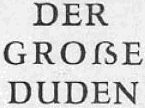

ß and capitals/ß Großschreiben

Das ß sollte abgeschafft werden, wie in der Schweiz – das Problem sieht man in der Überschrift. Es mausert sich aber langsam zum Großbuchstaben, das Versal-ß – siehe Berlin Blawg (mit guten Links) und das praegnanz.de Blog.

The header here shows the problem: the German ß is only a lowercase letter, and when it appears in capitals, it is replaced by SS. So what happens when you use fonts that automatically convert into uppercase? Or small capitals? I didn’t think about this when I set up Movable Type to capitalize the headers, so I usually avoid ß in the heading.

Berlin Blawg has an entry on the gradual appearance of ß as a capital – without a vote, and without even a spelling reform commission.

Apparently the uppercase ß was recognized by the ISO for Unicode at the end of April. Good news for typeface designers.

The ß came from a ligature of two s’s and in my view it should be done away with altogether. Bring back the SS (oh no, we aren’t allowed to say that). But actually, the strongest argument for the uppercase ß is the fact that some people use it in their surnames, so it should be detectable in uppercase as well as lowercase, as Fontblog says:

b

Vor allem nach der Rechtschreibreform hat die Diskussion an Bedeutung gewonnen, weil das scharfe s nach kurzem Vokal generell weggefallen ist (daß/dass) und damit die Aussprache eindeutig definiert ist: das »Ruß« in Stefan Ruß-Mohl spricht sich auch versal gesetzt – RUSS-MOHL – immer noch »Ruhs« aus.

Here, from Wikipedia, is an uppercase ß on the title page of the 1957 Leipzig Duden.

Eszett_Leipziger_Duden_1957.png

LATER NOTE: I see Movable Type automatically converts ß to SS in the header. I don’t think it always did that. Indeed, the triple S was not permitted before the recent German spelling reform. OTOH my Movable Type is prehistoric.

Translatorscafe.com

TranslatorsCafe.com in Canada is one of the useful translators’ forums out there. Someone really has it in for them. I’d better not give a link for fear of stirring up what should better be discarded:

Members of TranslatorsCafé use the interface as a medium for illegally spreading untrue and defamatory information about individuals and companies who have simply experienced the misfortune of using the services of one or more of the so-called “Masters” who stand guard over the service.

I am always fascinated by the names these places give to their posters depending on how many messages they have posted: TC Master, Elite Veteran and so on. I’m not so sure about the ‘standing guard’ bit.

Shareholders/Gesellschafter

The translation of forms of business association is quite complex and takes so long to discuss that the steam goes out of the boiler before the discussion has got off the ground.

I met some U.S. translators briefly last Friday, but not too briefly for one of them to tell me that all the U.S. lawyers she works for reject the translation of Gesellschafter of a GmbH as shareholder.

This is a good concrete example – without such examples it’s really impossible to discuss why some lawyers don’t like some translations (see earlier entry without examples).

It would be great if people asked their English-speaking lawyers why they don’t like the translation.

So, let’s look at this. Gesellschaft itself is a problem, but at least my favourite translation of GmbH, which is GmbH, is straightforward (until the client complains).

But the word Gesellschafter has to be translated. The nearest equivalents (not translations) of Gesellschafter in English are:

AG: shareholder
GmbH: member
KG: partner
OHG: partner

But look at this:
Aktie in AG: share
Anteil in GmbH: share

So it has become standard to translate every Gesellschafter of a limited company as a shareholder. Of course, it may seem like translatorese in a GmbH, but it seems a good solution to me. For some reason, hardly any Germans seem to have heard of the word members.

The U.S. lawyers who didn’t like shareholder apparently wanted members or partners. Members, OK, but never never never partners in a GmbH: it creates the wrong idea.

It’s been suggested to me that the lawyer familiar with two languages may simply be getting confused, and transferring the existence of two terms for shares (Aktie and Anteil) in German to a wrongly assumed existence of two terms in English.