Hare Krishna food guy/Hare Krishna kostenloses Essen für Studenten

From A Week in the Life of a SOAS student:

9-10 : Grammar 10-11 : Practical

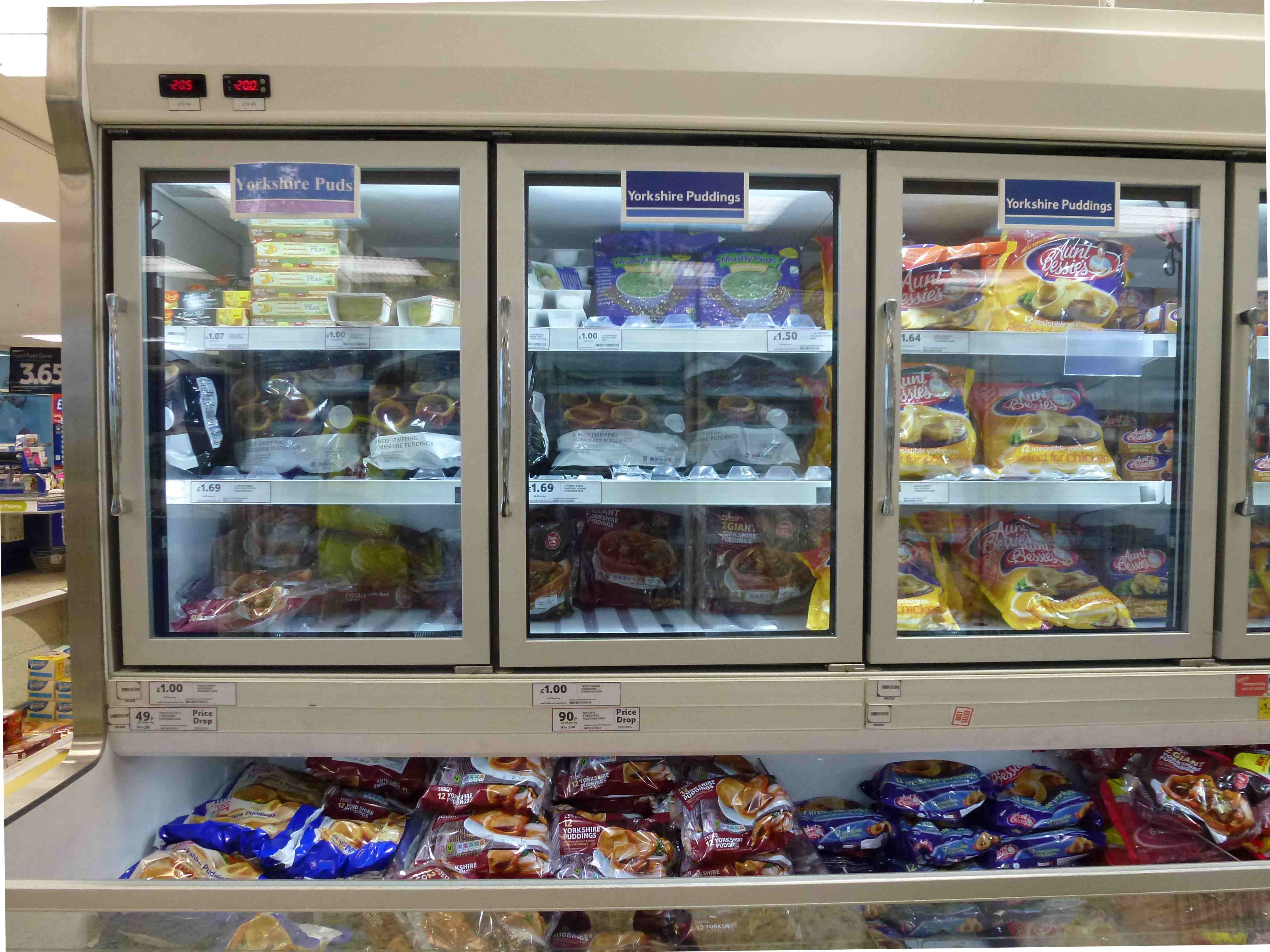
12.30 or thereabouts : I offer my custom to the great SOAS institution/legends who are the Hare Krishna guys. They come every day with a wagon of free vegetarian curry [but seriously, give them a donation, you skinflints] which is really really top quality stuff. They also boast the latest in trouser-related sartorial elegance ; you’ll know what I mean when you see them. Also, if you take the trouble to learn their names, they’ll give you massive portions, more than you can handle.

I realized it must be free after I took the photo and remembered Steve Jobs saying he used to go to Hare Krishna once a week for a free meal.

False friends, good and bad translation blog

One of my favourite translation blogs, false friends, good and bad translation (I’m not sure about the capitalization) by Martin Crellin, has touched on legal terminology in recent weeks.

The first entry that caught my eye was one on the English legal term frustration, which is not the same as German Frustration. Crellin comments on how often internet searches show the translation frustrated expenses for frustrierte Aufwendungen. The Linguee site is given as an example of this.

Mit diesem Wissen kam meine australische Mitarbeiterin Lotta Ziegert (mit ihrem juristischen Hintergrund) schnell auf den passenden englischen Begriff (bzw. Begriffe):

Reliance loss
Wasted expenditure
Wasted expenditure loss

Alle sind wasserdichte Lösungen – die man durch zuverlässige Definitionen belegen kann.

I have a quibble here: if you read Linguee’s examples carefully, an EU one is given with futile expenditure. I like that best of all.

The second one was on Paragraphendschungel, which some benighted souls apparently translate as paragraph jungle.

Das vorgestellte Konzept hieß „paragraph jungle“. Das ist ungefähr so sinnvoll wie „Absatzurwald.“

Bei uns bestehen Gesetze nicht aus Paragraphen. Sondern aus sections oder articles. Und die Absätze auf der nächsten Ebene? Sind meist sub-sections.

Image searches reveal some pictures of one of these.

Most recently, there is a post by Ben Davidson, the trainee, on Der Rechtsweg ist ausgeschlossen: The judges’ decision is final.

Der Rechtsweg ist ausgeschlossen is a phrase that crops up regularly, especially in competition terms and conditions. And it causes problems.
“Why?” I hear you ask, “Doesn’t it translate as ‘the judges’ decision is final’?” Well yes, that is a perfectly acceptable translation, as proven by its inclusion in the rules of Britain’s Got Talent, and on the Illinois Legal Aid website.
You see, the problem doesn’t stem from our inability to find an adequate translation. The issue is “the judges’ decision is final” just doesn’t sound legal enough. Customers can’t believe that it is the equivalent term – it’s almost a case of “The translator’s decision is not final”.

I was surprised at this. I would use this expression only in connection with competitions. So I used to teach that there are two possible translations: either The judges’ decision is final in competitions, or something else in relation to a court of law. I seem to have opined on this on ProZ in the past. But I don’t believe that ousting the jurisdiction of the courts is often appropriate. Something like recourse to the courts is excluded is better, I think now. And there certainly are some ghits showing The judges’ decision is final in a legal context, but I don’t think it’s common.

Davidson settles on The judges’ decision is final and legally binding, for which he finds over 3,000 ghits, but this is only in the context of competitions – legal translators meet the German quite often in relation to the courts of law, which requires a different solution.

Destroying works of art/Kalkfleck folgt Fettecke

This isn’t the first time a cleaner has destroyed a work of art. I remember one of Joseph Beuys’ fat corners – Fettecken – where he’d thrown some butter or something at a plastic shape and it was just left as it was. Here’s a machine translation account of that:

the famous end of the fat corner

a cleaning strength removed 1986 after Beuys death arbitrarily the fat, because it it not as work of art, but when dirt regarded. To 27. October 1987 came it therefore to a process. The country North Rhine-Westphalia paid at that time finally 40,000 DM payment of damages to the owner of the work. Because of this anecdote the fat corner ranks among the most popular, although also to few understood work of the artist.


Cleaning strength
means a cleaner – Reinigungskraft.

When Beuys was shot down over the Crimea in WWII, he claimed he was rescued by Tatar nomads who smeared him with animal fat and wrapped him in felt, hence his obsession with fat.

The latest story concrns a work by Martin Kippenberger called Wenn’s anfängt durch die Decke zu tropfen (When it starts dripping through the ceiling).

Some papers have a picture of it e.g. Die Welt, but apparently only after the damage was done. The whitewash that had dripped into the basin underneath was thoroughly removed.

According to Prof. Dr. Markus Stoffels on beck-blog, the woman will not be sacked.

Die Frau habe in einem „unbedachten Moment“ gehandelt und sei anschließend selbst unter Tränen zu ihrem Chef gekommen, um das Missgeschick zu beichten. „Da ist einfach etwas über sie gekommen“, so Schwake. Das Personal hat die Anweisung, zu Kunstwerken einen Abstand von 20 Zentimetern zu halten – „Das wusste sie natürlich, darum ist sie ja so erschüttert.“ Eine Bestrafung durch den Arbeitgeber schließt der Chef denn auch aus: „Wir schätzen die Mitarbeiterin sehr. Sie ist genug gestraft, weil sie sich unendlich schämt.“

At least according to this version, the woman had been told to keep at a distance from works of art – other sources disagree – but she said ‘something came over me’. This is spoken like a true charwoman. It’s something that doesn’t come over me often enough.

English in German courts/Englisch in deutschen Gerichten: noch eine Meinung

For another blog on this topic, see German American Law Journal.

AmCham is what the American Chamber of Commerce calls itself. It has produced a Positionspapier des Corporate an Business Law Committee von AmCham Germany: Englisch als Gerichtssprache in Deutschland. Maybe there’s an English version, but I haven’t found it.

I was particularly glad to read that some circles in Frankfurt am Main do not support the initiative, because in Frankfurt am Main there is the greatest number of lawyers who use English in their work. The Landgericht judges could not agree to support it – persons surveyed had misgivings in particular with regard to quality. Similarly, the board of the Rechtsanwaltskammer, the Frankfurt bar association, could not support it either, again on grounds of quality.

Interessant ist in diesem Zusammenhang, wie sich die betroffenen Justizkreise an dem wohl internationalsten Standort Deutschlands, in Frankfurt am Main, zu den Reformbestrebungen stellen.

Die Richter am Landgericht Frankfurt am Main haben sich in einer im Jahr 2010 durchgeführten Befragung nicht dazu durchringen können, sich der von den Verbänden unterstützten Initiative zur Einführung von Englisch als Gerichtssprache anzuschließen. Bedenken wurden insbesondere im Hinblick auf die Sicherung eines hohen Qualitätsstandards geäußert.

Erstaunlicherweise hat sich auch der Vorstand der Rechtsanwaltskammer Frankfurt im Frühjahr 2010 nicht zu einer Unterstützung dieser Initiative durchringen können. Auch hier standen insbesondere Befürchtungen hinsichtlich einer Sicherung des Qualitätsstandards im Vordergrund. Da in kaum einer anderen deutschen Stadt Englisch so häufig im täglichen Verkehr anzutreffen sein dürfte wie in Frankfurt, muss diesen Bedenken besonderes Gewicht beigemessen werden. Internationalität kann eben nicht von bestimmten Qualitätsstandards abgekoppelt werden.

There’s also some discussion of the differences between German and English procedure. For instance, discovery is important in the common law, together with fishing expeditions, whereas in Germany the parties each have to present their own facts and prove them – and those who choose the German courts probably want to avoid the discovery system, which they may regard as largely superfluous.

However, the German understanding of oral proceedings is described as gewöhnungsbedürftig (needs getting used to), which is rather politely put: the lack of a full transcript – German judges dictate witness statements and thus filter them. I remember being surprised by this myself, hearing the Amtsgericht judge translate the witness’s Franconian statements into High German, and when I was contacted by someone in Britain who sells transcription software and wanted to enter the German market, I had to suggest to him it might not have a future.

Viel gewichtiger allerdings ist der Einwand, dass das Verfahren in Deutschland zwar unter dem Grundsatz der Mündlichkeit steht, dass dieser Grundsatz allerdings aus Sicht ausländischer Juristen sehr gewöhnungsbedürftig gehandhabt wird. Was soll eine ausländische Partei von einer mündlichen Verhandlung halten, in der laut einem knappen (laut Entwurf des § 184 Abs. 2 GVG englischsprachigen) Protokoll „die Rechts- und
Sachlage umfassend erörtert“ wurde? Und, schlimmer noch, von einer Beweisaufnahme, bei der die Zeugenaussagen zwar in Englisch, aber nicht wörtlich („verbatim“), sondern zusammenfassend durch den Filter des eine Aussage ins Protokoll diktierenden Richters wiedergegeben werden? Die Art der Protokollführung in deutschen Gerichtsverfahren ist im internationalen Vergleich so abschreckend, dass sie aus Sicht anderes gewöhnter
Juristen die Vorteile einer Verfahrensführung in Englisch schnell zunichte macht. Wer je in einem Schiedsverfahren die segensreichen Vorzüge eines Wortprotokolls erleben durfte, wird einer Beweisaufnahme vor einem deutschen Gericht – gleich ob in Deutsch oder in Englisch – und noch mehr der Bewertung von Zeugenaussagen nach Auswertung eines solchen Protokolls sehr skeptisch gegenüberstehen.

And indeed, I hadn’t thought of the problems when German judges dictate the record in English.

Another comment is that very long contracts may have to be translated at great expense. AmCham is storngly of the opinion that exhibits in English should be permitted without a requirement of a German translation, because the translation expenses can be very high and this tends to act as a bar to further proceedings – the parties may feel forced to settle.

As for the quality of the English spoken by attorneys, AmCham thinks the client who is a native speaker of English should be capable of judging that. But what about the linguistic abilities of judges? It has been stated several times (by the proponents of the bill) that getting an LL.M. abroad proves your English is good enough, but there are some, including some in AmCham, who don’t regard it as adequate.

In diversen Publikationen wird ausgeführt, dass ein Auslandsaufenthalt, insbesondere ein Master-Studium im anglophilen Ausland (und damit meist der Erwerb eines LL.M.-Titels) eine entsprechende sprachliche Qualifikation belege. Es gibt allerdings (auch innerhalb der amerikanischen Handelskammer) ernstzunehmende Stimmen, welche allein eine derartig nachgewiesene Qualifikation für nicht ausreichend halten. Zudem wäre zu überlegen, wer eine entsprechende Zulassungsprüfung überhaupt abnehmen sollte und ob hierfür innerhalb der Justiz überhaupt die nötige Sachkunde bereitsteht. Wie groß ist denn eigentlich der „Pool“ entsprechend qualifizierter Richter beim BGH oder OLG? Diesbezüglich ist noch eine ganze Reihe von Fragen unbeantwortet.


If this is fresh, give me stale/Google-Update

Google Blog:

Giving you fresher, more recent search results
11/03/2011 08:19:00 AM
Search results, like warm cookies right out of the oven or cool refreshing fruit on a hot summer’s day, are best when they’re fresh. Even if you don’t specify it in your search, you probably want search results that are relevant and recent.

If I search for [olympics], I probably want information about next summer’s upcoming Olympics, not the 1900 Summer Olympics (the only time my favorite sport, cricket, was played). Google Search uses a freshness algorithm, designed to give you the most up-to-date results, so even when I just type [olympics] without specifying 2012, I still find what I’m looking for.

This is not what we translators want, and how does Google know what the majority of searchers want?

This follows another idiotic change: it used to be easier to search for obscure words. Now, Google says ‘Did you mean X? Searching for X’ – you can click on your original term if you still want it.

Some colleagues say they are using DuckDuckGo and Blekko.