Miscellaneous notes of a retired legal translator

A few notes, just in case I don’t stop blogging

1. Bernstein

Richard K. Bernstein died on 15 April 2025, the 22nd anniversary of my blog. Obituaries are available. He was 90, so he made it longer than Pope Francis.

Richard Bernstein’s diabetes book tells a fascinating story: at 12, in 1946, diagnosed with Type 1 diabetes. Pumped full of insulin. In his early thirties, alive but with health problems. An engineer. The first diabetic to test his own blood sugar at home. Not allowed to buy a testing device, but his wife was a doctor. It weighed 8 kilos, I think (this is all from memory. Tested several times a day and developed a strict low-carbohydrate diet, his health problems vanished and he lived a normalish life.

As a non-physician he was not able to publish his findings. He therefore qualified as a doctor himself and was able to publish, and set up a diabetes practice himself.

I accidentally stumbled on his death notice when I was thinking about diabetes as I had decided to try an NHS prediabetes course. My eldest brother was diagnosed in his 50s. I am not so insulin resistant and have been prediabetic on and off for years. The course is run by something called “Thrive Tribe”. Enough said.

2. Upminster

Diamond Geezer on Upminster as the Easternmost part of London, for Easter!

He has done all the anoraky stuff on establishing which shopping parade is the easternmost in London – it’s in Cranham. He has the easternmost Caffé Nero – for some reason he overlooked Costa, but the local man has a reputation for not letting his staff have tips etc. so that’s OK.

3. Die überraschenden Funde aus Wallensteins riesigem Heerlager

Die Welt, 18 April 2025

Building for a new housing area in Stein uncovered the centre of Wallenstein’s camp in 1632, which was over 16 km long. 13,000 trees had to be felled for it. There were three gallows and a wheel with the body parts of someone who had been quartered.

Wallenstein residierte im Süden des Lagers in einem zerlegbaren Holzhaus. Aus Böhmen war seine silberne Badewanne mitgebracht worden. Golo Mann vermerkt, dass der Generalissimus Kräuterbäder nahm, gerne Rebhühner aß und Weizenbier trank. Vermutlich auch Erdbeeren genoss, es war ja Erdbeerzeit.

Gustav Adolf was established in Nuremberg and Wallenstein aimed to starve his army out.



Feast of the tabernacles/football

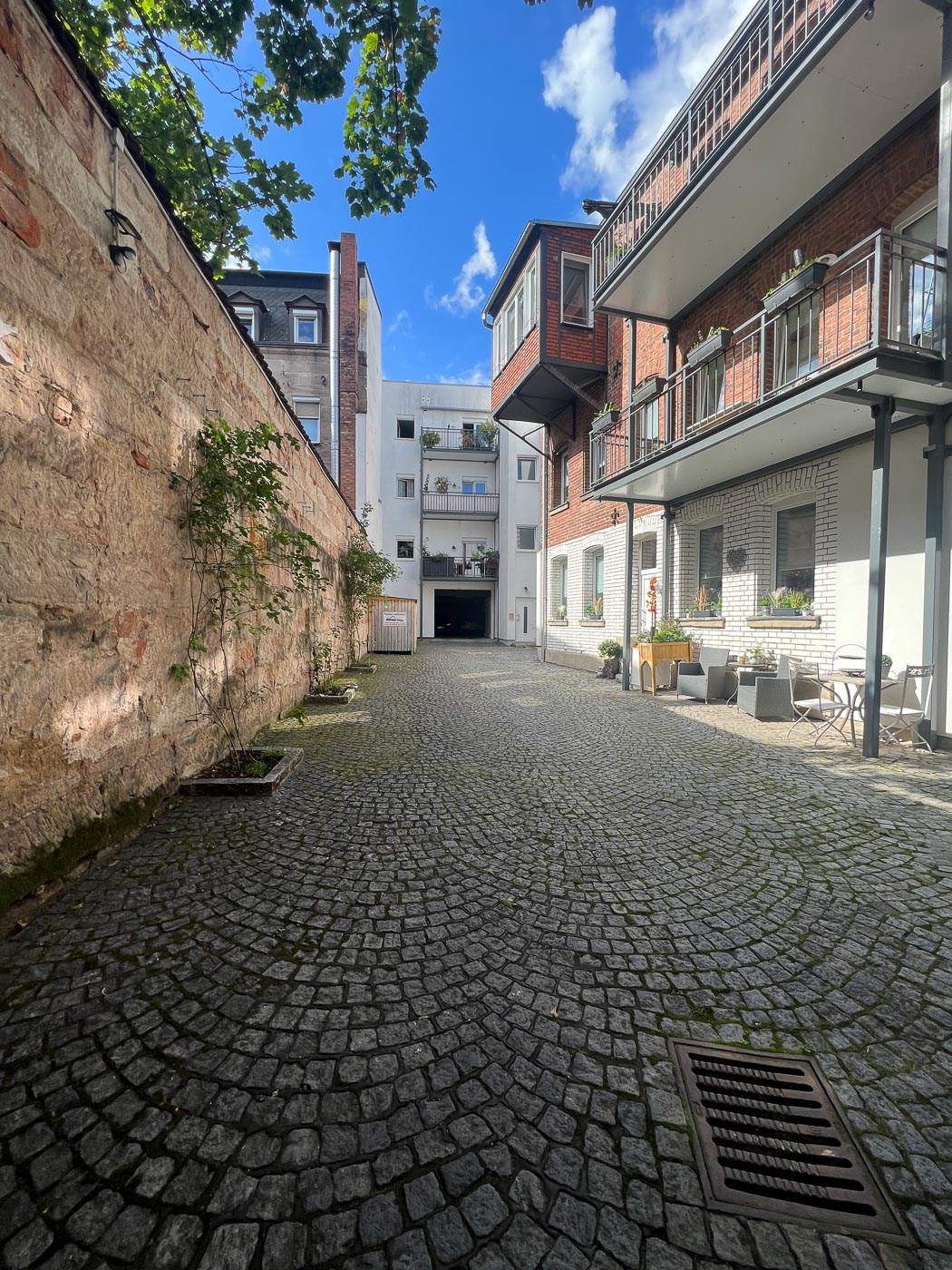
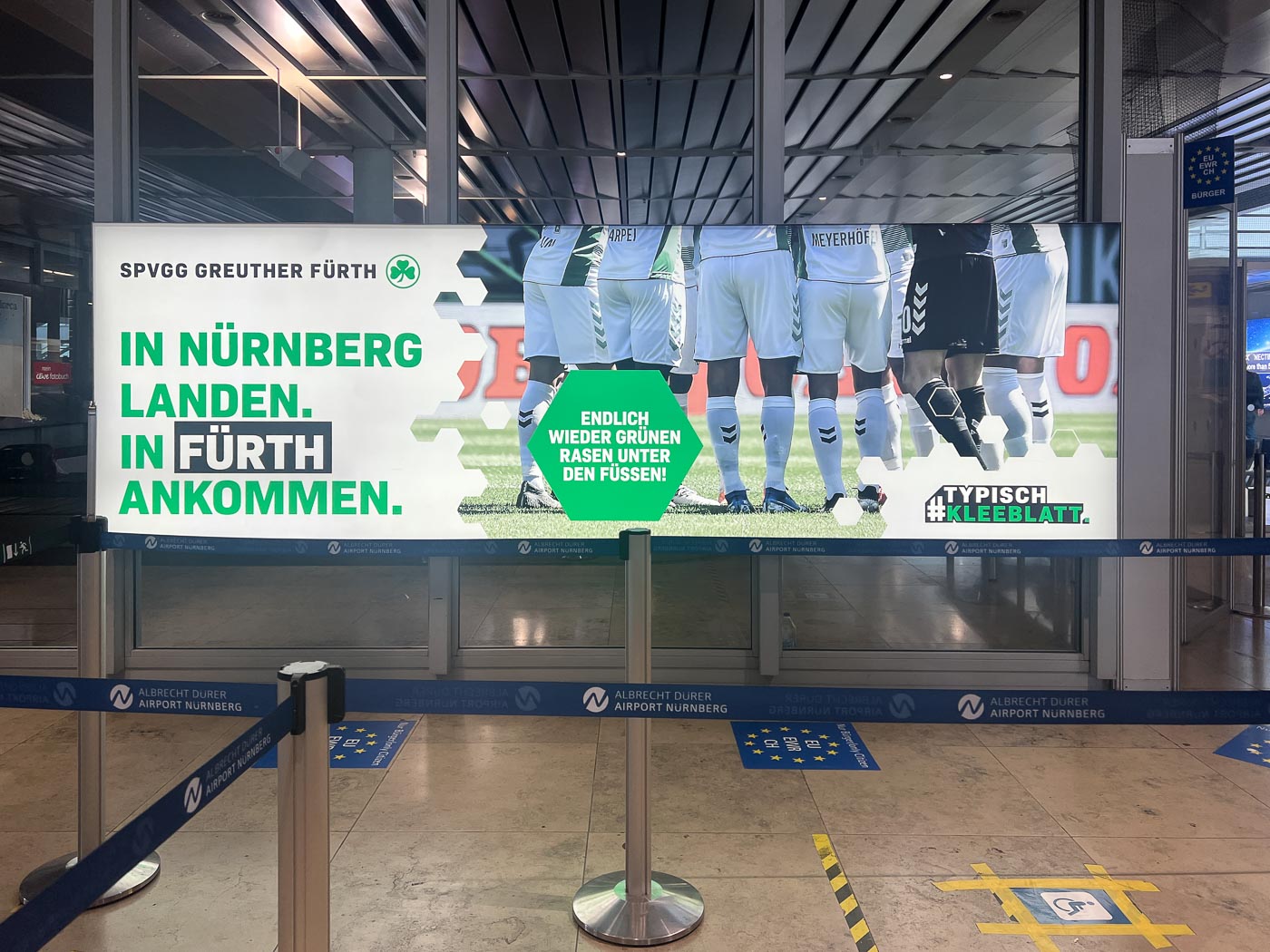
Two photos from Fürth.

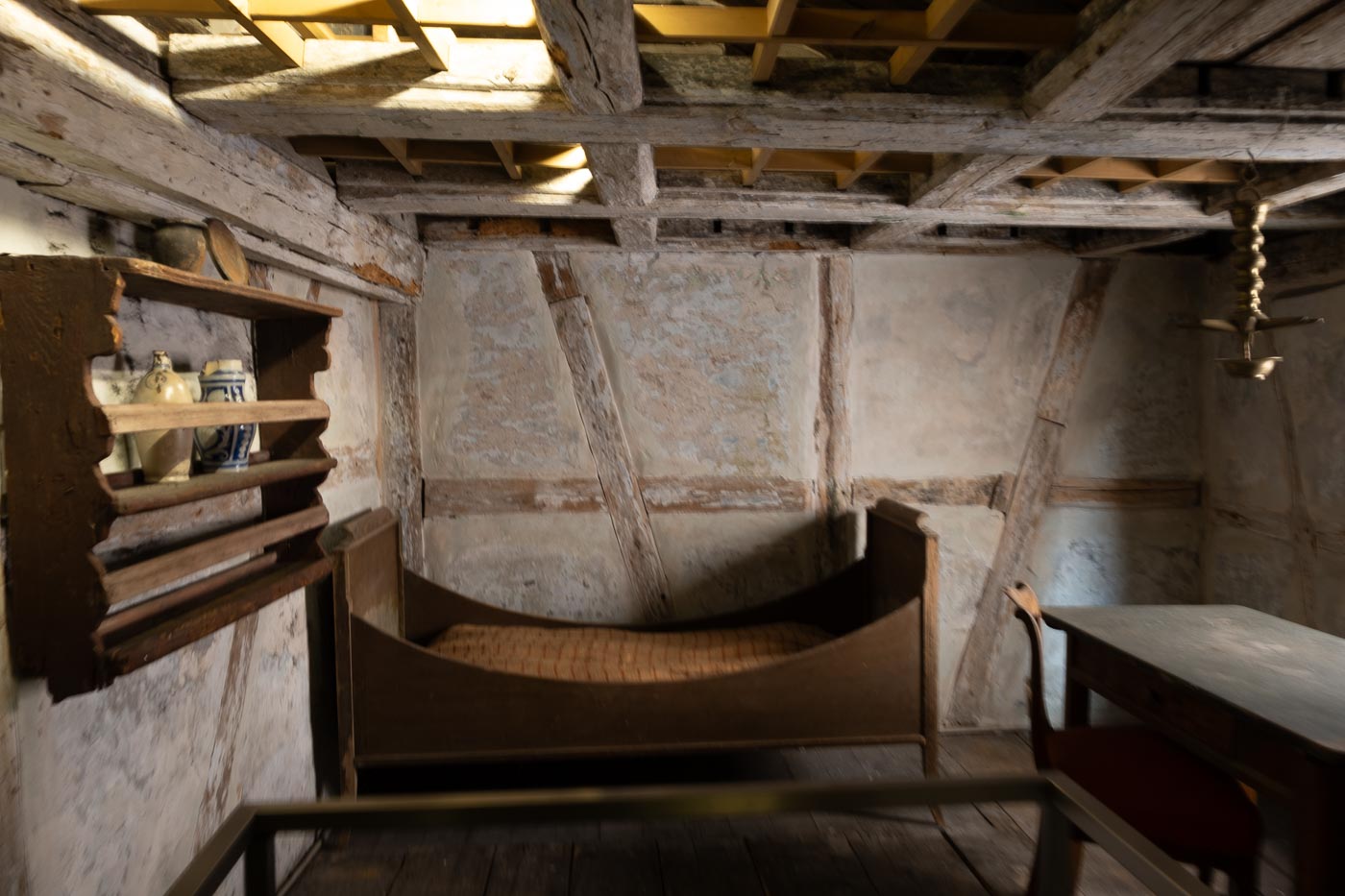
In the Jewish Museum there is one room whose roof can be removed and replaced by branches, where the family who lived there could stay during the Feast of Tabernacles (Laubhüttenfest/Sukkot). This is a shot of it:


This is a balcony in Friedrichstraße – according to the famous FürthWiki this is a tabernacle, built in 1907: “Balkonanbau, vermutlich Sukka, von Adam Egerer, 1907″:

And here is an advert for the Fürth football team, Greuther Fürth, as seen in Nuremberg Airport in both February and September 2023:


Germany refuses to extradite man to UK

Germany refuses to extradite man to UK over concerns about British jail conditions

I know things are bad in this country – I know courts have been closed (even without containing RAAC), I know legal aid has been cut, I know prisons are overcrowded (while the government calls for more and harsher sentences) – but this still doesn’t sit very well with me.

A court in Karlsruhe decides against extradition of Albanian man ‘in view of the state of the British prison system’.

A German court has refused to extradite to the UK a man accused of drug trafficking because of concerns about prison conditions in Britain, in what is thought to be the first case of its kind.

This was the Oberlandesgericht.

Karlsruhe higher regional court in south-west Germany made its decision earlier this year, and it has only recently been made public.

A translation of the court report said: “The court decided that the extradition of the Albanian to Britain was ‘currently inadmissible’. Without British guarantees, extradition is not possible in view of the state of the British prison system. There are no legal remedies against this.”

The man was arrested by German police and held in extradition custody.

His defence lawyer, Jan-Carl Janssen had studied in Glasgow and had written a thesis that looked at UK prison conditions.

In court, Janssen cited his research about chronic overcrowding, staff shortages and violence among inmates in British prisons. On the back of this evidence, the German court sought reassurances on two occasions from the UK authorities about prison conditions there.

The court said guarantees from the UK of compliance with minimum standards in accordance with the European convention on human rights were required. In addition, the court asked the British authorities to specify which prisons the Albanian man was going to be detained in and what his conditions of detention would be in those prisons.

A police station in Manchester replied to the court’s first request on the final day of the deadline for a response, saying 20,000 extra prison places were being built to deal with the problem of overcrowding. The second request for reassurance about UK prison conditions received no response from the UK.

…Since the UK is no longer a member of the EU, the rules of the European arrest warrant no longer apply.

It does look as though similar decisions have been made in Ireland and the Netherlands. It does sound rather weak to promise that the UK is building prisons for 20,000 more people.

From the Frankfurter Rundschau:

In dem neueren Fall hatte der Verdächtige einen Anwalt, der so etwas wie ein Experte für den Zustand der britischen Gefängnisse war. Jan-Carl Janssen schrieb seine Dissertation über das Strafvollzugssystem in England, Wales und Schottland und führte vor Gericht seine Untersuchungen zu Themen wie chronische Überbelegung, Personalmangel und Gewalt unter Insassen an. Er sagte auch, dass einige Zellen zu klein, zu dunkel und schlecht belüftet sind.

That’s a one-year LL.M. dissertation btw.

Here is Jan Carl Janssen and here is his book on prison conditions.

LATER NOTE: A report on this case on Udo Vetter’s blog, with four comments (glad the UK is out of the EU, especially because the right of silence has been weakened). Not yet references to how a prisoner escaped from Wandsworth last week. Udo gives the file number of the German case: 301 OAus 1/23


Perpetrators (pool of)

(Excuse the lack of spaces between sections – I don’t understand the latest edition of WordPress)


On the platform formerly known as Twitter, Mary Aspinall-Miles (followed by 27 people I follow) wrote:

May I ask a question about criminal justice language: When did the word “perpetrators/perp” start getting wide-scale use in the UK generally?
I understand the reply from FaithfulDefenceAdvocate:
After the pandemic when we all started watching too many US cop shows on Netflix?
But that may not be the context in which the term has been used so much.
Reply from Inspector Morose:
Has it though? I don’t hear this at work: it’s suspect / offender / nominal / defendant; and very occasionally accused / subject / target / person of interest. I think it may be more common in victim support services, maybe ?
In a court context, the defendant has not yet been convicted, and after conviction becomes the prisoner/prisoner at th
I gather it has become common to refer to “domestic abuse perpetrators”. Was this not always the case? It sounds a bit US but I suppose there are few alternatives. ‘”Domestic abuser” is a possibility.
As one commenter mentions, the term “pool of perpetrators” is used:
In the light of concerns about the Ben Butler case in June 2016, this post by Sarah Phillimore attempts to explain the law that will apply in the family courts when a child has been hurt and there are a number of adults who could have done it – the so called ‘pool of perpetrators’.
Here’s a 2022 case, Re A (Children) (Pool of Perpetrators) with more information on the term.
In Re B (Children: Uncertain Perpetrator) [2019] EWCA Civ 575, [2019] 2 FLR 211 (“Re B: 2019″), Peter Jackson LJ clarified the proper approach in respect of uncertain perpetrator cases and the concept of a pool of perpetrators.
I have traced the term “pool of perpetrators” to a case as early as 2003 and I think it is probably a term that was introduced and taken up in case law.
The Oxford English Dictionary was not likely to solve this one. But here is part of the entry:
A person who perpetrates something, esp. a crime or evil deed.
  1. 1570

    Estemed as menquellers and perpetratours of most wicked factes.

    J. Foxe, Actes & Monumentes (revised edition) vol. I. 110/2

The actor or absolute perpetrator of the crime.

W. Blackstone, Commentaries on Laws of England vol. IV. iii. 34
1796

What is often said..of other crimes..if the perpetrator be sufficiently illustrious, it becomes a virtue.

J. H. Burton, Book-hunter (1863) 183
1951

Harington was the Queen’s godson—clever,..naughty, a light~weight, perpetrator of puns and practical jokes.

A. L. Rowse, English Past 24
1995

He wanted the perpetrators captured and executed.

T. Clancy, Op-center xx. 100