FIT Congress in Berlin

The FIT Congress, which I am not at, is going on in Berlin at the moment.

This means that a lot of tweeting is going on (hashtags #fitcongress or #FITcongress, I gather – I am only seeing what comes direct from people I follow).

Thus I gather that there is a marketing block in which Chris Durban is calling for action (picture).

This was preceded by a talk by Martina Wieser on using a blog for marketing purposes. Here is the weblog of Martina Wieser and Norma Keßler. Their blog is integrated into their website and has occasional posts, all aimed at a marketing effect (but what isn’t?).

My blogroll has gone and I have only begun to put together separate pages with useful links, I’m afraid.

SMALL RANT: Two of three things I received in the post were wrong. Instead of sending me the latest edition of Corinna Schlüter-Ellner’s Juristendeutsch, the BDÜ Fachverlag sent a book by Renate Dockhorn on Trados, of all things. On my complaint by email, they replied as follows:

Vielen Dank für Ihre Nachricht.
Wir sind ab sofort bis zum 06.08.2014 auf dem FIT-Weltkongress 2014.
Ab Donnerstag, den 07.08. 2014 sind wir wieder wie gewohnt für Sie zu erreichen.

Mit freundlichen Grüßen,
Ihre BDÜ Weiterbildungs- und Fachverlags GmbH

***

Thank you very much for your email.
The office is not occupied until August 6th, 2014, as we are celebrating the FIT Worldcongress in Berlin.
We will be back in the office from August 7th, 2014.

Kind regards

I’m not holding my breath, but wondered how one might understand ‘The office is not occupied until August 6th’.

I also received a repayment of tax from HMRC, sent to my German address which was not relevant to the tax return. Since Deutsche Post does not understand foreign postal codes when forwarding abroad – it is incapable of putting a gap in the middle – , I am not very happy with this. The letter took a month to reach me.
Beck’sches Formularbuch Deutsch-Englisch

Beck’sches Formularbuch Zivil-, Wirtschafts- und Unternehmensrecht (Buch + CD-ROM) Deutsch-Englisch DE-EN

The third edition of this quite useful tome came out in 2014. It has a CD-ROM. I have the 2007 edition and I must admit I’ve scarcely used it, but it appears a lot better than some other such works.

If you find a contract or form that you need, you will also find a bilingual list of vocabulary and notes. The notes are on the German law. There is no discussion of the choice of English terminology, although I can see I would not always use the same. My copy is over 1100 pages long. It might be worth getting hold of a second-hand copy, as there won’t have been massive changes, will there?

This recommendation came with the Kater Verlag newsletter. There, you can click through to the Kater-Scan, which gives a better impression of the contents. But Beck-Verlag also offers details plus Inhaltsverzeichnis and Leseprobe online (Harte Patronatserklärung: Hard Letter of Comfort!)

Sitz der Gesellschaft: company seat

I seem never to have dealt with this problem in the blog. So I’ll quote myself on ProZ, where you can see others’ opinions too:

seat

Explanation:
I prefer seat, because it is understood in English and doesn’t give the incorrect impression that it is a street address (unlike ‘registered office’). It is unpopular with some translators because it is perceived as ‘translatorese’, but in legal translation you can’t just take the nearest potential equivalent just because it sounds English – because, after all, we’re talking about German law, not English law.
I agree that ‘domicile’ is a possibility, but I don’t think it’s so widely understood (and a German domicile is a city, but an English domicile is a jurisdiction, such as Germany or England and Wales or California). ‘Corporate headquarters’ seems a slightly different context to me.

Here’s another one, where the asker said:

Please do not reply with seat. It sounds very awkward to me.
I am translating it as headquarters but wondering why I can’t say location.

Don’t you just love it when someone tells you what answer they don’t want? And even Beate Luetzebaeck hates seat.

Actually, the term seat is not so uncommon in company-law contexts, for instance in seat theory (PDF); Sitztheorie).

At present, there are two contrasting conflict of law theories as regards the recognition of foreign
legal persons: the ‘incorporation’ theory and the ‘real seat’ theory. The ‘real seat’ theory probably
dates back to the middle of the nineteenth century. According to this theory, the law of the country
where the company has its ‘real’ seat (i.e. its management and control centre) is the law applicable to
company relationships.

People may not like the word seat, but registered office
strikes a really odd chord for me, since a registered office is an address, for instance an address for service, whereas Sitz is a town, for example the courts of that town.

The German text might be:

Sitz der Gesellschaft ist Hamburg.

You can’t write: The company’s registered office is Hamburg.

But you might write: The company’s registered office is in Hamburg.

Messages

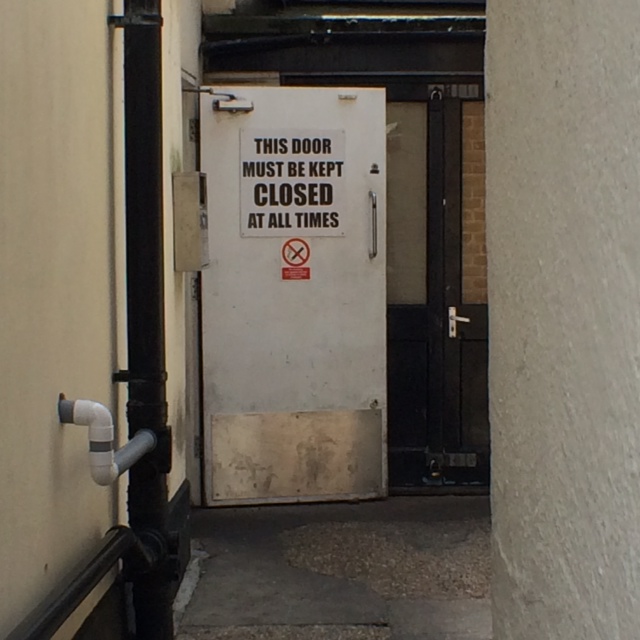
A self-defeating sign:

photo5

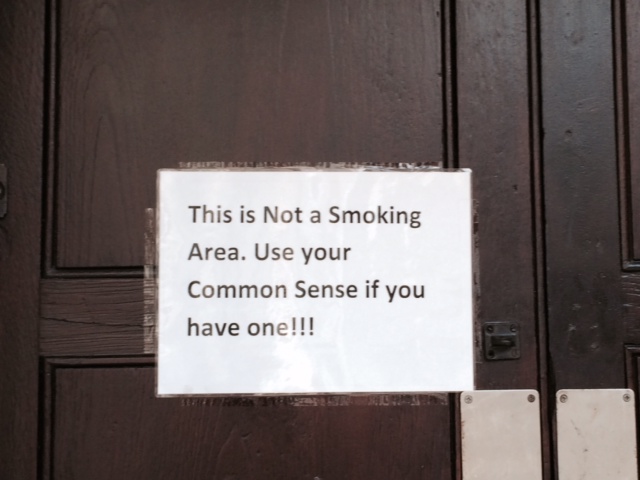
An ungrammatical sign:

photo4

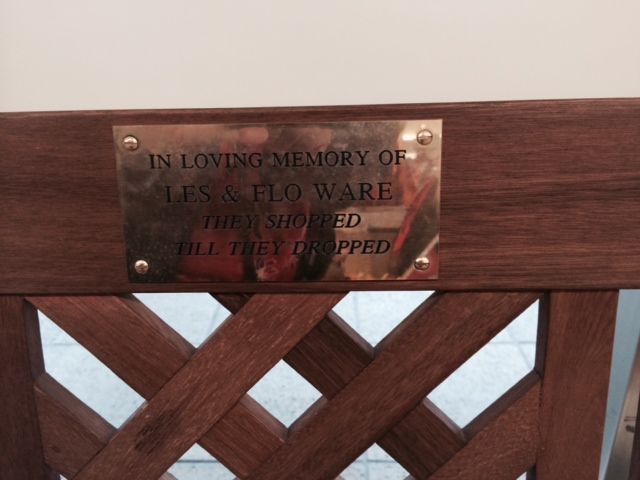
Inside Sainsbury’s in Hornchurch, on a garden bench beyond the tills: In loving memory of Les and Flo Ware. They shopped till they dropped. – Not sure whether to believe this. I can’t trace these people’s dates of death.

photo3

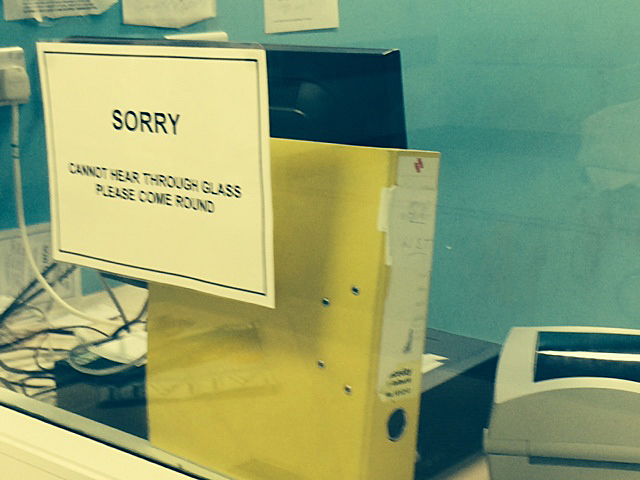
Sorry. Cannot hear through glass. Please come round.
photo7

Book of the month: Slugs of Britain and Ireland

Slugs of Britain and Ireland. Identification, understanding and control. By Ben Rowson, James Turner, Roy Anderson and Bill Symondson. FSC Publications First edition 2014, ISBN 978 1 908819 13 0
See field-studies-council.org

aidgap-slugs-cover

On the basis of ‘If you can’t beat them, join them’ I decided to find out more about slugs. Fortunately, this book has just been published (superseding the 1983 edition).

Possibly a juvenile Large Black Slug

Possibly a juvenile Large Black Slug

If you’re interested in slugs of Britain and Ireland, this is the book for you. You know who you are.

Some information that was new to me: slugs have been considered to cure consumption and sore throats if you swallow them.
Slugs have a bad press.
They evolved from snails and although they have uncoiled, they still have a ‘right-handed’ asymmetrical body like their snail ancestors.
Life as a slug. Slugs are hermaphrodites, which makes mating complex. It can last from under a minute to many hours. They can probably all self-fertilize, but the worst pests are usually outcrossers.
Slugs must have arrived in Britain or Ireland without human help at least 5,000 years ago to be native. (I’m not sure how they came). We share some slugs with Iberia and the Pyrenees.
More money is spent on dormouse and newt surveys every years than has ever been spent on slug recording.

There is a lot of information on identifying slugs, with pictures. There is also advice on how to get rid of slugs, and slugs are given flags according to how much of a pest they are. There are appendixes with lists of Latin and English names (Spanish Stealth slug, Budapest Slug, Dead Man’s Fingers, Rusty False-Keeled Slug, Vulgar Slug and so on). Also details on how (and why) to dissect a slug.

Perhaps by its nature, the book is rather dry in parts, but there are headings like ‘Why be a slug?’

Curiously, it appears that a long-awaited guide has also appeared in Germany at virtually the same time. Die Landschnecken Deutschlands covers both snails and slugs, of which there are 242 species in Germany. Members of the Schnecken-Forum were excited about this. I haven’t seen the book itself, but no doubt it would make me envious of the wealth of slugs and snails on the Continent.

Silk – Roben aus Seide

I haven’t yet managed to watch a whole episode of the British series Silk, but I would be interested to see the German version. You can buy episodes in the German iTunes store, but that doesn’t work for me. Der Tagesspiegel writes:

Die ehrgeizige Strafverteidigerin möchte unbedingt die Auszeichnung des QC erlangen, des begehrten „Queen’s Counsel“, der zum Tragen einer Robe aus Seide berechtigt sowie dem Träger das Recht einräumt, sich seine Fälle selbst aussuchen und an den höchsten Gerichten vertreten zu können.

Privilegien, begehrt unter britischen Anwälten. „Taking silk“ heißt es dort unter rivalisierenden Anwärtern auf die Kronanwaltschaft, und solche Rivalen befinden sich auch in Shoe Lane.

The barristers’ chambers at Shoe Lane are referred to as a Sozietät and a Kanzlei.

I am told that the details of barristers’ function are a bit mystifying in German. One could have introduced the terms Solicitor and Barrister in German, but instead it looks as if they are Rechtsberater and Prozessanwälte. taz:

Die Serie hat diverse durchlaufende Themen, namentlich die Schwächen des englisch-walisischen Rechtssystems, das aus langer, wenngleich mittlerweile aufgeweichter Tradition zwischen „Solicitors“ und „Barristers“, Rechtsberatern und Prozessanwälten, unterscheidet und so Abhängigkeiten und Machtgefüge schafft. All das wirkt sich auf die Abläufe in der Sozietät aus, wo Billy Lamb schon mal zu unsauberen Methoden greift, aber nicht als einziger intrigiert und manipuliert.

The role of the clerk (der Bürovorsteher) is also mysterious to Germans.