Interview with Glaswegian interpreter/Interview mit Dolmetscher des Glasgow-Dialekts

Glasgow has appointed a Lancastrian, sorry, a man of Lanarkshire (that makes more sense) trained as an interpreter at Heriot-Watt University, as a Glaswegian-English interpreter. Here’s a video of an interview with him – at 2 min 45 sec he is tested, and the original text appears onscreen.

With over 500 applicants, 26-year-old Jonathan from Wishaw in Lanarkshire was delighted to take on the challenge of deciphering the city’s various twangs…and to get paid for doing it!

The MSc graduate in Translation and Conference Interpreting from Heriot Watt University in Edinburgh said: “There is a genuine need for Glaswegian interpreters.

(Tweeted by Nick Rosenthal)

English in German courts/Deutsche Gerichte benutzen Englisch contd.

Today, the Financial Times Deutschland takes up the proposals for German courts to hear cases in English.

In particular, it mentions a joint NRW/Hamburg initiative under which the court records and judgments would be written in English. A lawyer from CMS Hasche Sigle wonders how English-language judgments could be enforced and appealed against. And some lawyers doubt that judges can speak English (I would go further and wonder about the lawyers too).

Skeptisch sind Anwälte auch in Bezug auf die sprachlichen Fähigkeiten vieler Richter. Nicht zuletzt vor dem Hintergrund der Debatte um das Englisch des neuen EU-Kommissars Günther Oettinger befürchten Kritiker, dass in Gerichtsverhandlungen ähnliche inhaltliche und phonetische Ausfälle bevorstehen. “Für solche Verfahren müssen alle Beteiligten exzellentes Englisch sprechen”, warnt Konstantin Mettenheimer von der Wirtschaftskanzlei Freshfields. “Dass sich ausreichend Richter mit verhandlungssicheren Englischkenntnissen finden, ist noch nicht selbstverständlich.”

There are also doubts as to the other court staff, including those who have to keep the record. (There isn’t a transcript, but a court official usually sits at a computer in court and records a summary of the trial). Ther’s a suggestion that only the pleadings (statements of case as they are now called in England, or US briefs) should be in English.

“Sinnvoll wäre es, sich auf die englische Verhandlungsführung und auf englische Schriftsätze zu beschränken”, sagt beispielsweise Martin Huff, Geschäftsführer der Rechtsanwaltskammer Köln. “Protokoll und Urteil sollten dann wieder auf Deutsch abgefasst werden. Die nötigen Übersetzungen und Erläuterungen gegenüber dem Mandanten kann der Anwalt vornehmen.”

Hmm.

See earlier entry.

(via Handakte WebLAWg)

Translating official documents/Urkundenübersetzung

Corinne McKay has a blog entry summarizing how to translate official documents.

Just to consider one point: she, and one of her commenters, use graphics of the original logos in the translation.

Use a screenshot or graphics program to enhance your translations. Many official documents include stamps, university logos, seals, etc. If you use a screenshot or image manipulation program, you can copy these over onto your translation for a truly official-looking translation.

To my mind that’s not on: a translation should be purely text. On the few occasions I have OCR’d the original certificate, I have always deleted the logos. My reasoning was that a copy of a logo is not a translation. But in addition, am I authorized to use the image of a university seal or some such? And in addition, I can say whether something is a seal, a stamp, embossed etc.

The commenters assume it varies from country to country. Is that right? We have lots of sets of guidelines in Germany, where court-certified translators like myself exist, but I don’t feel bound by those guidelines unless I agree with them myself. Of course, when I do translate something, the translation usually goes abroad, so I need not fear the pettifogging ways of the German authorities.

I had a look at the book Translating Official Documents, by Roberto Mayoral Asensio (link to amazon.co.uk), St. Jerome Publishing 2003, and I could see no suggestion that seals should appear as graphics either. Perhaps the USA is the odd one out here?

LATER NOTE: After some discussion on Corinne’s website and in particular a footnote from the superbly credentialled Tom West (hi, Tom!), Corinne has revised her opinion on this point.

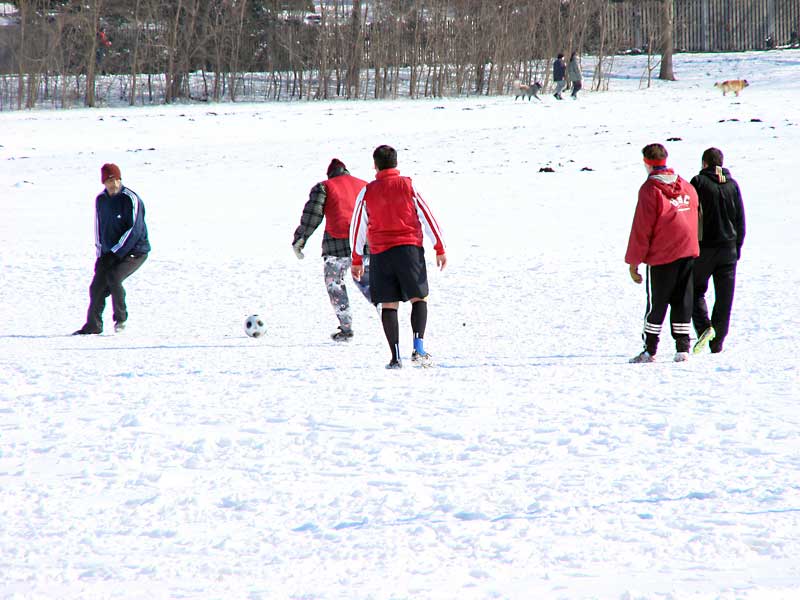
The wrong kind of snow/Die falsche Sorte Schnee

I first encountered ‘the wrong sort of snow’ in Kate Fox’s Watching the English. I’m not sure that she’s right that once upon a time a train announcement referred to ‘the wrong kind of leaves’ on the track being responsible for the train delay. Her context is ‘The Moan Exception’ – one of the few occasions when British people on a train acknowledge each other’s existence:

if the loudspeaker announcement blames snow for the delay, someone will invariably say: ‘The wrong sort of snow, I suppose?’ I was once waiting for a train at my local station in Oxford when the loudspeaker announced a delay due to ‘a cow on the line outside Banbury’: three people on the platform simultaneously piped up: ‘The wrong sort of cow!’

Wikipedia has a more convincing story of the origin of ‘the wrong type of snow‘:

The wrong type of snow is a phrase coined by the British media in 1991 after severe weather caused disruption to many of British Rail’s services. People who did not realise that there are different kinds of snow saw the reference as nonsensical; in the United Kingdom, the phrase became a byword for euphemistic and lame excuses.

There is even a multilingual list on the topic, done by Salford Translations Ltd. into Spanish, Italian, French, Dutch and Polish.

And there are even German references on the Web:

Die offiziellen Erklärungen für die Verspätungen und Ausfälle sorgen auf der Insel immer wieder für Heiterkeit: Mal sind es „Blätter auf den Schienen“ (im Herbst), mal ist es „die falsche Sorte Schnee“ (im Winter), im Rest des Jahres sind es „Weichenprobleme“ oder „fehlende Lokführer“.

LATER NOTE: kalebeul has taken up the topic in a more erudite fashion, as usual.