Repetitor 2

More about Repetitor on disLEXia (why is it called disLEXia? I thought it was a reference to law).
Is he the Paul Schneider who died in 1986 and is buried in the Poppelsdorfer Friedhof? Of course, there are other people called Repetitor, but apparently they are usually called Korrepetitor, in English coach (again) or repetiteur, who play the piano and help singers learn their parts.
Frau Klamser’s website is vera nicely written.

Repetitor 2

More about Repetitor on disLEXia (why is it called disLEXia? I thought it was a reference to law).
Is he the Paul Schneider who died in 1986 and is buried in the Poppelsdorfer Friedhof? Of course, there are other people called Repetitor, but apparently they are usually called Korrepetitor, in English coach (again) or repetiteur, who play the piano and help singers learn their parts.
Frau Klamser’s website is vera nicely written.

Faces from the past

Reading Udo’s tale yesterday, I remembered that one of my fellow articled clerks (trainee solicitors) in London later spent time in prison in connection with some financial schemes, probably with clients’ money. It would have been amusing to visit him, but I didn’t hear about it till later.
Another one, Simon Zolan (a Czech name), apparently later worked for a commercial law firm with Spanish connections and is now running a flamenco school in Seville or Jerez (well, somewhere in Andalusia). He has red hair so his stage name is Simón el Rubio. The Internet is a great help in tracking these things down.

And I suspect that this David Fletcher is the right one, as he had spent a year in Finland before qualifying as a barrister and solicitor. (But the photograph must be the other man):

‘Mr David Fletcher, solicitor, who has lectured to Scandinavian audiences on these topics on numerous occasions. He combines legal qualifications and experience (he has also qualified as a barrister) with linguistic expertise. He specialises in Company/Commercial and UK and EU Competition Law. He gives contract-drafting courses in a number of different countries including Sweden, Denmark, Germany and Finland.’

I think some of the articled clerks are working as solicitors, but I’d better not out them.
I am also grateful to Friends Reunited in the UK, which found contacts with a number of people I was at school with. Since most of them had left the area and changed their names, there was no other way I could have done this. You can read the site free of charge, but to post it costs £5 per year for expenses.

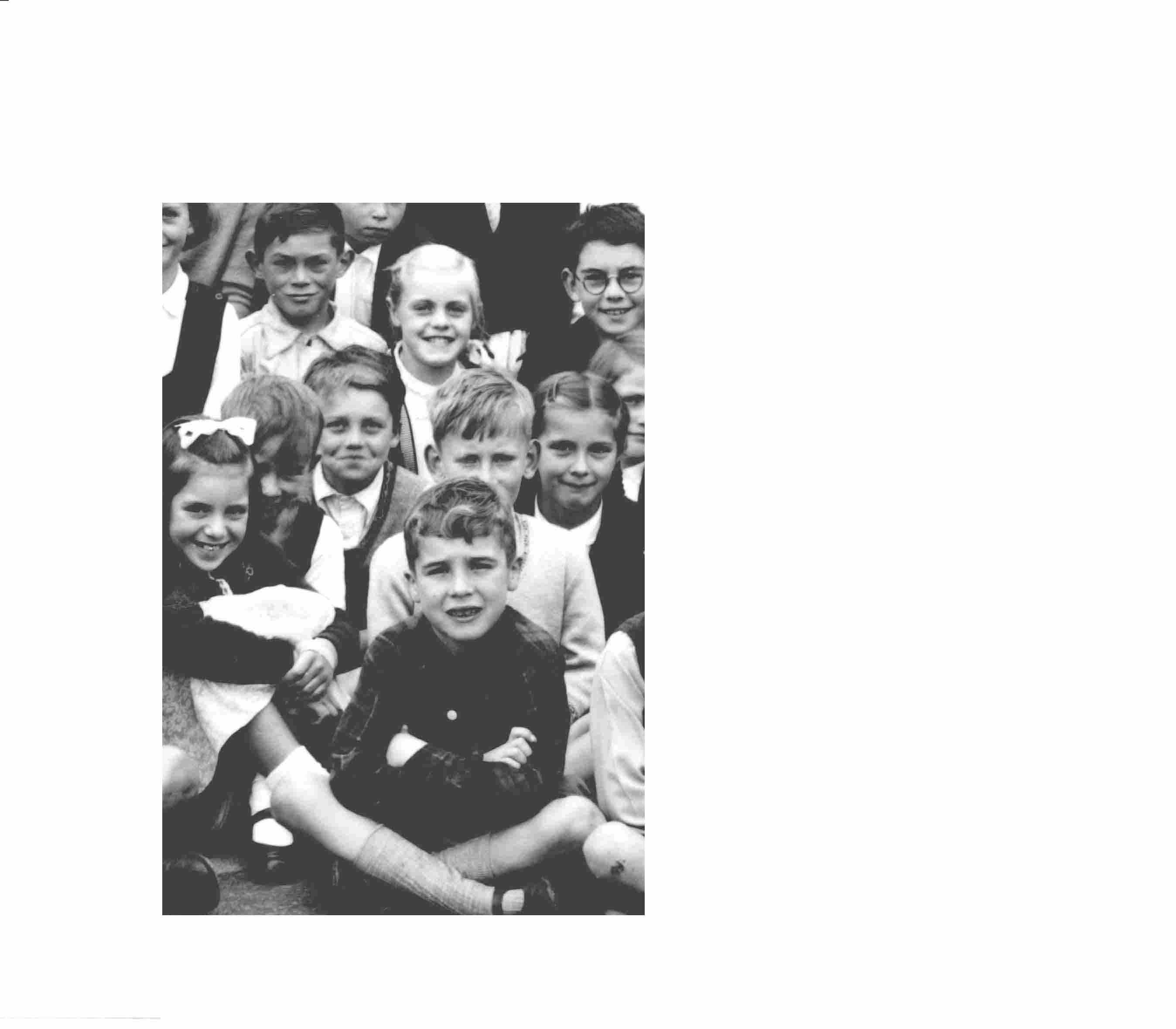
One thing I have discovered is that if you scan old roll photos from school, bit by bit, enlarging them in the process of scanning, they are much easier to look at on screen than on paper. Here are some of the pupils of Squirrels Heath Junior School in Romford in 1956.

squheath56.jpg

Faces from the past

Reading Udo’s tale yesterday, I remembered that one of my fellow articled clerks (trainee solicitors) in London later spent time in prison in connection with some financial schemes, probably with clients’ money. It would have been amusing to visit him, but I didn’t hear about it till later.
Another one, Simon Zolan (a Czech name), apparently later worked for a commercial law firm with Spanish connections and is now running a flamenco school in Seville or Jerez (well, somewhere in Andalusia). He has red hair so his stage name is Simón el Rubio. The Internet is a great help in tracking these things down.

And I suspect that this David Fletcher is the right one, as he had spent a year in Finland before qualifying as a barrister and solicitor. (But the photograph must be the other man):

‘Mr David Fletcher, solicitor, who has lectured to Scandinavian audiences on these topics on numerous occasions. He combines legal qualifications and experience (he has also qualified as a barrister) with linguistic expertise. He specialises in Company/Commercial and UK and EU Competition Law. He gives contract-drafting courses in a number of different countries including Sweden, Denmark, Germany and Finland.’

I think some of the articled clerks are working as solicitors, but I’d better not out them.
I am also grateful to Friends Reunited in the UK, which found contacts with a number of people I was at school with. Since most of them had left the area and changed their names, there was no other way I could have done this. You can read the site free of charge, but to post it costs £5 per year for expenses.

One thing I have discovered is that if you scan old roll photos from school, bit by bit, enlarging them in the process of scanning, they are much easier to look at on screen than on paper. Here are some of the pupils of Squirrels Heath Junior School in Romford in 1956.

squheath56.jpg

Repetitor

The word ‘Repetitor’ is mentioned in the Udo extract I just quoted. I translated it as ‘coach’. It is sometimes rendered ‘crammer’, but that may be too specifically British and too harsh. Many German law students go to these institutions to brush up their knowledge before the final exams, and in some cases it is more than brushing up, apparently. I’ve heard that lectures tend to concentrate on what the professor in charge wants to talk about, rather than to prepare students for the exam, and in any case quite a few semesters may pass between the attendance of the first important classes on civil law, criminal law and administrative law and the exam itself. So some say you have to go to the Repetitor to pass.

I found this translation in Romain (Romain/Byrd/Thielecke, Wörterbuch der Rechts- und Wirtschaftssprache, ISBN for German 3 406 48068 3 (I need some permanent links for books – this is the second time I’ve quoted this, but there is nothing in Dietl): ‘Repetitor m/-in f coach, tutor, semi-qualified person who coaches (law) students for state (bar) exam.’
I love the ‘semi-qualified’. Sure enough, the old (pre-2002) edition has ‘qualified’.

Von Beseler-Jacobs-Wüstefeld has ‘tutor, coach’ and for Repetitorium ‘repetition/refresher course’. A good source for some of this terminology is Simon and Funk-Baker, Einführung in die deutsche Rechtssprache, ISBN 3 406 44558 6 (in Germany; but there is a second edition out – maybe they have improved the German-English glossary, which is not very reliable in my edition). I quote:
‘Repetitorien sind private Einrichtungen, in denen der Prüfungsstoff in komprimierter Form dargeboten wird. Die Wissensvermittlung erfolgt nicht systematisch, sondern gezielt im Hinblick auf die Erfordernisse der Staatsprüfung. Auf Zusammenhänge wird kein Wert gelegt. Repetitoren sind eine “typisch deutsche” Einrichtung. Sie weisen sicher auf Defizite der Universitätsbildung hin, zeigen aber auch das mangelnde Interesse vieler Studierender an einem soliden Erwerb der Grundlagenkenntnisse.’
This is nice. When I get down to notaries, which needs more time than I have today, I want to say that however much information is on the Internet, there is often a lack of the comparative element that enables us to put someone else’s legal system in context. Since Simon and Funk-Baker are writing for non-Germans, they do give this information: what here is different from what happens elsewhere.
One well-known Repetitor is Alpmann und Schmidt, some of whose materials can be downloaded free of charge. They sell scripts (including two on English law, Introduction to English Civil Law I and II, but a bit Denglishy – a shame because the layout is attractive and the content good) and a monthly journal. There is an Internet Repetitorium called eJura too. Hemmer is another Repetitor.

Repetitor

The word ‘Repetitor’ is mentioned in the Udo extract I just quoted. I translated it as ‘coach’. It is sometimes rendered ‘crammer’, but that may be too specifically British and too harsh. Many German law students go to these institutions to brush up their knowledge before the final exams, and in some cases it is more than brushing up, apparently. I’ve heard that lectures tend to concentrate on what the professor in charge wants to talk about, rather than to prepare students for the exam, and in any case quite a few semesters may pass between the attendance of the first important classes on civil law, criminal law and administrative law and the exam itself. So some say you have to go to the Repetitor to pass.

I found this translation in Romain (Romain/Byrd/Thielecke, Wörterbuch der Rechts- und Wirtschaftssprache, ISBN for German 3 406 48068 3 (I need some permanent links for books – this is the second time I’ve quoted this, but there is nothing in Dietl): ‘Repetitor m/-in f coach, tutor, semi-qualified person who coaches (law) students for state (bar) exam.’
I love the ‘semi-qualified’. Sure enough, the old (pre-2002) edition has ‘qualified’.

Von Beseler-Jacobs-Wüstefeld has ‘tutor, coach’ and for Repetitorium ‘repetition/refresher course’. A good source for some of this terminology is Simon and Funk-Baker, Einführung in die deutsche Rechtssprache, ISBN 3 406 44558 6 (in Germany; but there is a second edition out – maybe they have improved the German-English glossary, which is not very reliable in my edition). I quote:
‘Repetitorien sind private Einrichtungen, in denen der Prüfungsstoff in komprimierter Form dargeboten wird. Die Wissensvermittlung erfolgt nicht systematisch, sondern gezielt im Hinblick auf die Erfordernisse der Staatsprüfung. Auf Zusammenhänge wird kein Wert gelegt. Repetitoren sind eine “typisch deutsche” Einrichtung. Sie weisen sicher auf Defizite der Universitätsbildung hin, zeigen aber auch das mangelnde Interesse vieler Studierender an einem soliden Erwerb der Grundlagenkenntnisse.’
This is nice. When I get down to notaries, which needs more time than I have today, I want to say that however much information is on the Internet, there is often a lack of the comparative element that enables us to put someone else’s legal system in context. Since Simon and Funk-Baker are writing for non-Germans, they do give this information: what here is different from what happens elsewhere.
One well-known Repetitor is Alpmann und Schmidt, some of whose materials can be downloaded free of charge. They sell scripts (including two on English law, Introduction to English Civil Law I and II, but a bit Denglishy – a shame because the layout is attractive and the content good) and a monthly journal. There is an Internet Repetitorium called eJura too. Hemmer is another Repetitor.