Translator’s diaries/Übersetzertagebücher

There was a thread on Translatorscafé yesterday started by someone looking for a freelance translator’s diary. Transblawg was mentioned, as were a number of others. There’s a nice photograph of Steve Maas of On-Time Updates there, too.

If anyone’s interested in translators’ weblogs, I have a set of links in the right-hand column. There are a couple of other translators’ weblogs out there too. Some are language/linguistics, some translation. I don’t know that any is exactly a diary. I think of a weblog as a log of what a person found on the Web, but Transblawg is not exactly that – more a log of what I was thinking about together with a few pictures and comments from day-to-day life.
But some of the translators’ weblogs are more diary-like.

A web search revealed an attempt at another translators’ site to gather diaries, but only one day from one diary had so far been offered.

Comment spam on MT

Does anyone know more than I do – this is very likely – about banning comment spam? I have a poster, not automatic, who always uses the same Yahoo address, but advertises different URLs and obviously has different IP addresses every time. I know I could get this person banned from Yahoo under that address, but it seems pointless, since they could get another one with no problem. At a very cursory glance, I see no way of banning a specific email address.

(LATER NOTE: I’ve got MT Blacklist installed and it’s excellent, but as far as I can see it doesn’t block specific email addresses – but RL’s comment suggests it does. What am I overlooking?)

I’ve been thinking of leaving Movable Type for a long time, and the latest wave of departures encourages me that there are alternatives. It’s not the fee structure that worries me, but the fact that very few providers in Germany can run MT, and I don’t want to get my own server. Before I moved to another provider, my posting brought the server down and I was banned for a day. It would be nice to be on a system that doesn’t do that, if there is one.

German officialese/Amtsdeutsch

Udo recently posted a lovely piece of German correspondence:

Sehr geehrte Damen und Herren!
In der vorstehenden Sache erhalten Sie unter Bezugnahme auf Ihr Schreiben vom 2. April 2004 anliegend eine Ablichtung der in dieser Sache ergangenen Schlusskostenrechnung zur gefl. Kenntnisnahme übersandt.
Mit vorzüglicher Hochachtung
W. Justizamtsinspektor

(Dear Sir or Madam,
With reference to your letter of 2 April 2004 in the above matter, please find attached a photocopy of the final bill of costs in this matter for your esteemed attention.
Your humble servant
W. Justizamtsinspektor)

I occasionally have to translate this sort of thing. The biggest problem is understanding it. The comments are fun too. The entry is headed gepflegt, but I don’t think zur gefl. Kenntnisnahme means gepflegt. I thought it was geflissentlich, but some commenters think it is gefällig (in one case this is based on the strange claim that there is a P in geflissentlich). Nor do I think Udo thinks it means gepflegt – his title refers to a refined or cultured way of expressing oneself, and seems to be somewhat ironic. Some commenters didn’t even know the word Ablichtung for copy – it’s more common than they think!

Google doesn’t help much. The very large Duden großes Wörterbuch der dt. Sprache has often helped me with Amtsdeutsch. On geflissentlich it has

(Amtsdt. veraltet) freundlich, gefällig (bes. in der Fügung): zur gefälligen Kenntnisnahme

For gefällig it mentions the abbreviation gefl., though.

I see I’m repeating myself so refer to an earlier entry on Juristendeutsch and to an Amtsdeutsch site in Austria. A lot of it consists just of legal terms, but here for example:

hieramts
Der Begriff “hieramts” ist gleichbedeutend mit beim/im Amt.

The same site also has a copy of Thaddäus Troll’s Rotkäppchen auf Amtsdeutsch.

Online information on law in Norway, Denmark and Sweden

LRRX.Com’s May 24th page includes updated online legal information for Norway, Denmark and Sweden.

LLRX has a huge amount of information about law all over the world online, even though it is not usually updated now (see links at left).

The latest offers include an article on trends in blog searching and a review of the PalmOne Zire 7.2 PDA, with links to Palm resources for lawyers that are worth pursuing.

One blog searching site mentioned is Waypath. Among other things you can do a text search of blogs. It didn’t react to kronprinsfred or kronprinsfleep, so I don’t think it has Desbladet in there. Nor did it have my Fürth blog. It was very informative about the Blogwalk that is happening near here tomorrow and I at last understood it is a day-long meeting for academics from all over the place, by invitation. Not that I would have had time, but if there were famous bloggers walking about Nuremberg (the name Blogwalk seemed to suggest that), I would have felt it my duty to photograph them.

Pronouncing the alphabet

Derek Thornton (former blog here) reports in the FLEFO forum of CompuServe (click on Nachrichten, then English/ESL/EFL):

As the French Ambassador to the United Nations said in English today in New York on the subject of a prime minister for Iraq:
“We are not going to speculate on a Mr. ‘icks or a Mr. E. Greck.”

Comments and a brace of vole

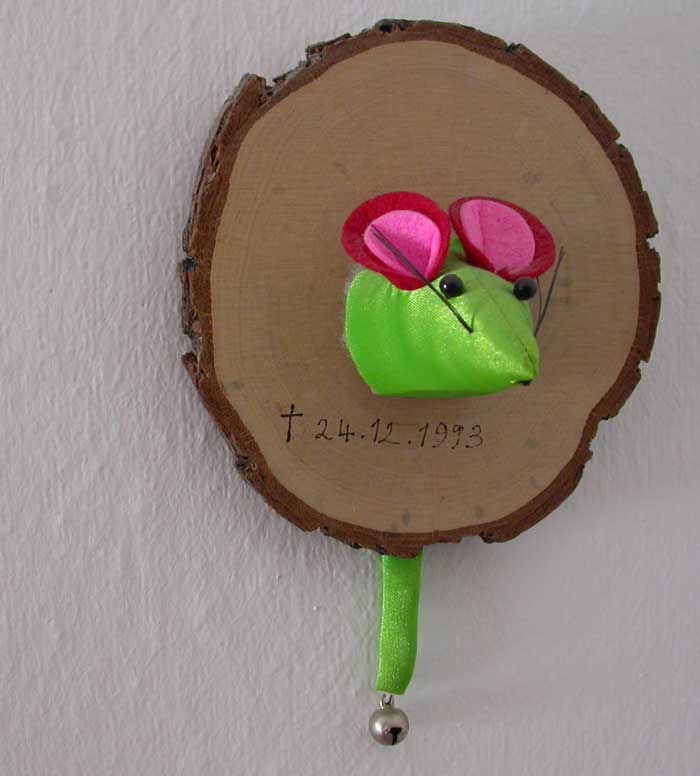
mousehtw.jpg

On language log, Sally Thomason asks what pattern governs the following list of mammals found on a farm in north-eastern Oregon:

bq. Mammal sightings: black bear, bobcat, cougar, white-tailed deer, mule deer, elk, chipmunk, ground squirrel, flying squirrel, snowshoe hare, mice, and vole

As she says, animals you hunt often take no plural -S, e.g. a brace of duck. But you wouldn’t talk about shooting a brace of vole (Wühlmäuse), although I imagine they’re difficult to hit.

bq. What’s interesting is the zero-plural-for-game-animals usage in this list, except for those mice — which aren’t game animals, of course, but then, neither are voles and chipmunks. That is, as is typical in discussions of game animals, all the terms are treated as if they were structurally parallel to deer, with plural identical to singular. Surely those animal sightings are multiple, not a single member of each species (well, except maybe for rarely-seen animals like cougars).

I think the idea is: if I’ve seen one, that’s sufficient. The lister is not interested in how many chipmunks he saw, just that he saw a chipmunk (is it the generic ‘the chipmunk’) at all. Still, I would be happier with ‘chipmunks’ and ‘voles’, but of course as it’s not a text about hunting, the bears should be plural too. Perhaps the writer was avoiding -s plurals for some reason or other and then the mice did not seem to break the pattern either, so voles and chipmunks remained singular too. Was it not Tom, of Tom and Jerry, who said, ‘I hate those meeses to pieces’? (In this connection, I have been translating something about Azerbaijan and see that you can shoot a lot of ducks there).

Anyway, I can’t post this as a comment on language log, because it allows no comments. An apologia for this has just been posted by Geoffrey Pullum. Actually, I would have thought it safe to allow comments provided you close posting of comments after a certain date. I get scarcely any comments since I closed posting on old posts. I still have a good six weeks open (this is a guess). There is one persistent poster, presumably automatic, who is constantly turned away by MT Blacklist. But that I could delete myself on the recent posts if I had to.