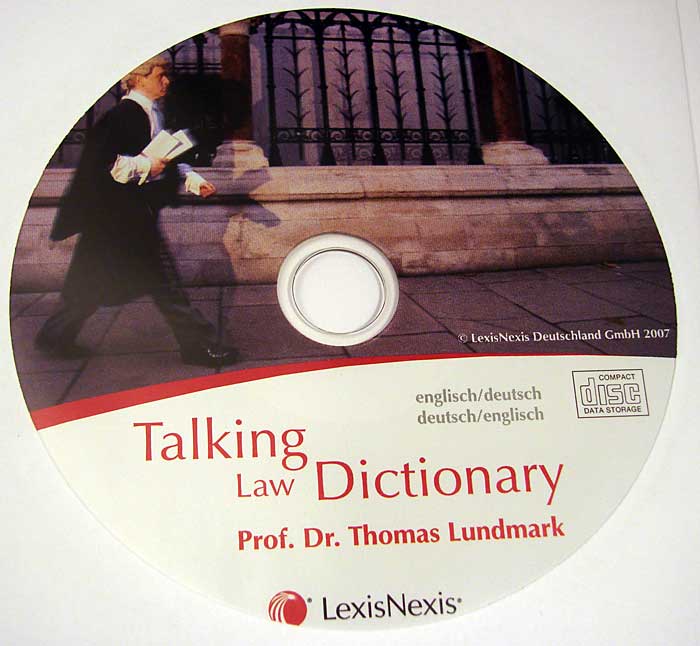
Punitive damages / Strafschadensersatz

Professor Volker Behr wrote a paper in 2003 in which he said that the USA and Germany are moving closer together on the issue of punitive damages. The USA has always recognized both a compensatory and a punitive element in damages, but they are now more frequently capped and not all of the punitive element goes to the victim (one does wonder why a victim should profit from the fact that the tortfeasor is particularly malicious or profit-making). Germany recognized both pillars in the 19th century (Prussia was pro-punitive damages and Bavaria against – who would have guessed?!), but since the Civil Code was drafted it has loudly proclaimed that a punitive element is unconstitutional (see sections 249-255 of the Civil Code, which refer only to compensation).

This has long been a problem for Americans who want their judgments enforced in Germany – German authorities would not enforce punitive damages orders.

The German attitude towards punitive damages is somewhat schizophrenic. On the one hand, since the enactment of the German Civil Code, the general German attitude toward punitive damages is that damages have to be purely compensatory.99 The German law of damages is a monistic system. What presumably does not fit into this scheme will be labeled as exceptions. On the other hand, and likewise since the beginning of the German Civil Code, there is a long and steady line of court decisions that do not fit into this scheme.101 German courts frequently awarded damages that could not seriously be held to be purely compensatory because they tended to include punitive elements. These decisions may be labeled as exceptions, as the German legislature labeled them when drafting the Code.102 And eventually they were exceptions in former times.

The European Court of Justice has also held that punitive damages may be awarded in cases of sex discrimination (§ 611a of the Civil Code), and the calculation of damages in intellectual property cases also has a non-compensatory element.

(Summarized by John Y. Gotanda in Charting Developments Concerning Punitive Damages: Is the Tide Changing? – thanks to German American Law Journal weblog)

Nasa accepts German bread / Deutsches Weltraumbrot

‘Space bread’ produced by a baker in Morgenröthe-Rautenkranz in Saxony has been recognized by NASA as official astronaut food.

Ursprünglich entwickelte Jörg Schürer dieses Brot in der Dose als zusätzliche Attraktion für die neue Deutsche Raumfahrtausstellung in Morgenröthe-Rautenkranz. Der dertsche Rekord-Raumflieger Thomas Reiter hatte den Bäcker auf die Idee gebracht, sein Produkt der NASA vorzustellen und schmackhaft zu machen. Bei einem Besuch klagte dieser über die Verpflegung an Bord. Dieser stellte letztendlich auch den Kontakt nach Houston her, wo man das Brot für weltraumtauglich erklärte.

I should think this bread is well suited for weightlessness.

The town (900 inhabitants) is the birthplace of Siegmund Jähn, Germany’s first cosmonaut. At the space exhibition there, in the online shop, you can buy Rauchermännchen (wooden figures smoking incense) in the form of astronauts and cosmonauts.

Professor Clark Byse, deceased

I have often envied Mrs. Tilton her detailed knowledge of spiders, but I had no idea she had experienced the Socratic method.

Byse was a slightly-built man who never raised his voice, yet students trembled in fear of him. Heaven help the unprepared student, because Byse wasn’t about to. In one famous instance, he called upon a hapless student to state the facts of a case.

“Umm, I’m sorry,” confessed the suddenly ashen-faced unfortunate, “I have to admit I haven’t read it.”

“That’s OK,” said Byse with terrifying calmness, opening his pocket watch and putting it on the podium in front of him. “Read it now. We have all the time in the world.”

And so the doomed youth sat there for ten or fifteen interminable minutes, reading the appellate opinion with the weight of his classmates’ 400 eyes upon him, damning the day he ever crawled forth from his mother’s womb. …

And yet there was really no need for fear. To profit from Byse’s lectures one really had to do only two things. First: read, and think about, the materials. But that goes without saying for any course, I’d say. Second: stop worrying about looking the fool. Under the Socratic method, you are never right (and if on occasion you are, the lecturer will change the facts so that you’re suddenly wrong). Get past those two humps, and Byse would help you to an understanding of how contracts work, and why. I can’t imagine how many thousands of students he helped over the years. We shall not see his like again.

Obituary here.

Draft NRW interpreters and translators Act / NRW Entwurf Dolmetscher- und Übersetzergesetz

Gesetzesentwurf für Nordrhein-Westfalen

A Problem
Das Bundesverwaltungsgericht hat mit Urteil vom 16.01.2007 (6 C 15.06) die Bestimmungen über die allgemeine Beeidigung von Dolmetschern und Ermächtigung von Übersetzern für die Gerichte und Notariate des Landes Rheinland-Pfalz als Berufsausübungsregelung im Sinne des Artikel 12 Abs. 1 Satz 2 GG bewertet, die einer normativen Regelung durch den Gesetzgeber bedarf. Entsprechendes gilt für Nordrhein-Westfalen.

The German Länder / states that haven’t yet passed a statute governing certified interpreters and translators are now doing so. This is a draft of the NRW one. It studiously avoids the term beglaubigt, and it prescribes wording to be placed at the end of the translation. I see no reference to a stamp or seal.

(Announced on the pt list at yahoogroups.com by Marisa Manzin)