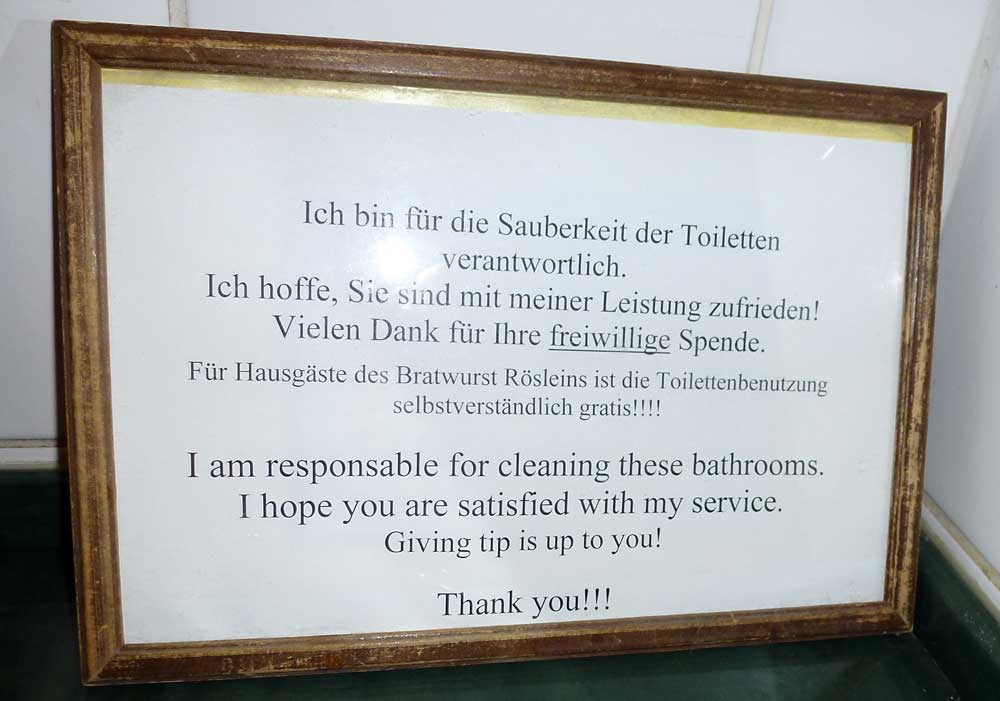
Bratwurst Röslein discrimination/Englische Übersetzung lückenhaft

I was a bit surprised after lunch at Bratwurst Röslein to find a woman collecting tips for the lavatory. But at least I should have read the German, which says that bona fide restaurant customers don’t have to pay. That bit hasn’t been translated into English.

I realize they must get a lot of people dropping in just for the lavatory, but how about a notice to the effect that we’re happy to let you use our facilities even if you don’t eat the sausages if you pay 50 cents?

EU translations 3/EU-Übersetzungen 3

I see that Richard Schneider at uepo.de calls the Saarbrücker Zeitung report a Falschmeldung – an incorrect report. He also enjoys himself making a dig at ‘blogs’, presumably mine.

Falschmeldungen haben ein langes Leben

Erfahrungsgemäß lassen sich von den Medien verbreitete verzerrte Darstellungen und Fehlinterpretationen nur sehr schwer wieder aus der Welt schaffen. Man wird sicherlich auch in zehn Jahren noch Artikel lesen können, in denen fälschlich behauptet wird, der Deutsche Bundestag habe 2012 die schlechte Qualität der EU-Übersetzungen bemängelt.

Deshalb sollte man zumindest auf den Websites der Übersetzungsbranche darauf achten, den Sachverhalt korrekt darzustellen. So kann jeder, der künftig zu dem Thema recherchiert, auch die wahrheitsgemäße Darstellung finden.

Just to clarify this point: it was discussed on a translators’ mailing list yesterday and that is why I wrote this at the end of my second post:

On another point: there are two grounds of complaint by the Bundestag: one, where documents are not available in German at all – here’s a German article on that from 2008 – and the other, where they are badly translated. It’s the latter we are discussing.

Here’s the original Bundestag announcement.

Someone pointed out that this could be taken to mean that the Bundestag was complaining about the lack of German versions – which is a serious problem, but a different problem. However, one colleague contacted the journalists on the Saarbrücker Zeitung and they confirmed that Bundestag members had complained about the quality of the translations.

LATER NOTE: This matter is apparently being discussed in the BDÜ translators group on Xing, and Richard Schneider is involved in that discussion, and has also been discussed on Facebook, I gather.

German equators/Deutsche Äquatoren

I’ve discussed things like the Weißwurst Equator before – see earlier entry, with diagrams.

Now Strange Maps has a new post on Germany’s Equators.

Scroll down for a map showing the Aldi equator, Weißbier/Weizenbier equator, Schaf(s)kopf equator, Guten Tag/Grüß Gott equator and two Weißwurst equators. I live in the Grüß Gott area, between the two Weißwurst equators. My feeling is that although I can buy Weißwurst everywhere here, it’s only south of the Danube that it is regarded as a big deal.

Badly translated EU documents 2/Schlecht übersetzte EU-Dokumente 2

A note about outsourcing – see also the comments to the last entry.

Here, under Closed calls for tender, the DG-T gives information of some past tenders. I’m looking at the PDF file for Translation — Legal and judicial documents of the EU for 2008 translations into English. They look like agencies on the whole, although Viesel Legal Translations in Trier are three members of the same family who do all their translations in-house. I haven’t checked further though.

At the top of that file you can see that the price range was from 14 to 55 EUR/page. A page means 1500 characters without spaces. I just checked a judgment I was translating, and in the English translation 1500 characters without spaces equalled 1808 with (in the German original 1723 – words are longer, especially in legal texts). That’s nearly 33 lines (55 characters including spaces) by normal German reckoning, so line prices ranged from 42 cents to 1.66 euros.

The question then arises to how much an agency’s translator gets, and how you price yourself – if you are at the 1.66 end, will you get offered no work? (I regard 1.66 as rather low for a demanding legal translation). A person might be happy to get 1.66 if regular work could be expected, but I don’t think that’s the case.

If I understand it right, the translation department creates a list ranking the translators who have been accepted. This is based on expected cost-effectiveness (price-performance ratio). But every translation returned is evaluated and the ranks change. For example, you might make a fairly low offer and be ranked at the top of the list, but if your translation is rated B+ rather than A (or whatever scale they use) you could slide down the list, and finish getting scarcely any work at all, especially if you ask for normal rather than low payment.

Here are Lists of contractors. This PDF shows all the translators and agencies used in 2011, how many contracts each was awarded and how much they earned during the year.

On another point: there are two grounds of complaint by the Bundestag: one, where documents are not available in German at all – here’s a German article on that from 2008 – and the other, where they are badly translated. It’s the latter we are discussing.

LATER NOTE:

I don’t work for the EU and never have (I had a short experience of the CJEU, but that was different at that time and is another story). Hence what I am writing here is based on what I’ve heard. I did once bid on a tender (hope I’m getting the vocabulary right), but I missed the posting date because I was waiting for some document or other.

I should have mentioned that in order to bid for a lot, you have to put a lot of paperwork together. If you are accepted and are found useful in the course of the year or two or whatever period the contract runs, this has no effect on you having to put all the paperwork together for the next bid. So you have this effort to make again and you can never be sure of the work in the long term (if you could be sure of it even in the short term).

It’s been written elsewhere that the lowest price wins out. That is not actually true, because there’s a ranking system, as I wrote above. I gather that the ranking system is weighted in favour of price, but it isn’t completely about price. Translators complain a lot about agencies which give work to the lowest bidder irrespective of quality and then try to get more experienced translators to correct that work. Clearly the EU ranking system is an attempt to improve on this price-only system, but I don’t know that it works very well.

It should also be noted that the range of prices from 14 to 55 euros mentioned above includes people or language combinations for low-wage countries, so one shouldn’t conclude that translators living in Germany get the 14 euro figure.

Bundestag returns badly translated EU documents/Bundestag schickt schlecht übersetzte EU-Dokumente zurück

The Local reports that dozens of badly translated EU documents were returned by the German Bundestag as incomprehensible.

According to a report in Tuesday’s Saarbrücker Zeitung newspaper, the Bundestag has had to send over a hundred important EU documents back in this legislative period alone, because its committee members could not work out what they were supposed to say.

Some EU documents are now seen as a “consultation obstacle” – and this at a time when parliamentarians across Europe are fighting to tackle Europe’s debt crisis.

The flawed translations have apparently slowed the work of the interior, finance, budgetary, economic, and defence committees in the German parliament. The paper also says that German versions of the documents are sometimes missing altogether.

Note also the comments.

Yet the translators working in EU offices at Brussels or Luxembourg are earning huge wage and enjoying tremendous benefits, compared to their peers. Shameful.

Nonsense, none of the incomprehensible stuff will have been produced by the translators working in EU offices. Most of the work is outsourced to translation agencies, who further outsource it to freelancers. The lowest tender gets the contract. I’d put this down to cost-cutting and the use of inscrupulous middlemen, nothing else.

Of course, a good opportunity for ill-informed ranting on EU translation costs:

Yay! Spend more of our tax money to re-translate badly translated documents.

“The EU institutions spent around €1 billion on translation and interpreting in 2007, representing around 1% of the EU budget or €2.50 per citizen. This figure would continue to rise by 5% annually.”

h**p://www.euractiv.com/culture/eu-translation-policy-stay/article-170516

Here is the lowdown on that from DG Translation:

2 – How much does DG Translation cost?

€300m a year (estimated) — or some €0.60 for every EU citizen.

Since 2004, the Commission has been able to handle vastly increased demand for translations as new countries have joined the EU — and continue its primary duty of providing legislation in all official languages — without increasing costs unduly.

In 2004–07, the number of official EU languages doubled from 11 to 23, but Commission translation costs increased by only 20%.

According to certain very rough estimates, the cost of all language services in all EU institutions amounts to less than 1% of the annual general budget of the EU. Divided by the population of the EU, this comes to around €2 per person per year.

Here is the original article in the Saarbrücker Zeitung.

Der Vorsitzende des Europaausschusses, Gunther Krichbaum, sagte der Zeitung, die EU-Kommission habe schon vor Jahren eine neue Übersetzungsstrategie versprochen. „Doch passiert ist bis heute leider gar nichts.“ FDP-Experte Stefan Ruppert beklagte: „Es werden immer mehr.“ Auf Antrag der Koalitionsfraktionen wird sich der Bundestag an diesem Donnerstag mit dem Problem beschäftigen. Nach dem Willen von Union und FDP soll die Bundesregierung auf bessere Übersetzungen pochen und dafür sorgen, dass genügend Mittel im EU-Haushalt bereitgestellt werden.

The Bundestag will be discussing the matter on Thursday.

Also in Die Welt (thanks, Dawid).

Football 2012/Fußball 2012

Not an exhaustive selection.

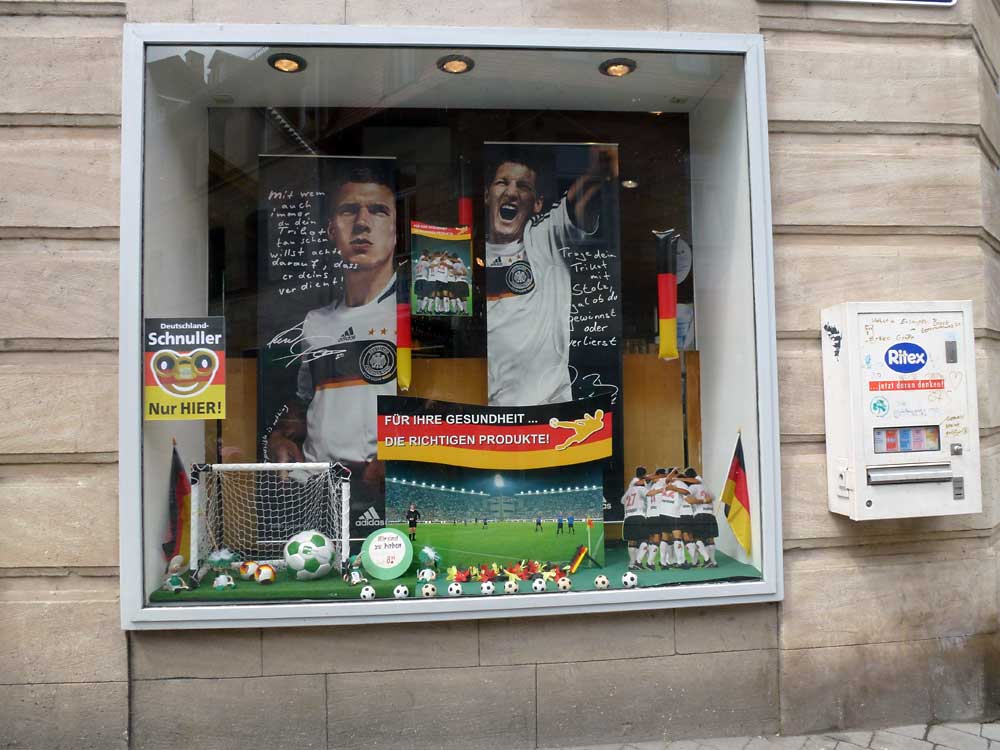
Apotheke:

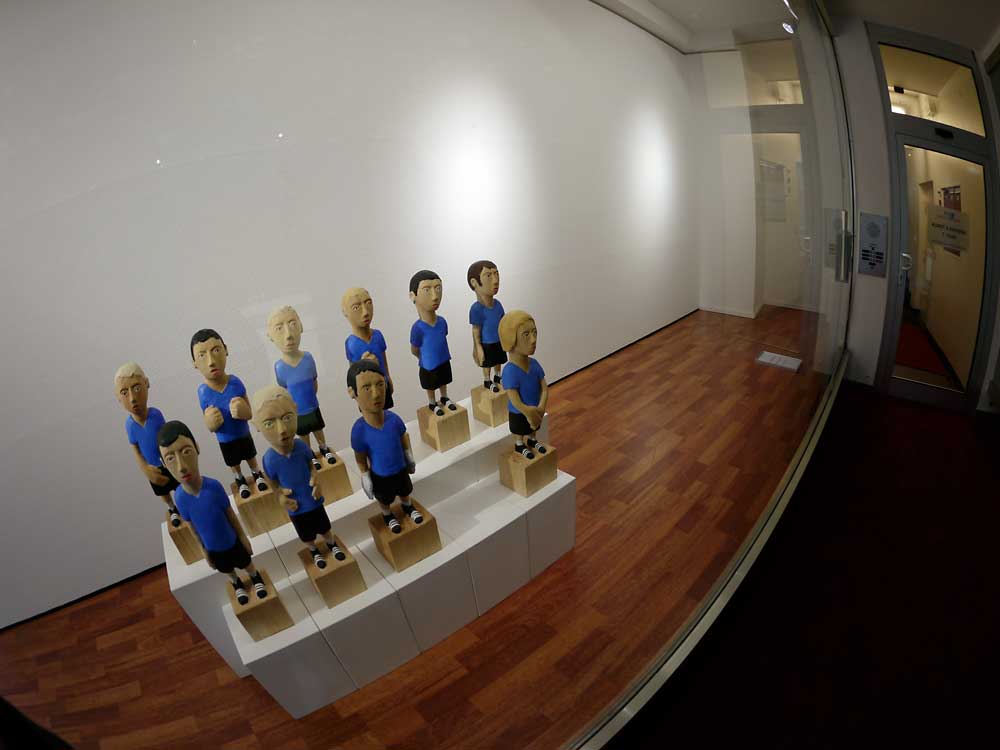
Bode Galerie & Edition (zehn Freund müsst Ihr sein?):

Cherry yogurt:

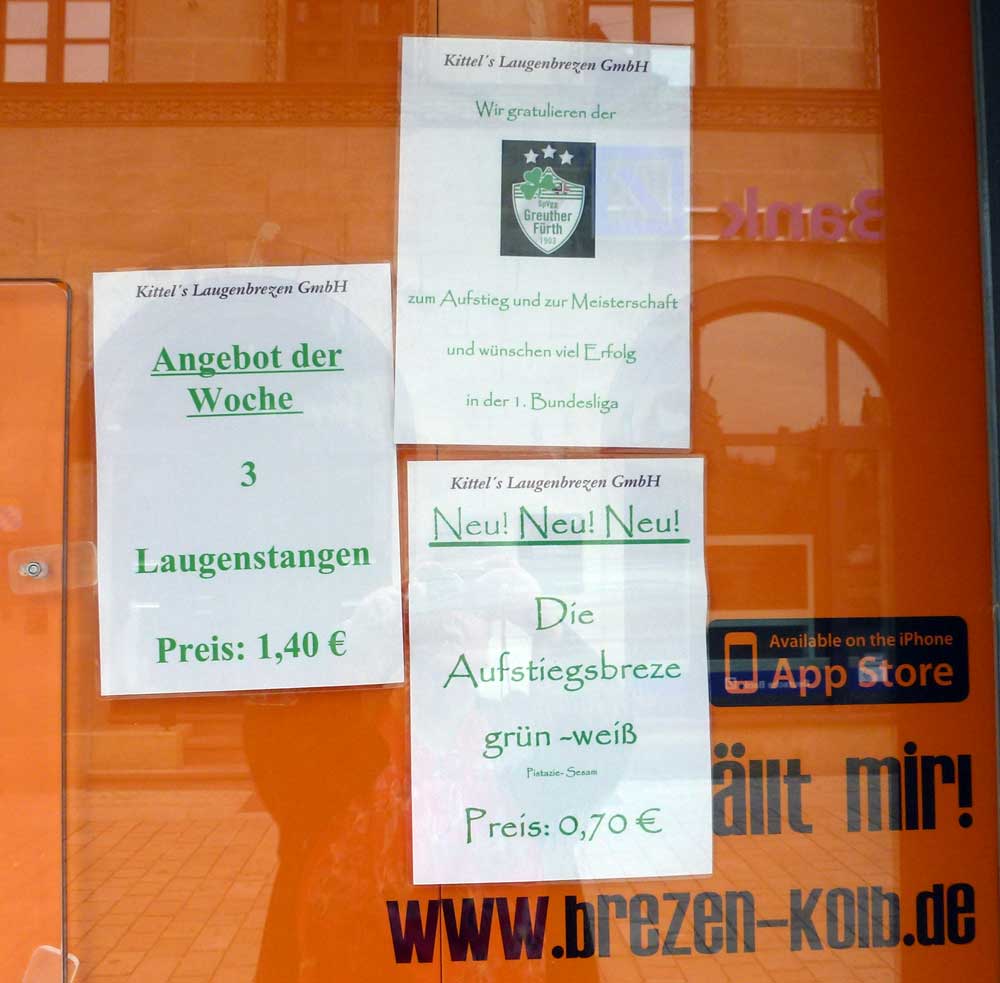
Green-and-white pretzel to celebrate Fürth going into the Bundesliga (probably filled with cream cheese and rolled in chopped chives):

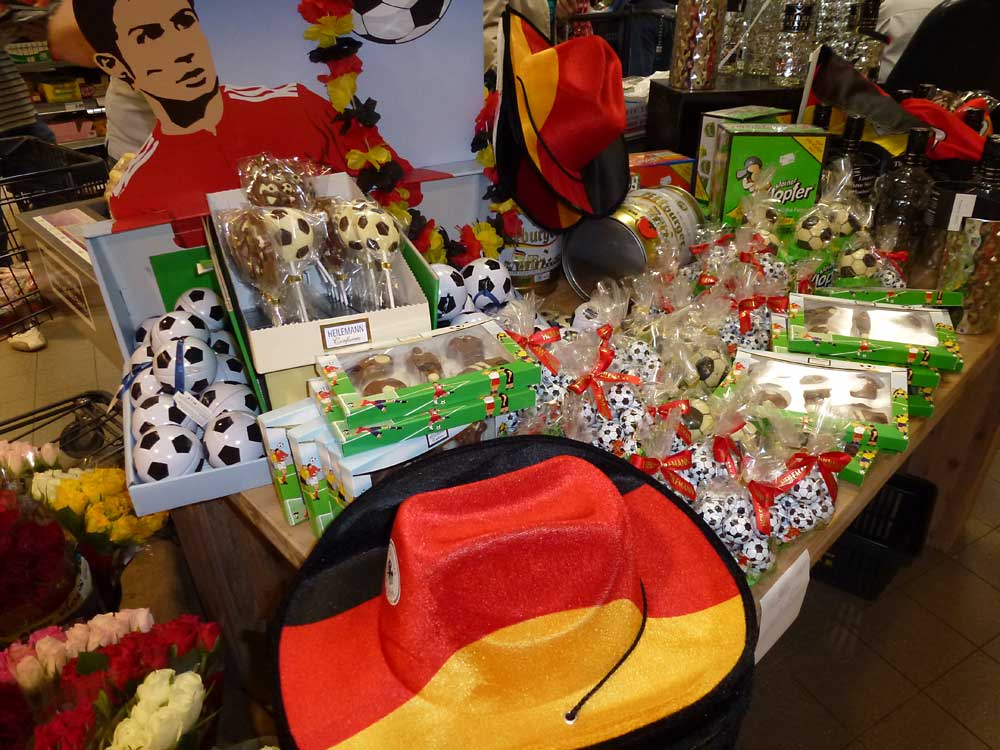
Supermarket:

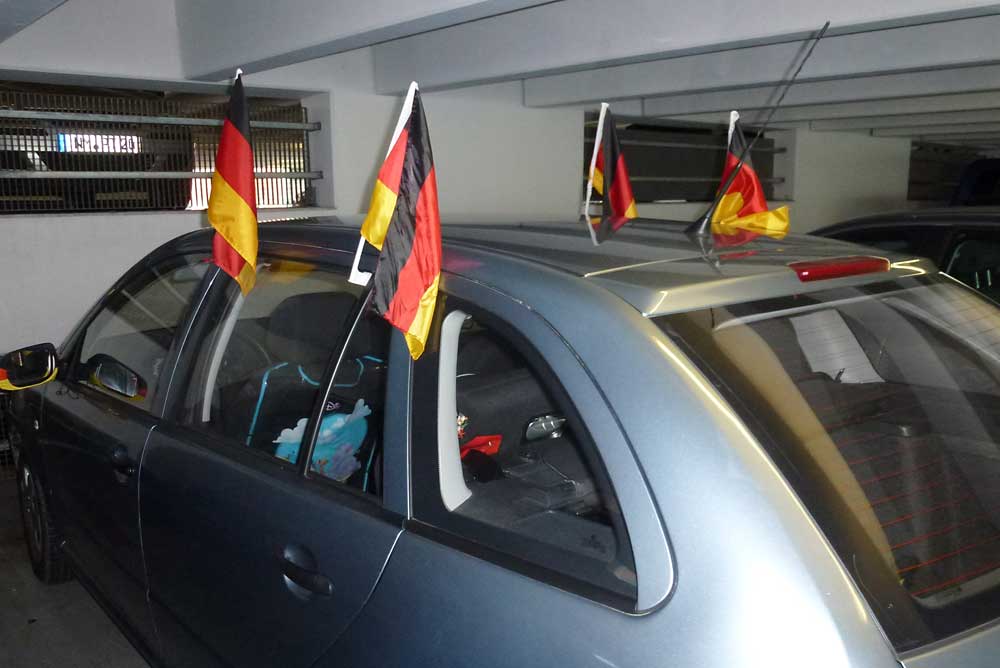
Car park:

On the underground:

At law blog, Udo Vetter shows a video with a football theme advertising the Deutscher Anwaltverein.