Germany: Memories of a Nation

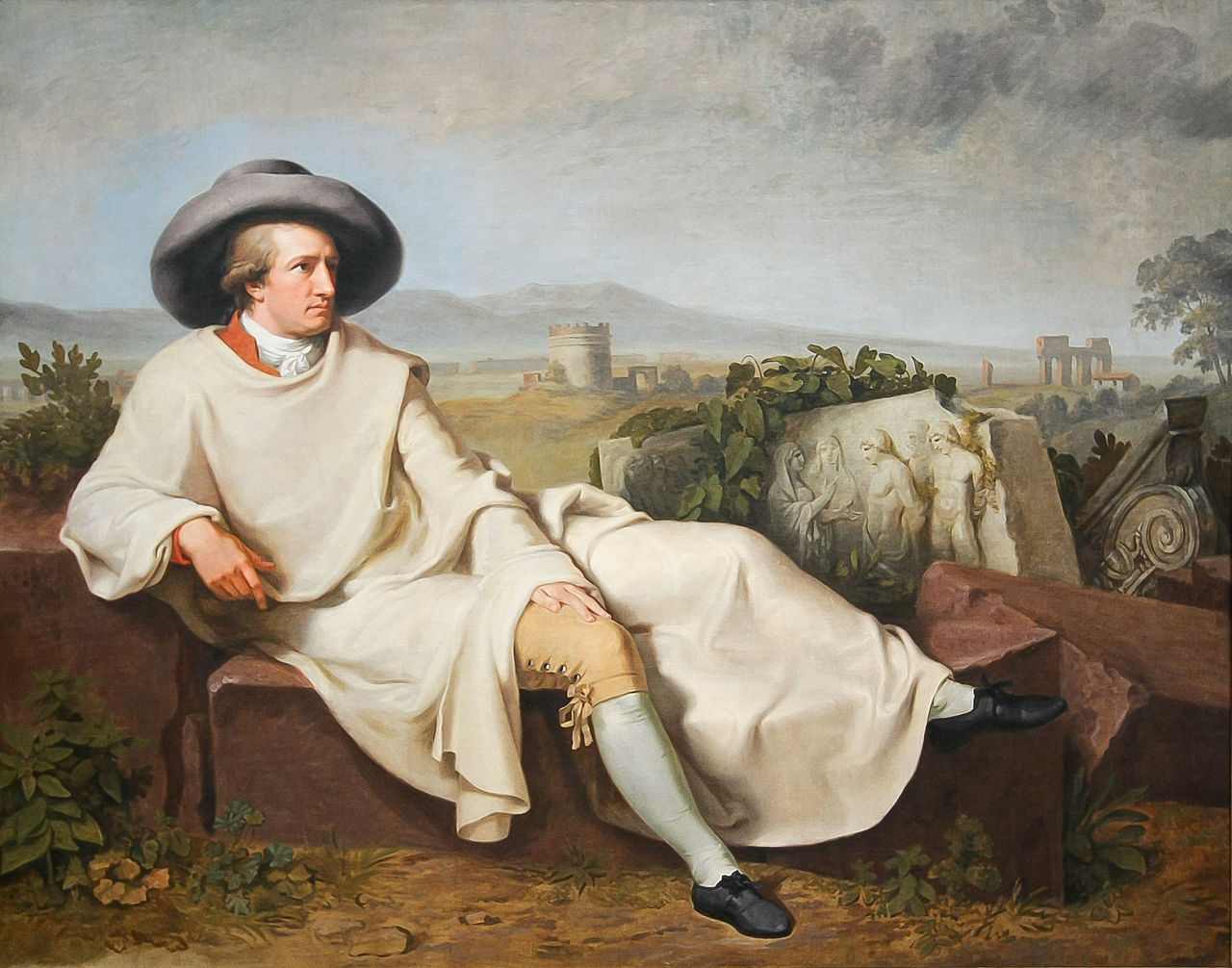
1280px-Johann_Heinrich_Wilhelm_Tischbein_007
(Goethe before liposuction)

I managed to see the British Museum exhibition, subtitled A History in 600 Objects, on Thursday. The accompanying radio series (I’ve only listened to one of the 15-minute episodes, now distracted by The Serial podcast) and book (has just appeared, also for Kindle) contain more detail.

The Telegraph two-star review I can understand.

MacGregor studied German at Oxford, has a lifelong passion for German history and culture, and a keen sense of their role in what makes Europe tick. These are important matters, more than worthy of greater attention, and MacGregor’s commitment shines through in the radio series, which clearly announces itself as a personal view. In the exhibition, however, this sense of identification coupled with MacGregor’s weighty professional role lends the show an oddly official air, as though it were being bankrolled by the Goethe Institute. While there’s no evidence of any such involvement parts of the show have the worthily dated air of expo exhibition stands.

The whole thing is idiosyncratic. It purports to relate to the reunified Germany which has only existed for 25 years, but it goes back hundreds of years and emphasizes the earlier larger Germany (Basel, Strasbourg, Kaliningrad; nice historical political maps) and there plenty of Luther, Holbein, Dürer, some nice Riemenschneider apostles too, in so far as a manageable exhibition with such a broad sweep can get anywhere. I didn’t so much feel there was too much text as that I didn’t feel I’d come to an exhibition with this title to read about Goethe’s Farbenlehre or the development of Meissen porcelain. I’m also not sure what ‘memories of a nation’ is supposed to mean.

It wasn’t necessary to book, and there were not too many problems of the present ubiquitous barrier of headphone wearers following the audio guide.

Some things were new to me or particularly struck me.

The model of Friedrichstrasse station created to train Stasi officials (picture in the book too). We used to cross there in 1967-1968, and a friend of mine was subjected to a body search and turned up on the East Berlin side with twenty minutes’ delay. I had no idea how it was constructed then, and looking at the model doesn’t help much now. Dr. Sabine Beneke of the Deutsches Historisches Museum is quoted (this is a building when another English friend and I were almost mown down in 1967 because we failed to see the goose-stepping soldiers patrolling in front of it):

‘I made the journey from West to East Berlin several times. … You can see clearly on the model that the station was constructed in a deliberately complex way. The spaces are divided up by very tall walls to give the effect of a labyrinth. There was no clear orientation. You can see the different train tracks were completely separated, so tracks which operated within the East German side were kept separate from those which ran through to the West German side or beyond. As you moved from the train to the exit, you kept having to change direction and change level. You went into small doors and then large spaces, then small spaces, and everyhwere in the model you can see the high windows in which observation agents or cameras were placed.’

I didn’t realize the lettering on the Buchenwald gate, which I’ve seen in situ (combines well with a trip to Weimar) was Bauhaus style.

Mutter Courage’s handcart, which I’d forgotten about – the Leiterwagen is perhaps typically German, and I used one to move house in the same road in 1984.

Barlach’s angel – I didn’t realize the original was melted down as entartete Kunst in the Third Reich.

I wasn’t aware that the only triumphant leader who marched through the Brandenburg Gate was Napoleon.

There is masses of material touched on in the exhibition: the Grimms, Caspar David Friedrich, Bach, Beethoven, Wagner, the tradition of crafts and trades – but all these things are more the material for a book. The book is huge and richly illustrated and worth getting hold of.

Daumen drücken

“Cross your fingers, or press your thumbs if you are a German, that we hear something from the lander again,” Valentina Lommatsch of the Rosetta mission control centre in Germany.

I haven’t been able to establish whether she is German by origin. The name Valentina is not common in Germany. The pressing of thumbs caused surprise in some quarters:

The Germans are weird in other ways. According to Inglorious Basterds if asked to hold up three fingers, they use thumb and next two fingers. Hollywood wouldn’t lie to us would they???

theGermanStandard is a blog by Kathrin, a teacher of German in London which explains this kind of thing. If crossing your fingers doesn’t help, try pressing your thumbs has a picture too. The gesture seems to go back to gladiator fights in ancient Rome.

As Johnson noted, crossing your fingers suggests you are hoping to avoid the worst, whereas Daumen drücken is about hoping for success.

I was excited to read the tweets from Philae Lander, in view of the fact that tweeting hadn’t been invented when it set off:

.@ESA_Rosetta I’m feeling a bit tired, did you get all my data? I might take a nap… #CometLanding

But maybe they are further evidence of alien activity on the comet:

According to an email published on the website UFOSightingsDaily.com – which does a regular trade in alien sightings – this mission is part of a European Space Agency and Nasa cover-up to disguise the comet’s true alien nature.

Legendary German bakers

It seems that the adjective legendary is applied to German bakers and pastry chefs. Actually, legendary pastry chef is a thing. Although even legendary translator gets a few ghits.

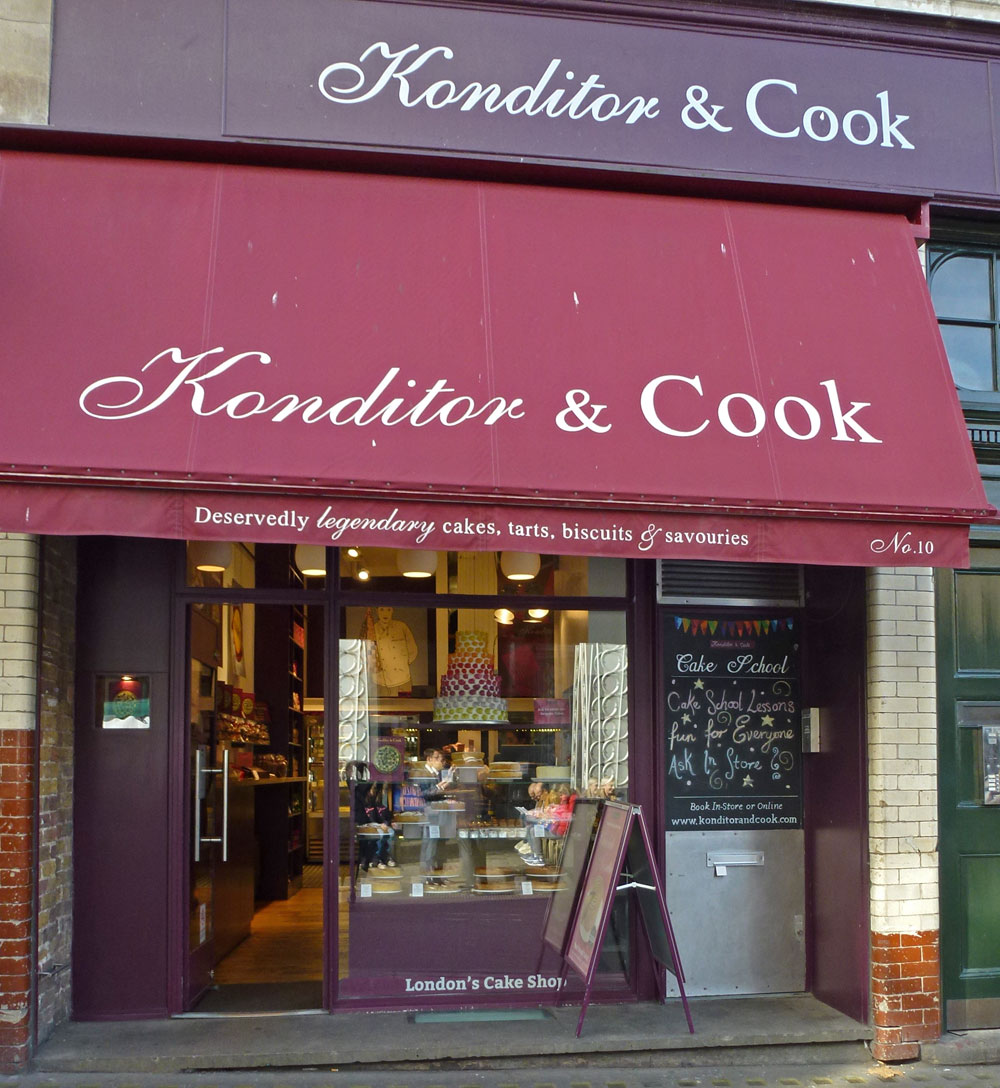
Konditor and Cook (thanks, Trevor!) have been around for a while and have a book.

kondcookw

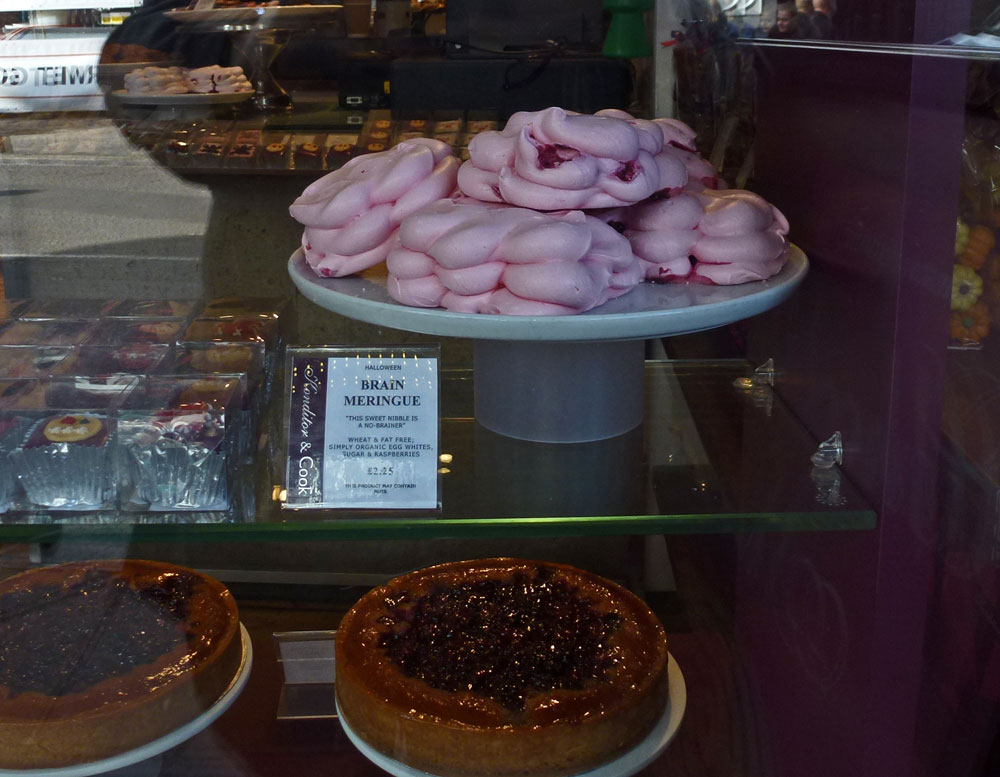
Here is a brain meringue which I didn’t try:

kond-brain-meringuew

The best-looking thing in the window was a home-made Victoria sponge. The Spectator writes:

Konditor and Cook (Ebury, £20, Spectator Bookshop, £18) is the book of an Anglo-German cake shop, which, given the excellence of German cakes, is oddly rare on the scene here. Gerhard Jenne is notable for his quirky decorations and humorous take on fondant fancies and you get a fair share of jolly stuff here, but there are also things like plum streusel in the German fashion. It’s all delicious, but I should warn you that some of the cake bases are quite dense, the cooking times aren’t always geared to domestic ovens and there’s a variation on a Victoria sponge (extra egg yolk, added crème fraiche) which comes squarely into the category of gilded lilies.

There’s another legendary German Konditormeister in Edinburgh, Falko Burkert. Stern borrows heavily from the Observer:

Jeden Monat kämpft er um die Zutaten für seine Kuchen. Er räumt den Supermarkt leer, sollte der ausnahmsweise mal Quark haben. Gehobelte Mandeln muss er aus Deutschland kommen lassen, Briten kennen nur gehackte und gemahlene Nüsse. Auch das echte Marzipan mit dem traditionellen Zweidrittelanteil Mandeln lässt er liefern. Die meisten britischen Varianten enthalten höchstens 30 Prozent. Er zahlt fast ein Drittel mehr für ungesalzene Butter (gewöhnliche Butter ist auf der Insel stets gesalzen) und muss aufpassen, dass er reines Mehl erhält und nicht solches mit Backpulver (“self raising flour” genannt).

Down here in London we pay the same for salted and unsalted butter, but perhaps it’s different when you’re bulk-buying. There’s plenty of marzipan with 30% almonds in Germany. In fact I seem to recall that 54% is the best I could get. It actually says here that Lübecker Marzipan by Niederegger has 70% Marzipanrohmasse, but then the Rohmasse already contains sugar, so that doesn’t mean 30% almonds, does it? And Falko should be capable of asking for plain flour rather than self-raising.

Joanne Blythman wrote:

For a 37-year-old, Falko is curiously old-fashioned in his instincts. He is both passionate and inspiring in his belief that time-honoured, labour-intensive, artisan skills can never be replaced by machines. He elevates taste over aesthetics. ‘I want to eat cakes, not look at them,’ he says. ‘A cake should not look like an overdecorated Christmas tree.’

His style is all about restrained amounts of sugar and subtle flavours. He will have no truck with the technological armoury used by most modern bakers, refusing, for example, to use a proving machine to speed up the making of his breads and insisting that all sponges are raised by hand in the orthodox German manner by beating air into the eggs, not with the addition of raising agents.

Journal of Civil Law Studies

Journal of Civil Law Studies

The Journal of Civil Law Studies is a peer-reviewed, online and open-access periodical, published by the Center of Civil Law Studies. LSU Law students participate in the editorial process once papers have been accepted for publication. First published in 2008, it promotes a comparative and interdisciplinary approach to the civil law in Louisiana and in the world.

The Journal has been going since 2008. You can download the whole issue or individual articles as PDFs. Articles in this issue include ones on Scotland, Spain and Switzerland. News from Switzerland (2012-2014): Major Reform of the Rules on Unfair Competition and of Domestic and International Family Law – also with references to introductions to Swiss law and online English translations of the Codes. Readers will know that you can get lots of official translations of Swiss law online nowadays. The authors of the article tend to use French-language references.

While we’re in Louisiana, remember you can get a Louisiana Civil Law Dictionary by Gregory W. Rome and Stephen Kinsella for Kindle.

via Juris Diversitas