Josef Fritzl’s literary forebears/Ahnen Fritzls in der österreichischen Literatur

In the Times Literary Supplement of May 16 2008, Ritchie Robertson searches Austrian literature for examples of men who terrorized or imprisoned their families. The article is available online too.

Adalbert Stifter: Turmalin 1852
Franz Nabl: Das Grab des Lebendigen 1917 – later reissued as Die Ortliebschen Frauen
Ferdnand Raimund: Der Alpenkönig und der Menschenfeind 1828
Johann Nestroy: Eine Wohnung ist zu vermeten in der Stadt 1837
Elias Canetti: Die Blendung 1935
Veza Canetti: Die gelbe Straße 1932-3

Robertson finds that John Fowles’s The Collector has more to do with class, whereas the Austrian examples relate to the father’s Züchtigungsrecht – right to chastise his family. He finishes by finding that some of Freud’s famous cases were surprisingly soft on the fathers and insensitive to the mothers.

Some legal links/Rechtslinks

1. Chappell Pascoe Solicitors call themselves ‘The long and short of legal advice’, as their photo shows.

2. LAWgical has posted links to videos for German law students.

Juristische Lehrfilme von Tele-Jura auf Youtube.

3. A later entry links to the active German law tutorial on Second Life.

4. The Advocate General Dámaso Ruiz-Jarabo Colomer has recommended to the European Court of Justice that it should be sufficient for the Impressum (legal notice) on a website to give email contact details – a second means of communication, such as a phone number, should not be needed. The court is not obliged to agree, of course.
See heise.online

Der Europäische Gerichtshof ist dabei, die bisherige deutsche Rechtsprechung zu kippen: Ein Online-Diensteanbieter muss neben der elektronischen Post nicht noch für einen zweiten Kommunikationsweg sorgen, empfahl jetzt Generalanwalt Damaso Ruiz-Jarabo Colomer dem Europäischen Gerichtshof in Luxemburg (EuGH) in seinem Schlussantrag. Es ist damit zu rechnen, dass sich der EuGH seiner Begründung anschließen und innerhalb der kommenden drei Monate sein Urteil verkünden wird.

(and also Telepolis – via Handakte WebLAWg)

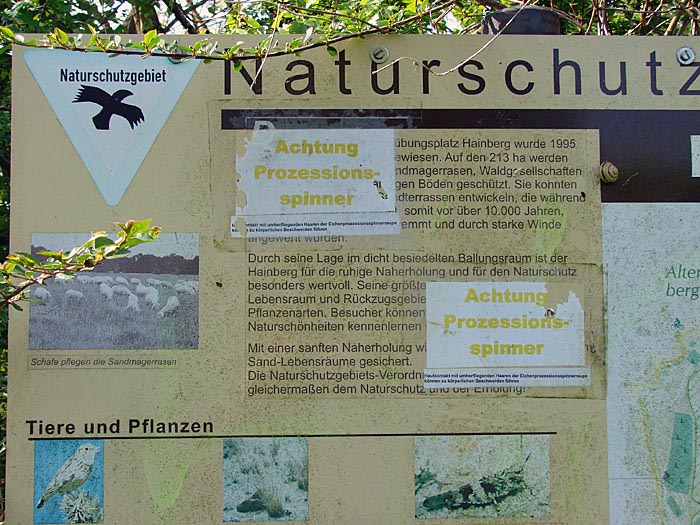
Oak processionary caterpillars/Eichenprozessionsspinner

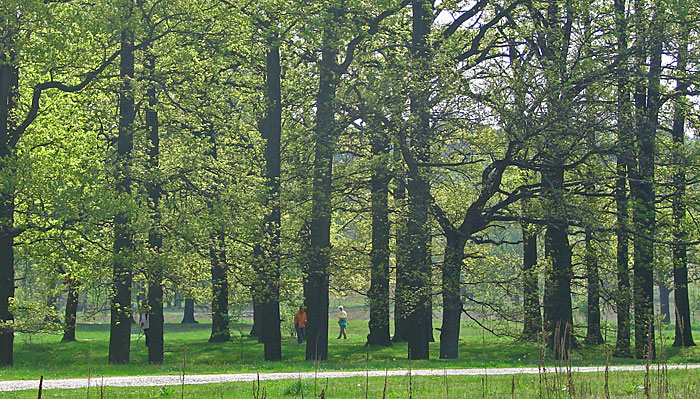
This was taken on May 6 at about 10 a.m. at the entrance to the Hainberg. Actually, I saw a lot of oak trees but no processionary caterpillars, nor the people out fighting them. In the past couple of days, helicopters have apparently been spraying.

A copse with an infestation of Nordic walkers:

I’m not sure why the Nordic walkers are congregating here, but they may be attracted by the shade.

Asparagus 2008/Spargel 2008

Time for the annual asparagus rant. I understand that people in this country much prefer white asparagus. Unfortunately, that means they have to peel it, as it doesn’t have the innate delicate melting quality of green asparagus.

The curiously punctuated Munich weblog delicious:days has an entry called The white asparagus deal according to which some sellers at the Viktualienmarkt will actually peel your asparagus for you and give you the peelings in a bag to make soup (see their photo).

Meanwhile, here are some tools to get at asparagus in a shop window in Fürth:

Misleading advice for foreigners/Irreführende Tipps für Ausländer

These were the New Statesman‘s readers’ suggestions for misleading advice for foreigners visiting London for the first time:

Never pay the price demanded for a newspaper; good-natured haggling is customary.

Never attempt to tip a taxi-driver.

On first entering an underground train, it is customary to shake hands with every passenger.

Try the famous echo in the British Museum Reading Room.

Visitors in London hotels are expected by the management to hang the bedlinen out of the windows to air.

Parking is permitted in the grounds of Buckingham Palace on payment of a small fee to the sentry.

London barbers are delighted to shave the patrons’ armpits.

I read them in the 1960s, and later they were reprinted in a book, long since out of print. This is the first time I have found them on the Internet, in the blog I spilled the beans, in which William encourages the English of – er – foreigners.