Photos from London/Fotos aus London

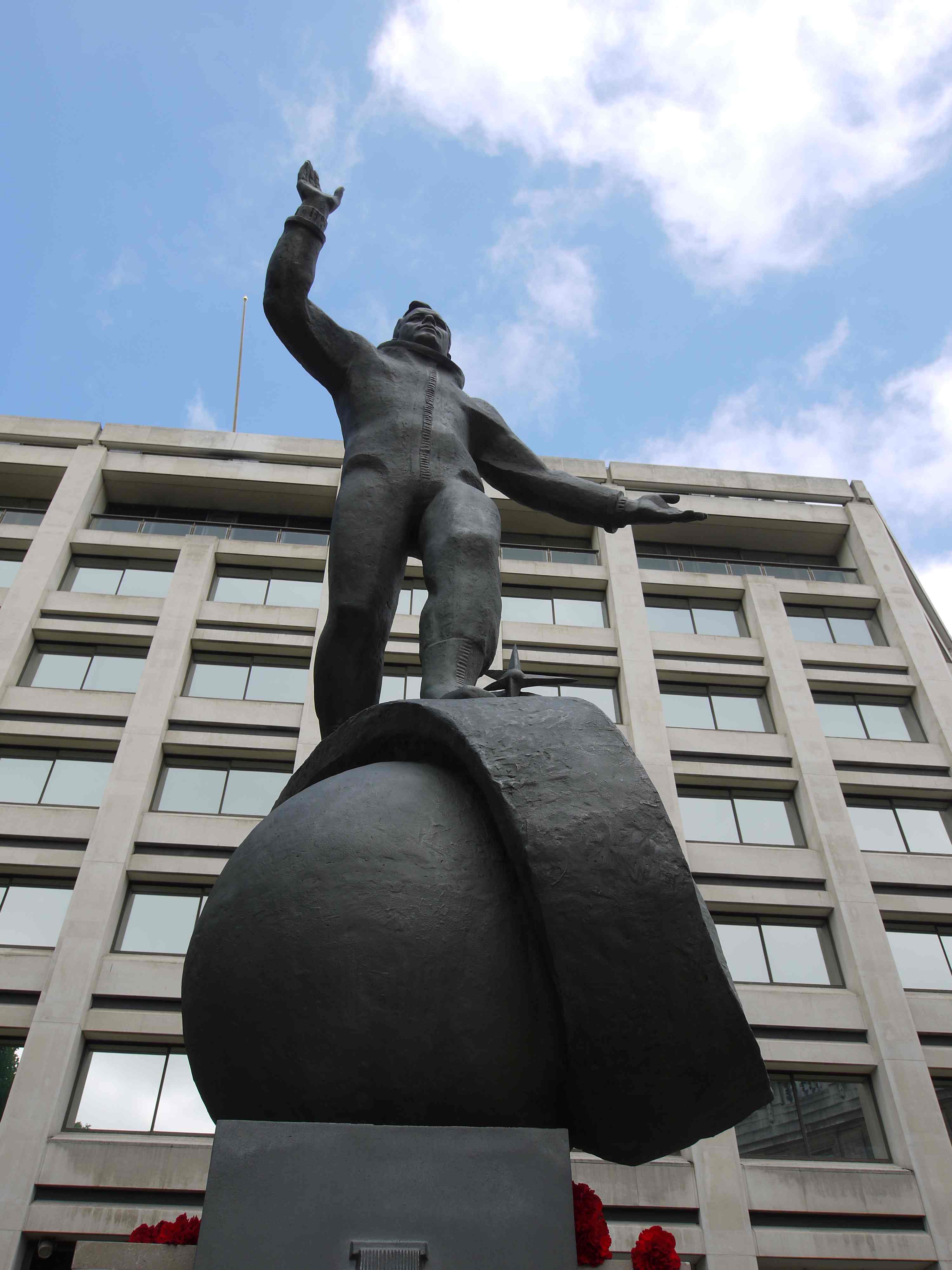
Statue of Yuri Gagarin (only there for a year, alas – the British Council wouldn’t let me see his spacesuit as you have to book in advance):

Lloyds:

Tottenham Court Road tube station:

Valuable cure for high blood pressure. I fancy the green hand:

Heirloomic assistance:

Corpus used in Utah court/Gericht in Utah benutzt Korpus

Mark Liberman at Language Log cites a Utah court that has relied on corpus linguistics. It was necessary to define the word custody in connection with a child, and some of the dictionary definitions were irrelevant. He cites Gordon Smith at Conglomerate:

Today, my former colleague and current Utah Supreme Court Justice Tom Lee used corpus linguistics in a lengthy concurring opinion (the relevant section starts at page 34). In this opinion, Justice Lee is interpreting the word “custody,” and he brings corpus linguistics to the fight. Of course, it’s no accident that Stephen Mouritsen is Justice Lee’s law clerk, but the bigger point here is that Justice Lee was persuaded — as I am — of the value of corpus linguistics to shed light on this interpretive question. Justice Lee’s collegues are not enamored with the approach, but you can read the opinions for yourself and see who gets the better of the argument.

This was apparently the first judicial decision ever to rely on a corpus.

The question arises, and I want to turn to it shortly, whether corpora are useful for legal translation. My feeling is that a corpus could be useful to reveal the style of judgments, but less so when it comes to contracts. But that might be because I believe that a translation of German law into English should not deny its foreign origins. But more shortly,in connection with a webinar on corpora I ‘attended’ recently.

Liver birds/Deutscher 50 Jahre nach seinem Tod geehrt

The Liver birds, a Liverpool landmark, were made by a German who had taken British citizenship twenty years early but nevertheless was treated as an enemy alien during the First World War and forced to return to Germany, leaving his wife and child behind, after the war. Carl Bernard Bartels, whose father was a Black Forest woodcarver, did manage to return to England, but it’s only this week that he has been given some honour – on the centenary of the building. The Guardian:

“He also made artificial limbs for servicemen in the second world war,” said his great-grandson Tim Olden, a graphic artist from Southampton who is one of 13 family members travelling to Liverpool to receive the award. “But it’s only very recently that he has started to get real recognition. My mother took a ‘let things lie’ attitude, but one of her last wishes was to go and see the birds, and Liverpool gave her a warm welcome.”

The visit in 1998 began Liverpool’s rediscovery of Bartels, including his skill as the first person to sculpt a nonexistent bird only previously portrayed in drawings and paintings. He also managed to create a male and female, giving rise to the scouse legend that one or the other flaps its wings if a virgin or an honest man walks along Pier Head.

Presumably that’s why they never flap their wings.

Interpreting and translation links/Links zu Übersetzen und Dolmetschen

A new book – in German – Gerichtsdolmetschen, by Christiane Driesen and Haimo-Andreas Petersen – table of contents here.

(Via uepo.de)

Peter Newmark has died – more here. I believe he was originally a Germanist.

There has been a bizarre German blog contest called Frauen-Blog-WM 2011. This has been won by a translator’s blog, buurtaal by Alexandra Kleijn.

Hitler’s talking dogs/Hitlers sprechende Hunde

I suppose in view of the earnestness of German alsatian owners’ societies I should not be surprised. Maureen Dowd in the New York Times:

A new book, “Amazing Dogs,” by Dr. Jan Bondeson, a senior lecturer at Cardiff University School of Medicine in Wales, reveals that Hitler supported a German school that tried to teach large, muscular mastiffs to “talk” to humans. This story set off a panting spate of “Heel Hitler,” “Furred Reich,” “Wooffan SS” and “Arf Wiedersehen” headlines in British tabloids and plenty of claims that Hitler was “barking mad.”

“There were some very strange experiments going on in wartime Germany, with regard to dog-human communication,” Bondeson writes, wondering: “Were the Nazis trying to develop a breed of super-intelligent canine storm troopers, capable of communicating with their human masters of the Herrenvolk?”

He discovered a 1943 Nazi magazine piece about the headmistress of the canine school, a Frau Schmitt, claiming that some of the dogs spoke a few words. “At a Nazi study course, a talking dog was once asked ‘Who is Adolf Hitler?’ and replied ‘Mein Führer!” Bondeson writes of these claims, noting that “the Nazis, who had such conspicuous disregard for human rights, felt more strongly about the animals.”

Here is the book referred to.

Via Boing Boing

Light summer reading/Sommerlektüre

In Heidegger’s case, the question of how to read him may be of less immediate interest than the question ‘Why read Heidegger?’ Of those who have heard something about him, many dismiss him as an unrepentant ex-Nazi, pompous and mystical, more sophist than philosopher, anti-modernist and irrationalist, given to asking obscure questions like ‘What is being?’ or ‘What is the nothing?’, and to offering even more obscure answers like ‘Being is not’, or ‘the nothing noths’.


Mark Wrathall, How to Read Heidegger.

Wir kennen Kants Tagesablauf bis ins letzte Detail und wollen ihn skizzieren:

4.55 Uhr: Wecken durch den Diener Lampe mit den Worten:”Es ist Zeit!”
5.00 Uhr: Aufstehen. Frühstück: keines, nur zwei Tassen schwacher Tee und eine Pfeife Tabak zur Anregung des Darmes. Erstes Arbeiten in Schlafrock, Pantoffeln und Nachtmütze, wahrscheinlich für die folgende Vorlesungstätigkeit.
7 – 9 Uhr: Vorlesungstätigkeit, inzwischen in vollständiger Garderobe.
9 – 12.45 Uhr: Hauptarbeitszeit für die Abfassung seiner Bücher, wieder im Hausmantel.
12.45 Uhr: Umkleiden, Empfang der Tischgäste im Arbeitszimmer, wieder in vollständiger Garderobe.
13 – 16 Uhr: Ausgedehntes Mittagessen im Speisezimmer mit geladenen Freunden, die einzige Mahlzeit am Tag. Lieblingsspeise: Kabeljau, stets eine Flasche Rotwein “Medoc”, manchmal auch Weißwein. Die Tafel wird eröffnet mit dem stereotypen “Nun, meine Herren!”
16 Uhr: Kant geht spazieren, immer allein. Er nimmt, von einer Änderung abgesehen, immer den gleichen Weg. Die Königsberger Bürger, so wird gerne erzählt, stellen die Uhr nach ihm.
Abends: Lesetätigkeit, “leichte” Lektüre, bevorzugt Reisebeschreibungen.
22 Uhr: Strengste Bettruhe.


Ralf Ludwig, Kant für Anfänger. Die Kritik der reinen Vernunft. Eine Lese-Einführung

But will I get further than the first pages?

In other philosophy news, Peter Adamson, Professor of Ancient and Medieval Philosophy at King’s College London, is doig the history of philosophy without any gaps in podcasts. He has reached podcast 41 and Aristotle.