Not awfully good online translation/”Übersetzung” online

1. This is really about legal translation – on fucked translation, kalebeul has done the work on describing the Spanish Facebook translation of civil union (civil partnership) as a homosexual union, thus excluding the heterosexual variant. Here’s the original Lexicool post. (Germany has a Lebenspartnerschaftsgesetz, and the parties are known as Lebenspartner).

2. This is interesting: machine translation, such as Google Translate, can be helpful in giving the gist of a web page. But what do people think when they read such gibberish without explanation? Here is an IKEA Hack in gibberish: Portable drawer … a box of second growth … This seems to have caused no unrest – of course, the photos help. The list of products is almost correct. Second growth seems to mean resurrection. This sounds a bit disgusting, though:

I just painted, I set the rear side, standing in the rolled up in my wrapping paper.

This is puzzling too – the original (Hungarian) must have meant something:

Here it is important enough for accurate measurement….(this is unfortunately the experience of my sentence:))

Becoming a translator with educated proficiency/Geld verdienen als Übersetzer

I am gearing up to start blogging properly again, but meanwhile some reading from a website on running a small business from home. Someone tweeted it this morning, I hope as a joke but perhaps not. The site gives advice on how you can earn money as a ‘verbal translator’ (this seems to mean an interpreter) or a ‘text-based translator’ (apparently a translator). This opportunity is open to you even if you do not have the ideal qualification of having grown up bilingual:

Most organizations who are looking to hire a verbal translator will prefer to find translators that grew up speaking both languages. Fully bilingual, these translators have been speaking both languages since their childhood and this can help bring a fluid mastery that many other translators will not have. These translators will often understand the rhythm and cadence of a particular region which many students of language cannot master.

I have always had the impression that ‘true bilinguals’ are not typically ideal translators, but apparently I was wrong. Looking at my day’s work today, I must admit that fluid mastery is not the first description that occurs to me.

Another important point made, if I interpret it correctly, is that whereas interpreters can just babble away, we translators need to know grammar. That’s good, because I’ve spent quite a few years teaching grammar. The students didn’t seem keen, but I always knew it would be useful some day.

While a verbal translator needs to be able to efficiently handle the ever changing dynamics of a language, text based translators often need to have a better hold on grammatical structure of a language. Both types of translators should certainly be able to both speak and write the language, although text translators should know the specifics behind important grammatical rules of the language. Most written documents will need to have an educated proficiency behind them.

Looking behind me, I haven’t spotted the educated proficiency yet, but I feel sure it must be there.

This is why a number of different tools can all come in handy when you are learning how to become a translator.

Here I am disappointed. I was hoping they would tell me what tools they meant. Do they mean software, or is it hammers and screwdrivers? Still, I am presumably past that point and there seems hope here:

Once you are able to hold a conversation or read a book in two different ways, though, you will know that you are ready to find work as a translator.

(I wonder whether these texts are bought in from Asia?)

Webinar on legal translation/Webinar zu juristischer Übersetzung

eCPD is a company formed this year to provide webinars for translators.

That means an internet seminar for continuous professional development (which the ITI is propagating) that you can follow on your own computer. If you miss the date but have registered, you can hear it online later.

They have a webinar on specializing in legal translation on October 28. The ‘speaker’ (?) is Ricardo Martinez, of the City University of London, who will be giving examples on English and into French and Spanish.

Register here.

This webinar will provide the audience with an overview of the field of legal translation, focusing on the following aspects:
• Why legal translation as a specialisation?
• How to get into the legal translation field
• Disparity between Anglo-American Law / Continental Law
• Types of documents usually translated and some basic vocabulary (examples translated into French and Spanish)
• Main features of legal English
• Some practical problems in legal translation
Practical advice for the budding legal translator.

Speaker: Ricardo Martinez of City University, London
Ricardo has been translating, interpreting and lecturing since 1990, both in the UK and Spain. As an Intérprete Jurado he specialises in the legal and financial fields. He has expanded his areas of expertise throughout the years to other fields such as journalism, TV, tourism, engineering, software localisation and IT. As a lecturer he has taught at the Escuela de Traductores e Intérpretes in Madrid in the 1990s and is currently responsible for the English-Spanish language pair of the Legal Translation MA at City University.
Cost: £15

(This has long since been blogged by Philippa Hammond, but I missed it).

flickr/Moo/amazon/twitter

The joys of the internet. Does one reply to an email like this?

Hey Margaret,
We’re just checking in to see if you received your order (Ideal and Actual in The Story of the Stone) from XYZ Books. If your order hasn’t blessed your mailbox just yet, heads are gonna roll in the * warehouse! Seriously though, if you haven’t received your order or are less than 108.8% satisfied, please reply to this message. Let us know what we can do to flabbergast you with service.
Humbly Yours,
Indaba (our super-cool email robot)

I got this book ages ago, much sooner than one would expect, and I thought I left positive feedback somewhere.

flickr and Moo are also incredibly upbeat. flickr (which I scarcely use) tries to appear multilingual by greeting me with bizarre foreign hellos, and Moo is constantly celebrating something. Maybe I need something of what they’re on.

Meanwhile, I am not getting a great deal out of Twitter. My biggest problem is that I skim or read lots of blogs, including translation blogs, by RSS. On Twitter, translators sometimes make it clear they’re linking to their latest post, but most of the time, they give these shorter links – usually to each other’s posts – which give nothing away, and a vague reference, and if I click on them I find something I read, sometimes weeks earlier, or that I would get to later in the day. I’m also not clear about the value of followfriday, when people just cite everyone who links to them – there’s no space to give value – but that’s OK, because I can ignore it. And at least Twitter showed me where I can vote against Tony Blair becoming EU president, although I suspect that may do little more than make me feel better.

International Translator’s Day/Hieronymustag

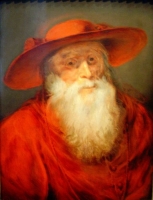
(St. Jerome by Rubens, via Wikimedia Commons)

Today is St. Jerome’s Day, which has now apparently become International Translator’s Day, and I am celebrating by translating.

Here are a couple of links, though.

1. Ghaddafi About the story of Ghaddafi’s interpreter collapsing: Richard Schneider has a full account, in German, which suggests that the New York Post was inaccurate when it said the interpreter collapsed after 75 minutes and shouted ‘I can’t take it any more’ – it seems he managed 90 minutes, and the UN interpreter only had to take over the last 5 minutes. The speech was intended to be about 15 minutes long. But simultaneous interpreters usually do about 20 minutes, as far as I know. Ghaddafi said he had brought his own interpreter, because he was going to speak an obscure dialect, but in fact he did not speak dialect. The chairmanship/presidency is currently held by Libya, by rotation, and that is why there was no complaint about the procedural irregularity. (How did Ghaddafi’s French interpreter manage?)

Richard Schneider gibes YouTube links to all sections of the speech. Here is the last one, including the takeover of the interpreting by the UN. These videos may not be accessible online for very long.

2. Becoming a medical translator On her blog, Sarah Dillon has an interview with Andrew Bell, who does medical and pharmaceutical translations and also runs the site Watercooler.

3. White House calls for machine translation Thus Global Watchtower reports.

Last week, the Executive Office of the President and National Economic Council issued its “Strategy for American Innovation.” Among the recommendations was a call for “automatic, highly accurate and real-time translation between the major languages of the world — greatly lowering the barriers to international commerce and collaboration.” In other words, machine translation (MT) has captured somebody’s attention in the President’s inner circle.

This tactic would certainly save all the problems associated with human translators – a potential such was recently held for hours, apparently for having Arabic flashcards in his backpack. (TSA defends itself).