I know we beat Panama, but this is a bit excessive. (These ads appeared in Metro on June 21, when thee was little expectation of the later win over Panama).
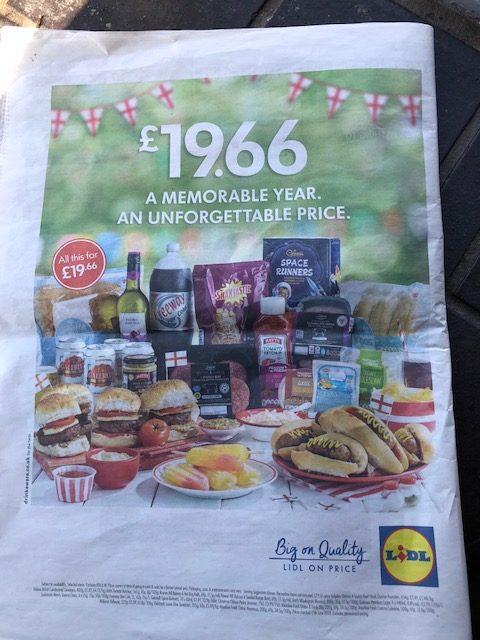
Metro ad


I know we beat Panama, but this is a bit excessive. (These ads appeared in Metro on June 21, when thee was little expectation of the later win over Panama).
Metro ad
Although we know about the abstraction principle in German contract law, we don’t often have to translate it.
Here is Markesinis on the principle:
We now come to what is one of the most intriguing peculiarities of German contract law. Indeed, Zweigert and Kötz, in their treatise, An Introduction to Comparative Law, p. 71, regard it as so distinctive as to argue that it gives the German legal system its characteristic style. … Many common lawyers, and indeed French lawyers,might be tempted to describe it more than just ‘distinctive’. ‘Un-necessary’ and ‘excessively abstract’ are words that have often been used; and not with(out) some justification.
German law notionally distinguishes between the legal transaction that creates the relationship of obligation (Verpflichtungsgeschäft) from (sic) the legal transaction which transfers, alters, extinguishes, or encumbers rights (Verfügungsgeschäft = disposition contract). This distinction is accompanied by an important sub-rule: the validity of the second transaction is independent from (sic) the validity of the first.The first tenet is known as the ‘principle of separation’ (Trennungsprinzip), while the second is referred to as the’principle of abstraction’ (Abstraktionsprinzip).
Basil S. Markesinis, Hannes Unberath, Angus Johnston, The German Law of Contract. A Comparative Treatise, 2nd ed. 2006, p. 27
Even the act of buying a newspaper, in German law, consists of two stages: the intention and the reciprocal handing over of paper and money.
The closest idea in English law is found in conveyancing, where the parties exchange contracts to buy/sell and some weeks later the property and payment are exchanged.
In my translation, the situation was that the Kausalgeschäft (= Verpflichtungsgeschäft) underlying a gift of money in return for a promise not to seek further payment was invalid, and so the gift was invalid too.
One way to do this would be to add a translator’s note explaining this peculiarity of German law. I decided to translate Kausalgeschäft as ‘underlying obligation’ and ‘obligational agreement’, adding ‘(a peculiarity of German law)’.
ProZ is often helpful here. As long as you understand the German legal point, you can see which answers are helpful, just as when trying to find help in Dietl or Romain.
I didn’t realize how long pretzels have been around. See Victoria Emily Jones, Praying with Pretzels.
The salty, twisted treats that we call pretzels have their origin, it is thought, in a seventh-century European monastery—according to lore, either in southern France, northern Italy, or Germany. Allegedly a monk invented them by shaping scraps of leftover bread dough to resemble arms crossed in prayer over the chest.
The pretzel’s Lenten link, not to mention its popularity as a year-round snack both inside and outside monastic communities, led artists to sometimes paint pretzels into Last Supper images.
Illustrations there, one of which I have pinched:
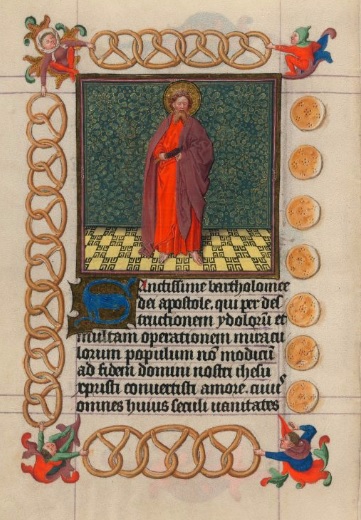
St. Bartholomew, from the Hours of Catherine of Cleves, in Latin, Utrecht, The Netherlands, ca. 1440. Morgan Library, New York: PML M.917, fol. 228. http://www.themorgan.org/collection/hours-of-catherine-of-cleves/87#
Café de Montmartre, Leytonstone
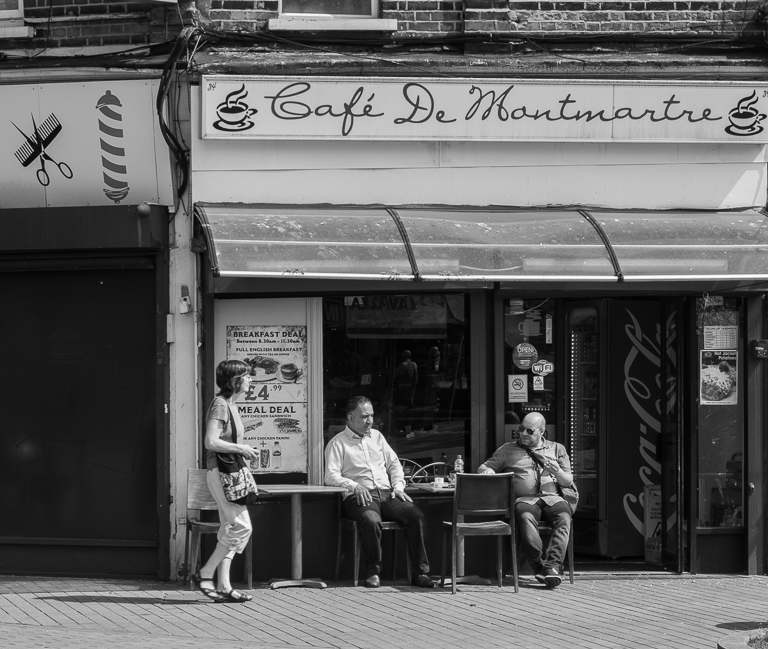
I should have known that Alfred Hitchcock was born in Leytonstone.
However, I went there to see the Singing Organgrinder at the new market.
He can be heard again at 13.00 next Saturday, but I am not sure if the market will still be in the Church Lane car park.


Today would be Hitler’s birthday, as my father always used to say – he would have been 116 tomorrow, April 21, which is also the Queen’s birthday. So I found myself having to pass time in Hornchurch and visited the new Lidl. It was so large that it reminded me of a big Edeka (Aldi in Upminster is smaller).
Unfortunately it could only be built after the elegant Towers Cinema, later bingo hall, was demolished: here are pictures.
There seemed to be more German foods there than I have seen in Aldi, but I haven’t been often enough to give a reliable account. Leberkäse, the German delicacy containing neither Leber nor Käse, was sold as Bavarian Meat Loaf.
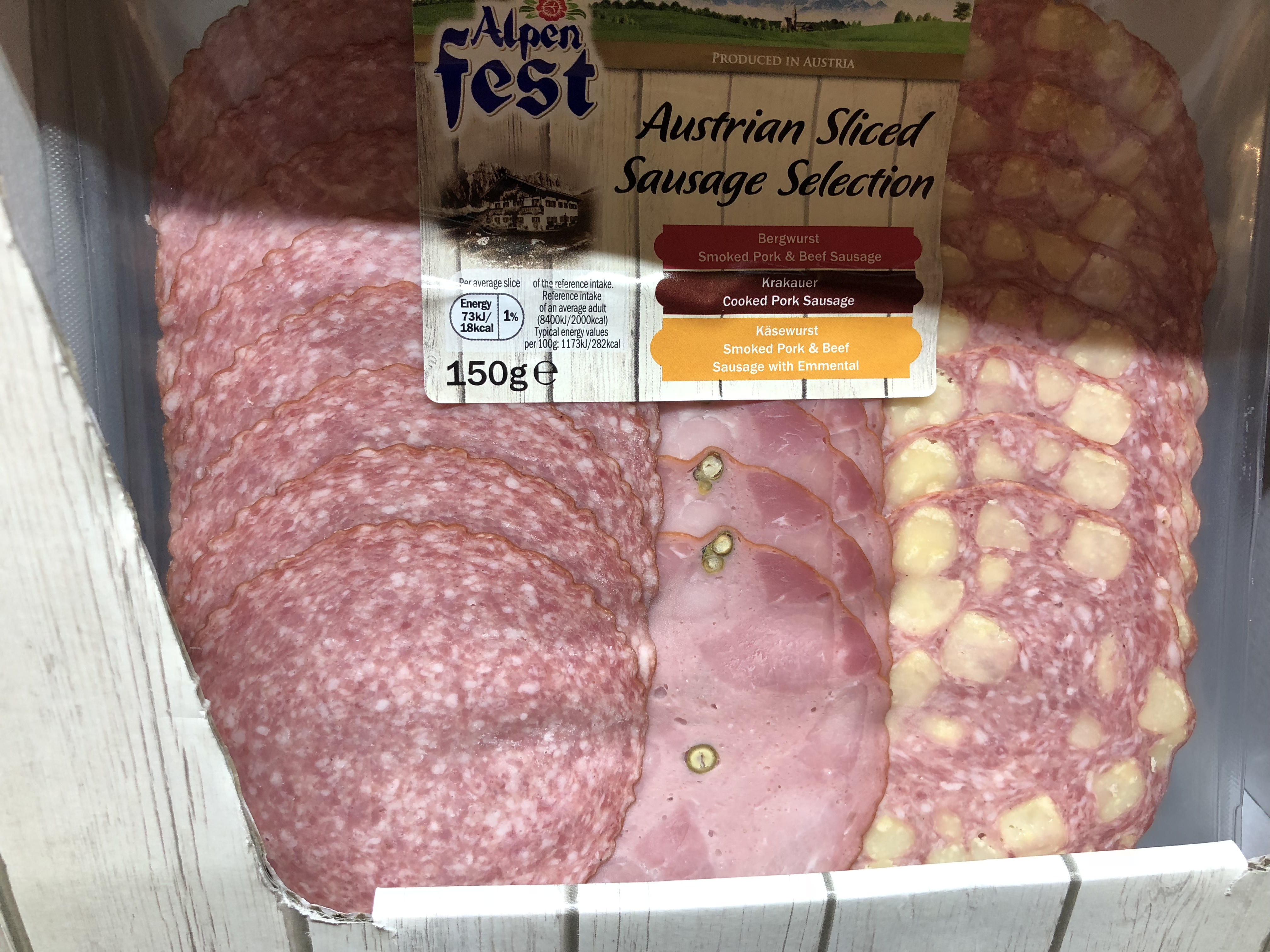
There was also Austrian sliced salami, some of which recalled Käsekrainer (though commenters may correct me).
Here, however, is an older picture of Speculatius at Aldi:

And here some more pictures of Lidl:
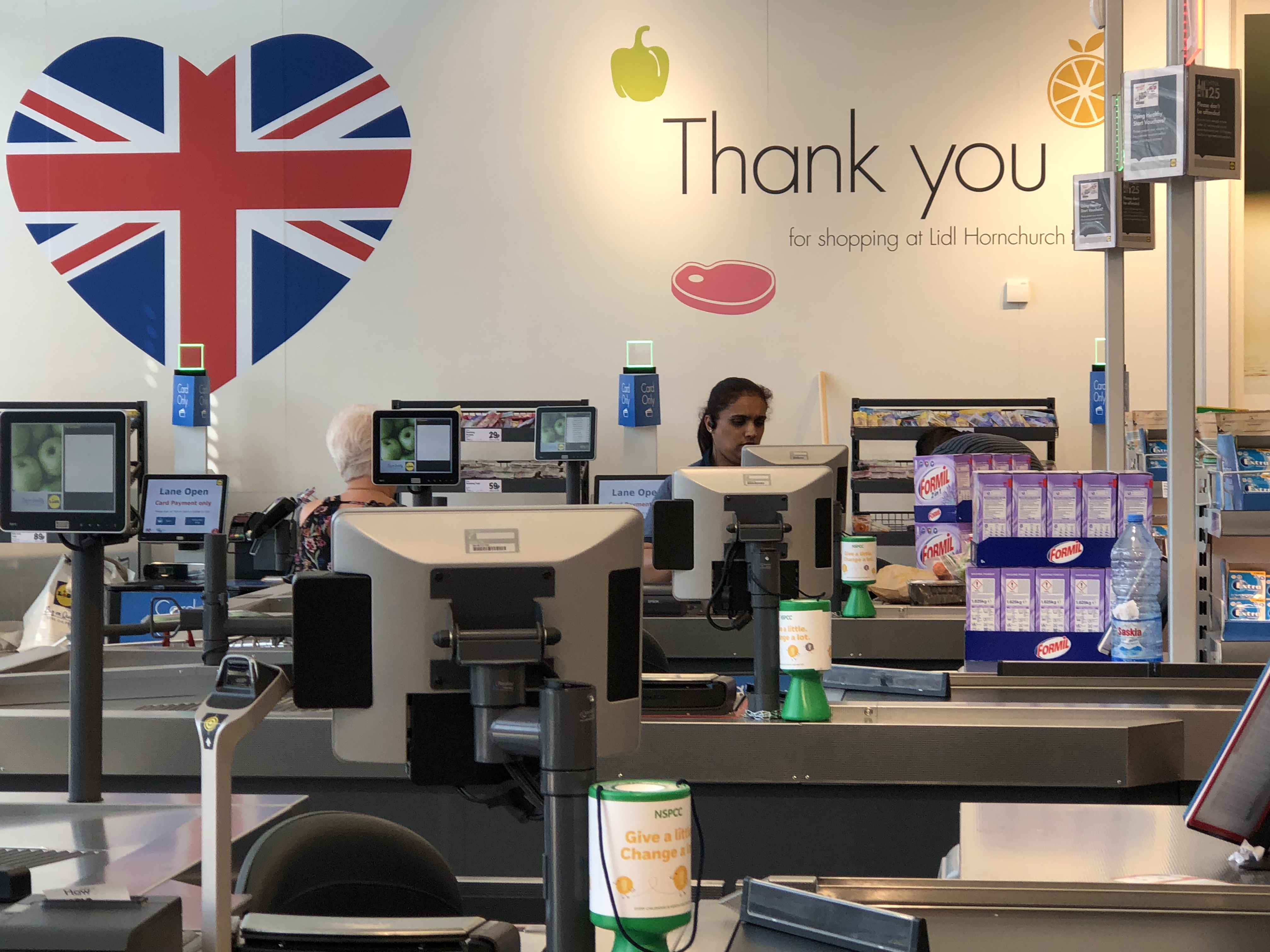
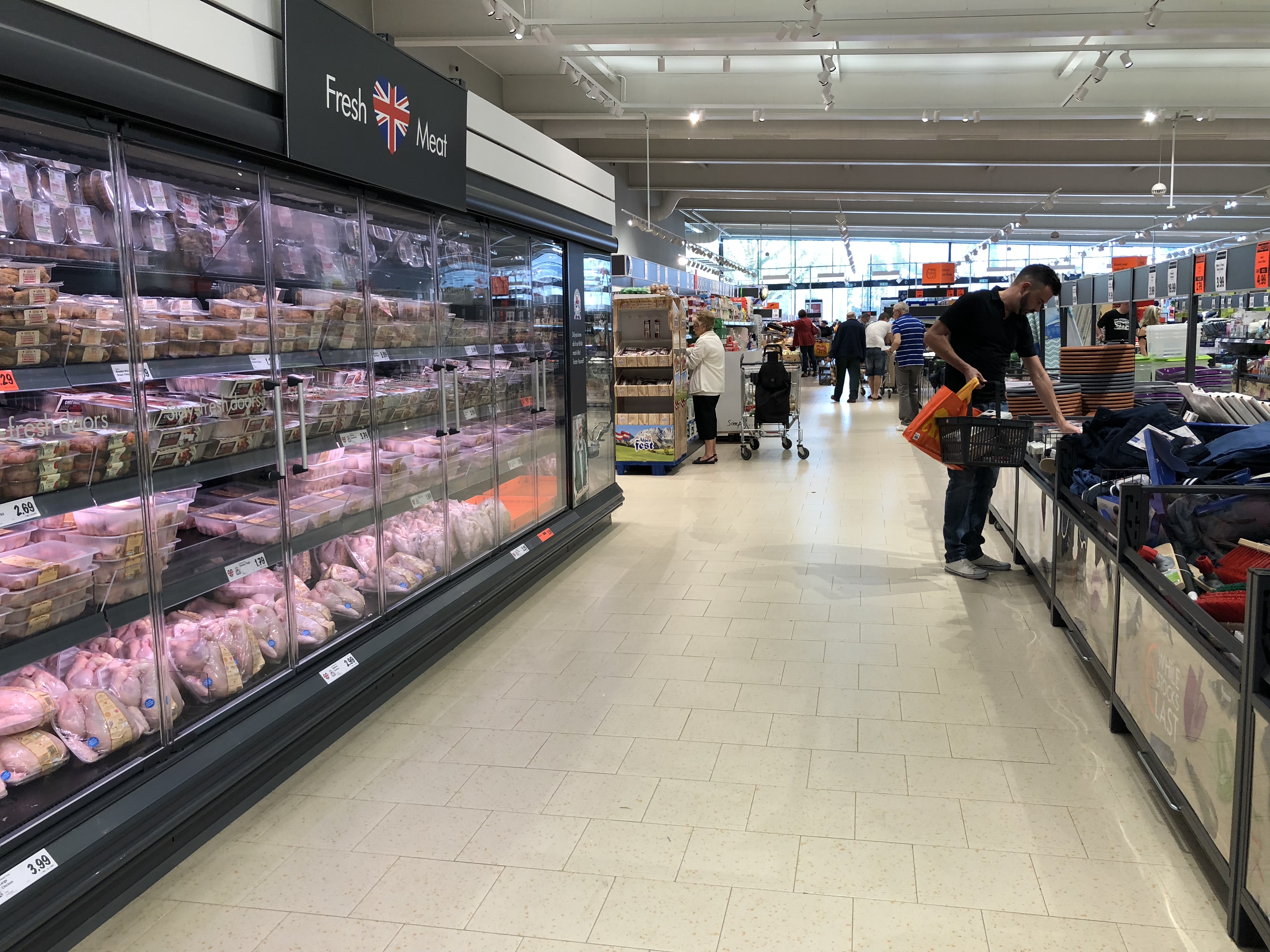

Here’s a photo of my downstairs neighbours for many years, Dieter and Jutta Mund, who ran Elektro Götz in Fürth (they don’t actually live there) but have to close on March 31st, which means this Saturday will be their last trading day. I took the photo in October 2016 and I’m sorry I will not be able to visit them in their shop again.
The kind of shop where if you want a vacuum cleaner bag replacement you will be given full details of the function and price of several manufacturers.
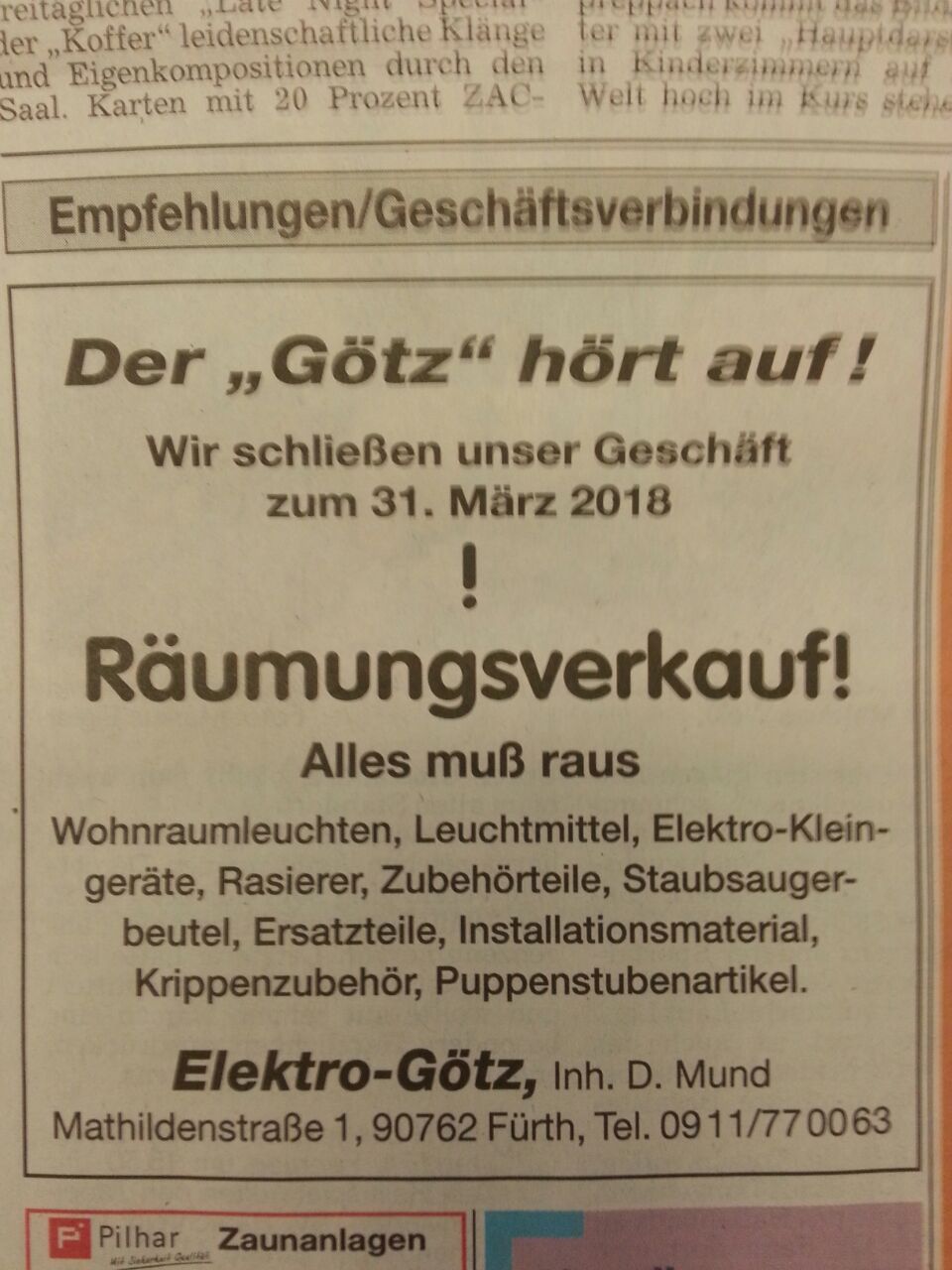
No doubt buying online has meant that a shop of that kind can’t make ends meet nowadays. I am surprised they managed so long!
Many thanks to Ralph Stenzel for keeping me informed.