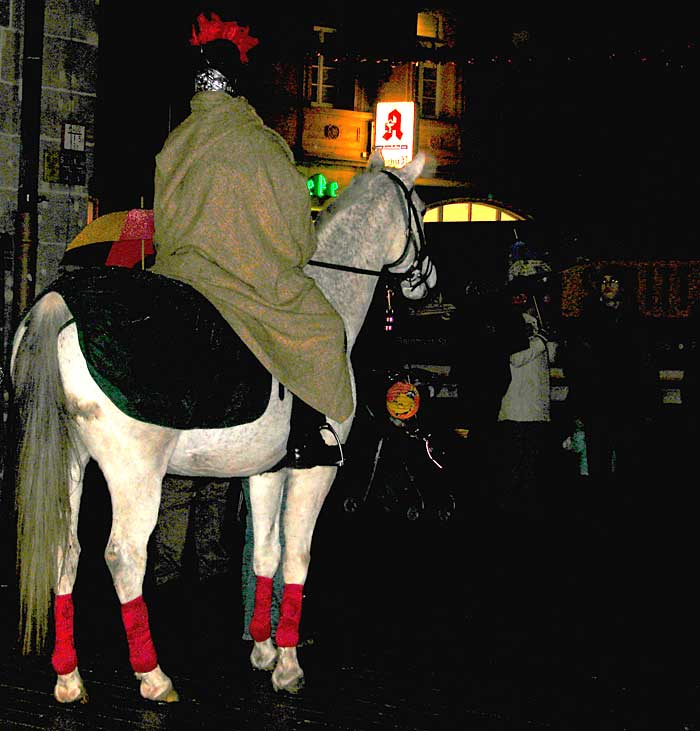
After the BDÜ Stammtisch in Nuremberg yesterday (Weinwirtschaft, Friedrichstraße):
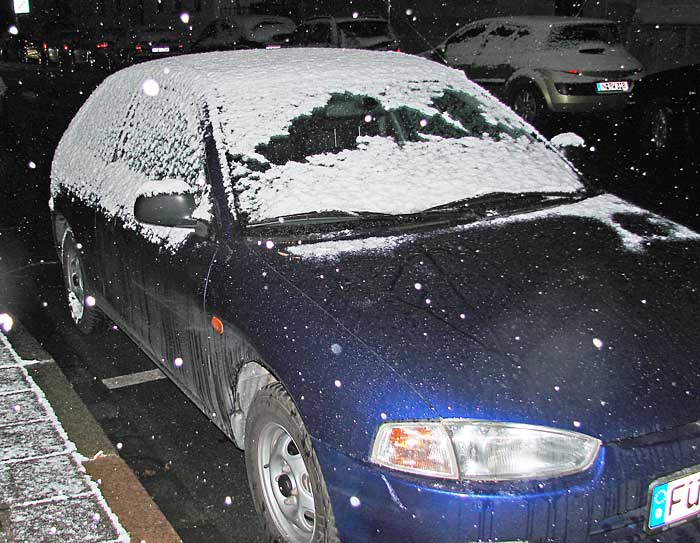

After the BDÜ Stammtisch in Nuremberg yesterday (Weinwirtschaft, Friedrichstraße):
Billy Connolly on youtube (via Volker Weber)
The best-known German forensic biologist, Mark Benecke, was pinned to the ground and deprived of his camera by five police at Cottbus as he was getting out of a train, reports Berliner Kurier. A station employee at Berlin, it was claimed, (although Benecke had not been in Berlin all day), had mistaken his mobile phone for a semi-automatic rifle. No warning was given.
Kurzes Haar und Dreitagebart. Ein schwarzer Mantel, schwarze Kleidung und ein Holster – “ist fürs Handy!”. So sieht es aus, wenn Mark Benecke (berät die Polizei in komplizierten Mordfällen) durchs Land reist. Das ist vielleicht verwirrend für einen sensiblen Beamten. Eine Angestellte vom Bahnhof Zoo schlug in Berlin Alarm, als der Biologe den Zug nach Cottbus nahm.
But at least it wasn’t the Metropolitan Police.
(Via law blog)
Der Shoposkop-Typtest stellt fest, was für ein Einkauftyp man ist. Ich bin angeblich der häusliche Nerd, will aber nicht unbedingt die sechs Geschenke kaufen, die mir vorgeschlagen werden (OK, einen Julienne-Hobel besitze ich schon, allerdings keinen von Kyocera, das ist nur der Drucker)
Dank an den verkitschten Feingeist bei Wortfeld
The Telegraph reports that there were probably translation errors that may account for discrepancies in the statements of the ‘Tapas Nine’.
“In the early days of the investigation there were dozens of statements being given at what was a very confusing time,” a police source said.
“Obviously the police acted in good faith in their selection of translators but given all that has been said about the various contradictions in the versions of events, detectives are now re-examining the possibility that there may have been some problems,” he said.
Apparently Robert Murat was one of the translators as well as a suspect (although it seems that, under Portuguese law, making someone a suspect does not necessarily mean the person is suspected of involvement in a crime).
Detectives are now said to be questioning the decision to use Robert Murat, 33, as an official police translator in the first crucial week after Madeleine disappeared.
The British ex-pat, who is bilingual, was made an arguido – or formal suspect – on May 14.
(I don’t wish to defend the McCanns, nor to imply that enough money will ever be put into court interpreting and translation to ensure that every case gets good translation)
Thanks to Derek at flefo.
This St. Martin doesn’t look as if he’s going to share his cloak with anyone.