Service for the blessing of the ‘No Smoking’ signs / Segnung des Rauchverbots

In search of information on St. John the Baptist, I came across what I thought was a serious religious site, Ship of Fools.

Minister: Therefore let us stub out our cigarettes with gladness, and cast off the works of darkness by joining together in the words of the Smoker’s Prayer.
All: Can you give us a light?

and later

THE DISMISSAL
Minister: God hates fags.
All: In the English sense of that word.
Minister: May the marketing of St Peter Stuyvesant, St Benson and St Hedges not be with us all, evermore.
All: Amen.

The site, a kind of newspaper, has some interesting regular features. I was particularly taken by the Mystery Worshipper, a column of reports on secretly visited church services. Here from a report on St. Columba’s, Anfield, Liverpool:

Did anything distract you?
This must be the best-heated church in Christendom and by the end we felt we had been in a sauna. More distracting than the heat, though, was the noise of the fans which were pushing it out. Other distractions were the cocktail-bar altar and wondering which saints were being veiled from sight by the Passiontide drapes (presumably Our Lady and St Columba).
Was the worship stiff-upper-lip, happy clappy, or what?
Modern Anglo-Catholic liturgy (Common Worship Order 1) with incense. The ceremonial was neither fussy nor sloppy; priest and servers – in particular the young girls who served as thurifer and boat-bearer – seemed relaxed and at ease as if worshipping God was the most natural thing possible. The priest, however, during some of the prayers, sounded if he were addressing a class of slightly slow children rather than Almighty God.

I suppose this fits well with the Vatican’s Ten Commandments for Motorists.
Laws and Acts / Gesetze

It’s puzzled me for many years why so many legal dictionaries translate Gesetz (later addition: in the sense of ‘statute’) as law. The term Act (capital A required) is OK for Britain and the USA both. We use law as a superordinate term for both statutes and delegated legislation. One theory a colleague of mine had was that German lawyers simply think Gesetz means law and so that must be the translation. Another theory is that the procedure for passing a Gesetz in Germany and an Act in the UK are so radically different that never the twain shall meet.

Working Languages reports that we have been saved from a change in EU law terminology that was intended in the constitutional treaty. The intention was to change regulation (Verordnung) and directive (Richtlinie) into law and framework law respectively.

I’m glad I didn’t hear of this earlier. Working Languages discusses the problems of these terms and also the term European law. There is also an excellent link to a House of Lords select committee report on the matter.

Words ending in -ee

In an old entry, life in translation mentions the problem of keeping -or and -ee apart, for example, writing lessor instead of lessee. It’s surprisingly easy to confuse parties in documents, and lawyers do it as well as translators.

Then there are difficult words like mortgagor (Hypothekenschuldner) and mortgagee (Hypothekengläubiger).

It’s not as simple as active and passive (employer, employee; divorcee (used some years ago for women)). So I can’t logically complain about attendees. There’s been a discussion on the Lexicography List. Urdang, I gather, also mentioned amputee (recipient of the result of an action), patentee (a person furnished with the thing named by the root) and escapee (a person performing the action named by the root).

There’s a paper on the topic, entitled Episodic -ee in English:
A thematic role constraint on new word formation
Chris Barker
University of California, San Diego

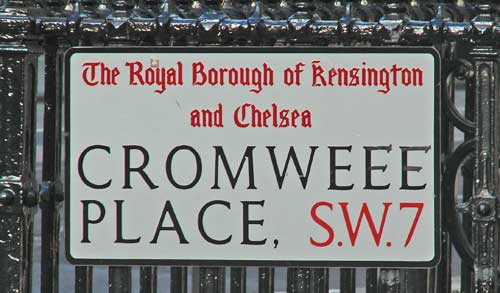
Some superfluous EEs gathering in Kensington (near ITI conference, April 2007):
20070427upm212w.jpg

HDR

Since I have been too busy to post, and everyone else in Fürth is doing HDR pictures, here’s a picture of the flowers I was given near Staffelstein:

DSC08257_61_60_59_58w.jpg

The leaves came out very well. The subtle apricot background is a darker orange wall, the windowless side wall of a back building.