East London

ftw4_050611w.jpg

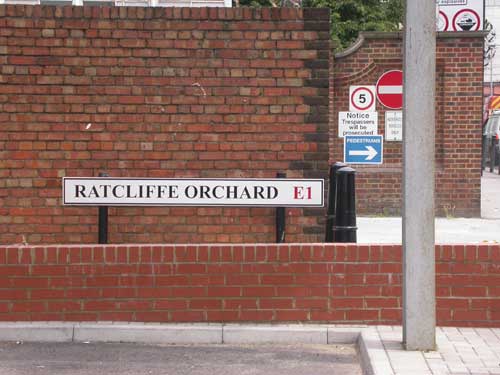
This is the Free Trade Wharf development (more photos), once the centre of an unsalubrious part of London where Pepys used to cross the river, sailors greeted their return to the Pool of London, some set sail for long voyages and some even, perish the thought, emigrated to the north of England, and later they even started using Macs.

rato1_050611w.jpg

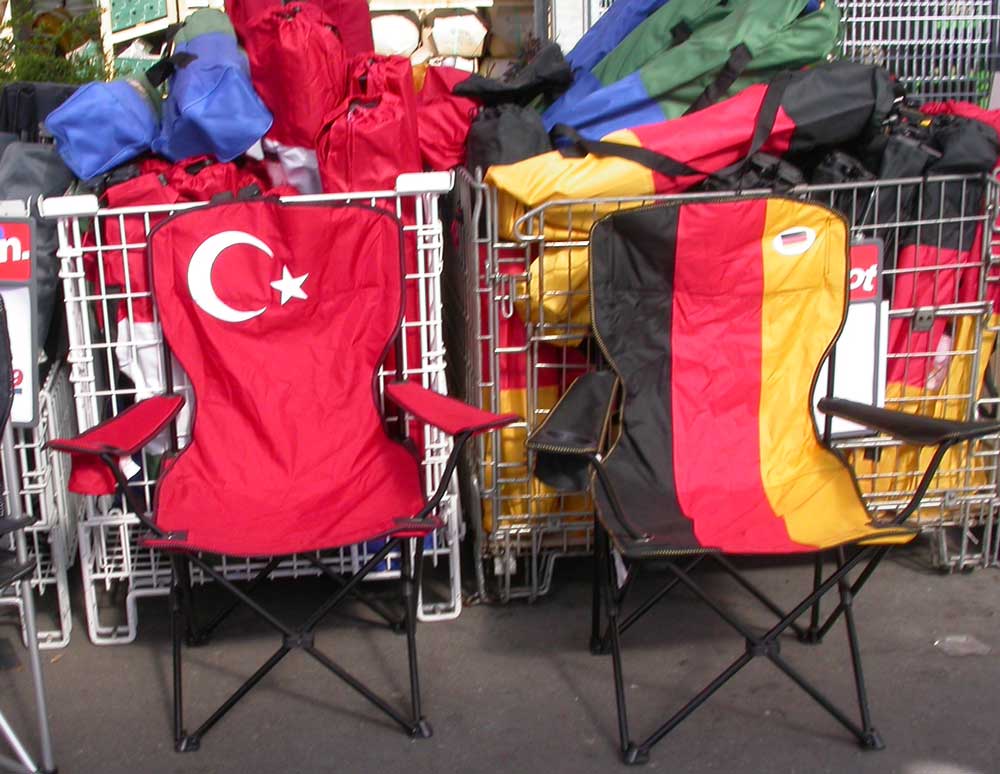
The Apple theme is subtly repeated here.

Holiday

This weblog will be neglected for a few weeks while I am on holiday. Comments are closed to avoid spam.

Actually, I will have to spend less time on it when I come back, as I have worked out that I need to spend the rest of my life either working, cleaning or exercising. (I just remembered the last time I flew back to Nuremberg I met an acquaintance who asked me how I was enjoying my retirement).

If I had been here longer I would have referred at more length to:

Employment Tribunal Claims – Tactics and Precedents – a British law blog,

and especially The Paisley Snail – Wellmeadow Cafe – A selection of Scottish law-related links gathered together for ease of reference. A meeting place for all those interested in Scots law, citizenship and education – with ginger beer and snails (with minitrials)
The last reference will not be lost on those who’ve studied torts

both via Delia Venables.

And Father Reggie – the Latin Vatican expert, with audio links, via Paul Frank

And World Wide Words on xenoglossy – the ability to speak a language without having learned it.

Shame about the referendums.

VAT on translations done abroad/Umsatzsteuer auf im Ausland gefertigte Übersetzungen

VAT64417-4.jpg

A translation is done for business purposes if it’s done for a freelance translator in another country, and that includes one who is not registered for VAT. So if I, in Germany, do a translation for a UK client, I charge VAT only if the client is a private person.

The diagram is taken from just before section 12 of VAT Notice 741, Place of Supply of Services. There is a list of notices online, but the number is given as 742, which isn’t correct.
HM Revenue & Customs has the notices online. The reverse charge, or tax shift, is described in 15.1.

The reverse charge arises when a translator in the UK, not registered for VAT (they often aren’t, and the threshold above which you have to register is higher), does work for me. It is deemed to be done in Germany, and I have to pay VAT on it. But at the same time I can deduct this VAT payment:

15.4 How does the reverse charge work?
You simply credit your VAT account with an amount of output tax, calculated on the full value of the supply you have received, and at the same time debit your account with the input tax to which you are entitled, in accordance with the normal rules. The partial exemption implications for reverse charge services are explained in Notice 706 Partial exemption.

The relevant parts of the statutes are mentioned in these articles or in the VAT notice.

Value Added Tax Act 1994 (UK)
Umsatzsteuergesetz 1980 (Germany)

Article in English by Kay Fisher at Translatorscafe.

Deutscher Artikel über USt für Übersetzer von Per Döhler auf der ADÜ-Nord-Website.

Interpreters and Piano Man

It sounds as if Piano Man may come from the Czech Republic:

bq. The behaviour of the unidentified stranger, who is in a secure unit in north Kent, has left health professionals flummoxed. All attempts to coax him into communication, including the use of interpreters from Poland, Lithuania and Latvia – but not the Czech Republic – have failed. He cowers when approached by strangers and is constantly anxious.

What I wonder is why did they try Poland, Lithuania and Latvia? Or did they try whoever they had at hand in North Kent? Or did they try many, and are just naming the East European ones?