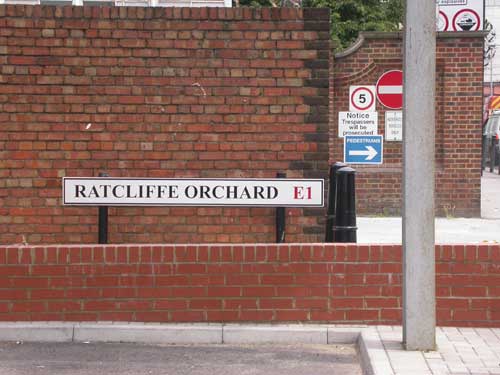
Die Kosten werden gegeneinander aufgehoben

Udo has an entry on Aufhebung.

Die Kosten des Rechtsstreits werden gegeneinander aufgehoben.

The meaning of this term is that the court fees are divided equally between the parties, and each party bears the costs of its own lawyer.

bq. Eine häufige Regelung in gerichtlichen Vergleichen. Sie bedeutet zunächst, dass jede Seite ihre eigenen Anwaltskosten übernimmt. Wenn der Anwalt auf der einen Seite teurer war (z.B. wegen Reisekosten), entsteht kein Erstattungsanspruch.

bq. Auch die Gerichtskosten werden bei der Kostenaufhebung geteilt. Der Beklagte muss dem Kläger also noch die hälftigen Gerichtsgebühren erstatten, die der Kläger von der Gerichtskasse in Rechnung gestellt bekommt. Das gilt auch für bereits angefallene Sachverständigenkosten, Zeugengelder etc.

Law blog recommends using this formula when requesting court orders.

bq. Schreibt man zum Beispiel “Jede Seite trägt ihre Kosten selbst” bleibt wohl derjenige auf den Gerichtskosten sitzen, der sie eingezahlt hat.

Many translators out of German seem to believe that the phrase means what it sounds like: that all costs and fees are shared fifty-fifty. Why don’t they inform themselves of the meaning of the German term. Years ago I was told by a colleague that the translation should be ‘No order as to costs’. That formula may be as common in English as the other in German, but it means something like ‘Jede Seite trägt ihre Kosten selbst’.

bq. § 92 (1) ZPO: Wenn jede Partei teils obsiegt, teils unterliegt, so sind die Kosten gegeneinander aufzuheben oder verhältnismäßig zu teilen. Sind die Kosten gegeneinander aufgehoben, so fallen die Gerichtskosten jeder Partei zur Hälfte zur Last.

In Switzerland, Wettschlagung der Kosten does mean each party bears its own costs (Metzger, Schweizerisches Juristisches Wörterbuch). Thus from a website with a decision, ‘unter Wettschlagung der Parteikosten und hälftiger Teilung der Gerichtskosten’.

It looks to me as if in Austria, gegeneinander aufheben refers only to each party bearing its own costs, but no doubt someone will correct me if that’s wrong.

LATER NOTE:
Here is some information on Austria kindly provided by Michael Kadlicz, one of three known Austrian legal bloggers:

bq. Der gebräuchliche Ausdruck in Österreich lautet bei Vergleichsabschlüssen: “Bei Kostenaufhebung” Im Ergebnis trägt damit jede Seite ihre Kosten selbst, soweit Gerichtskosten (auch SV_Gebühren) angefallen sind, werden diese 1/2:1/2 getragen. Das versteht sich aus dieser Formulierung mehr oder minder von selbst, es wird aber oft noch durch einen Halbsatz verdeutlicht(zB.: die Gerichtsgebühren werden je zur Hälfte übernommen; die SV-Gebühren tragen die Parteien zu gleichen Teilen oä.)

bq. Bei einer Kostenentscheidung des Gerichts spricht § 43 ZPO von “Kosten gegeneinander aufzuheben oder verhältnismäßig zu theilen”. Wie Du am “theilen” erkennen kannst, gibt es diese Gesetzesstelle schon ein paar Jährchen.

So it does seem that ‘each party bears its own lawyer’s fees’ is more a German than an Austrian thing – in Austria it would take more words to provide it.
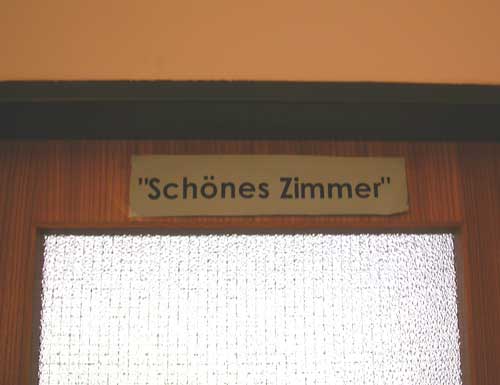

“Inverted commas”/”Anführungsstriche”

sz_050618w.jpg

Pfarrheim St. Maximilian, München.

It’s easy to make fun of the wide use of quotation marks in German, and that’s what Bastel Sick (the Lynne Truss of the German language) did in a recent Spiegel Online.

bq. Auf irgendeinem Flughafen war ihnen ein Schild aufgefallen, das folgende Aufschrift trug: Bitte lassen Sie Ihr “Gepäck” nicht unbeaufsichtigt! Die Häkchen vor und hinter dem Wort Gepäck verliehen dem Ganzen einen geradezu empörend arroganten Unterton. Meine Freunde lasen unwillkürlich zwischen den Zeilen heraus: “Ihre schäbigen Koffer verdienen zwar kaum die Bezeichnung Gepäck, aber lassen Sie sie trotzdem nicht unbeaufsichtigt.”

But translators have to be careful to think whether the inverted commas are needed in the target text. They seem more common in German, despite the familiar list of uses given by Zwiebelfisch: to mark direct speech, to indicate quotations, to emphasize words (‘Das Wort “Standard” schreibt sich am Ende mit “d”.’), to mark titles and to indicate irony. But the following goes a bit further:

bq. Mozarts “Figaro” ist eben nicht der Mann, der Mozart die Haare frisierte, sondern eine Mozartoper. Und wenn man liest: Er sah jeden Montag als erstes in den “Spiegel”, dann weiß man, dass damit nicht der Badezimmerspiegel, sondern das Nachrichtenmagazin gemeint ist. Ich komme übrigens jeden Morgen auf dem Weg zur Arbeit am “Atlantic” vorbei. Stünden die Anführungszeichen nicht da, so könnte man jetzt denken, ich wohnte am Meer. Das “Atlantic” ist aber ein Hotel. Auch Namen von Hotels, Schiffen und Gaststätten können in Anführungszeichen stehen.

Here, I often think the capital letters do the job in English: for us, the Mirror and the mirror are different.

Incidentally, a reader of this blog who prefers to remain anonymous pointed out to me that there is a critical review of Bastian Sick’s book “Der Dativ ist dem Genitiv sein Tod” on amazon.de by Professor Theodor Ickler of Erlangen (there are three links hidden there). I actually met Professor Ickler a few times before he became world-famous as an opponent of the German spelling reform and I think the review is worth reading – it’s now easy to overlook as one of about 100 (it’s dated 26 November 2004).

bq. Das Beste ist der Titel, sonst die gewohnte Mischung aus Belehrung und Parodie, wie in Dutzenden von ähnlichen Werken seit über hundert Jahren („Sprachdummheiten” usw.). Sogar die Beispiele sind großenteils dieselben: scheinbar/anscheinend, gewunken, teilweise Zunahme, das „Ultra-Perfekt”, brauchen ohne zu, Stundenkilometer usw. Der Verfasser nimmt den gewohnten normativen Standpunkt ein und stellt immer die „Regel” (über deren Herkunft er sich keine Gedanken macht) höher als den tatsächlichen Gebrauch.

I see Professor Ickler has a bloglike Rechtschreibtagebuch with a comments function online.

German comedian in Britain/Deutscher Komiker über englische Klischees

hwehn.jpg

Süddeutsche Zeitung zu Henning Wehn, ein Deutscher, der als Stand-Up-Comedian in England auftritt:

bq. Angesichts dieser bescheidenen Anfänge und seiner deutschen Herkunft ist Wehns schneller Erfolg in England wirklich erstaunlich. Im Februar hat er sich gegen 250 Mitbewerber durchgesetzt und den prestigeträchtigen Nachwuchspreis des Londoner Vaudeville-Theaters „Hackney Empire“ gewonnen – auf derselben Bühne immerhin, auf der Charlie Chaplin und Stan Laurel ihre Debuts gaben.

Er spielt mit englischen Klischees von Deutschen:

bq. Zudem kann er in der Rolle des deutschen Spießers ausgiebig den Reißverschluss seiner Strickjacke preisen, mit dem er „so effizient seine Körpertemperatur“ regelt, und Prinzessin Diana ungestraft eine „dreckige, verhurte Schlampe“ nennen. Irgendwann schlägt das ungläubige Lachen des Publikums in echtes um.

Henning Wehn, a German stand-up comic who is having some success in Britain. From the Roar with Laughter site:

bq. A German with a sense of irony, surely not. A German prepared to take the piss out of himself (and us), GASP. Don’t expect political correctness, there’s none here. Welcome to Europe.

Borghild travels round the world / Borghilds Reisen

Late news from Barcelona reveals another German fiction going round the world: the story that the world’s first sex doll was invented by the Nazis for their troops.
The story started as a website with a German and ‘English’ page (links to current version).

Jens Baumeister has followed its path to international fame (in German).

The Wehrmacht are claimed to have wanted to keep this top secret, and they certainly succeeded until that website appeared. Thereafter began its voyage to fame on the Web.

This started when Ariel Magnus of taz used the story as a hook (? Aufhänger) for a long article on sex dolls, which started with Borghild, continued with Real Dolls in the USA (I didn’t look at their site, as you have to be over 18) and reached its climax in Andy the android, of Nuremberg of all places, despite the name a woman (like Borghild, Andy resurfaced in BILD a few days later on 20 April).

There then appeared a number of articles, first in German then in English. All seemed to be based on the one website, since the website misspelt the name of Joachim Mrugowsky and so did they. So there’s no other evidence available. BILD did the usual thing of milking the story for all it was worth, only to quote an expert saying there is no evidence.

Just two English versions: Boing Boing and Secular Blasphemy.

Baumeister shows the site was altered and photos described as originals later described as reconstructions.

Baumeister finds the domain borghild.de registered in the name of Mike Cospro in Neumarkt. The name sounds invented and is not in the Neumarkt phone book (there is a cosmetics firm of that name, but presumably that is an amalgamation of COSmetics and PROfessional).

There is an email address on the Borghild site, but I haven’t tried it.

Borghild indeed – the very name sounds like a hoax (said to have been coined by a Danish Nazi, in place of the German Burghild, but sounds like a play on ‘borgen’ – to lend or borrow). I wonder if someone spelt Burghild wrong when they bought the domain?

East London

ftw4_050611w.jpg

This is the Free Trade Wharf development (more photos), once the centre of an unsalubrious part of London where Pepys used to cross the river, sailors greeted their return to the Pool of London, some set sail for long voyages and some even, perish the thought, emigrated to the north of England, and later they even started using Macs.

rato1_050611w.jpg

The Apple theme is subtly repeated here.

Holiday

This weblog will be neglected for a few weeks while I am on holiday. Comments are closed to avoid spam.

Actually, I will have to spend less time on it when I come back, as I have worked out that I need to spend the rest of my life either working, cleaning or exercising. (I just remembered the last time I flew back to Nuremberg I met an acquaintance who asked me how I was enjoying my retirement).

If I had been here longer I would have referred at more length to:

Employment Tribunal Claims – Tactics and Precedents – a British law blog,

and especially The Paisley Snail – Wellmeadow Cafe – A selection of Scottish law-related links gathered together for ease of reference. A meeting place for all those interested in Scots law, citizenship and education – with ginger beer and snails (with minitrials)
The last reference will not be lost on those who’ve studied torts

both via Delia Venables.

And Father Reggie – the Latin Vatican expert, with audio links, via Paul Frank

And World Wide Words on xenoglossy – the ability to speak a language without having learned it.

Shame about the referendums.