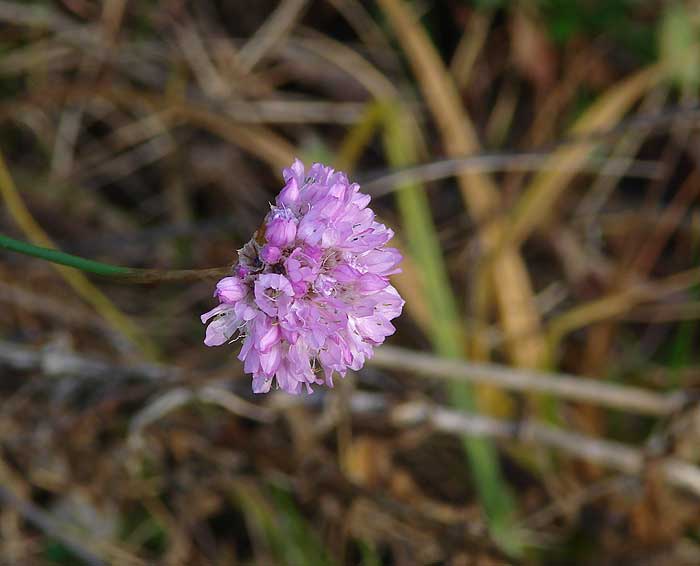
Sandgrasnelke

DSC01850w.jpg

This is a Sandgrasnelke which I photographed last Sunday. I don’t know what it is, except that it is a kind of pink or carnation and its leaves and stems are covered with wax to withstand a dry climate. I don’t think it should be flowering in November, somehow.

LATER NOTE: it’s armeria elongata, not a carnation at all. Armeria maritima is thrift, and is similar – this is a subspecies.

Book on barristers’ clerks

One of the desirable jobs in the English legal world is that of the impresario-like figure of the barrister’s clerk. A clerk and his (are there any women?) assistants arrange the diaries of the barristers in whose chambers they are employed, in return for a cut.

Professor John Flood (no, Germanists, this is the other Professor John Flood) specializes in studying lawyers. He has studied and taught in Britain and the U.S.A.

My first major study was of barristers’ clerks, which is about to be revisited. This was followed by an ethnography of a large law firm in Chicago looking at the organisation of the law firm and the relationships between lawyers and clients. …The most recent research, funded by the German Science Foundation at Bremen University, will examine cross-border lawmaking in large law firms.

This is interesting stuff on which we must keep an eye. Professor Flood even has a weblog, Random Academic Thoughts (RATs for short).

His 1983 book on barristers’ clerks is online as a PDF and looks like an enjoyable read. The first appendix describes the experience of researching barristers’ chambers from the inside.

amazon.de review/Spannende Wochenendlektüre

From a review on amazon.de (three stars out of five):

Was mir jedoch nicht gefallen hat, ist der fürchterliche Schreibstil des Autors, der sich hinter dem Pseudonym “Gesetzgeber” versteckt (ich glaube, ich weiß nun auch endlich, welcher Autor das berühmte Schild in deutschen Aufzügen verfasst hat*). In Frankreich habe ich in einem ganz ähnlichen Buch einen weit flüssigeren, eleganteren Stil und vor allem eine tadellosere Grammatik vorgefunden.
*Für Aufzugvermeider: Der Text lautet “Es ist verboten, Personen in Aufzügen zu befördern, in denen das Befördern von Personen verboten ist.”

German-Surinam Creole dictionary/Wörterbuch Deutsch-Suriname-Creole

Google Books reveals Wullschläger’s 1856 dictionary for missionaries (spotted by Trevor).

I always find it bizarre to find German written in Fraktur and the other language not.

jdn. als Koch anstellen: potti hem na koki
der Apfel fällt nicht weit vom Stamm: aranja (od. manja) no fadóm fárawei vo hem boom
das Bein brechen: broko hem foetoe
das Gesetz brechen: broko da wet
Eingang: doro
einheimische Kräuter: krioro wiwiri
Deutsch: opo-duisi
Dickbein:bigi-foetoe
Furz: popòe; winti
Geschwätz: taki taki; taki
Nebel: smoko vo gron; dampoe; smoko

Domestic violence/Gewalttätigkeit in der Familie

In English law, there is legislation on domestic violence (Oxford Law Dictionary: ‘Physical violence inflicted on a person by their husband, wife, or cohabitant’), for instance enabling a wife to get an order banning her husband from the matrimonial home. Romain suggests Gewalttätigkeiten im Familienbereich; Tätlichkeiten gegen Familienangehörige.

Die Welt has now summarized a report in The Times. This relates to a pilot database trying to identify potential murderers along the lines of Ian Huntley (although it doesn’t answer the question as to why he slipped through the nets of the current law, where it should not be possible for someone with his history to be employed as a school caretaker).
The Times:

The team is concentrating on reducing the risk of those with a history of domestic violence turning into murderers. About a quarter of murders are related to domestic violence.

Die Welt:

Dem Team gehe es insbesondere darum, das Kriminalitätsrisiko bei Menschen mit häuslicher Gewalterfahrung zu senken. Ein Viertel aller Mörder habe entsprechende Erfahrungen, schrieb die „Times“.

I am not too happy about the translation of a history of domestic violence as häusliche Gewalterfahrung.

(Via Handakte WebLAWg)

Texas German/Texas-Deutsch

Annggargoon’s language of the week is North Texas German. Article in the Houston Times, and site of Texas German Dialect Project (TGDP) with sound clips.

Texas German is a unique dialect of German that is spoken by the descendants of German immigrants who came to Texas beginning around 1830. Widely spoken across central Texas for more than 150 years, Texas German is in the process of dying out because it is not passed on to younger generations.

Professor Hans Boas is working to preserve the dialect (is it a dialect?). It is not free of English influence. To quote the newspaper article:

GLOSSARY
Here are a few phrases and words distinctly Texas German: • die Stinkkatze: “the skunk;” literally: the stinking cat; standard German: Stinktier , meaning stinking animal • mitaus: a direct translation from English “without” (with: mit; out: aus); standard German: ohne • für sicher: “for sure,” direct translation from English; standard German: na klar , or sicherlich • der Blanket: “the blanket;” standard German: die Decke • Das hat mich gebothered: “that has me bothered”; “that bothered me”; standard German: das hast mich geärgert • Online: To hear Texas German and read more about the University of Texas project, visit www.tgdp.org Source: Hans Boas, University of Texas at Austin