US Supreme Court on translator vs. interpreter/Was ist ein Dolmetscher?

The Wall Street Journal Law Blog reports on a Supreme Court decision on the definition of interpreting. A 1978 federal Act (the Court Interpreters Act) permitted the winner of a case to have interpreting expenses paid for by the loser. Did this include translated documents? The court said no.

Justice Alito said translating documents doesn’t count as interpretation. His reasoning relied heavily on dictionaries current in 1978, most of which defined an interpreter as one who translates oral communication. The Oxford English Dictionary included a definition of an interpreter as one who translates “books or writings,” but described that definition as obsolete, Justice Alito wrote.

… While other appellate courts had found that “interpreter” includes translators of written material, Judge Posner ruled otherwise in 2006, prompting the Supreme Court review to resolve the conflict. Justice Alito cited Judge Posner’s comment that no one would refer to the translator of the Iliad and the Odyssey as an English-language “interpreter” of those works. Chief Justice John Roberts and justices Antonin Scalia, Anthony Kennedy, Clarence Thomas and Elena Kagan joined the majority.

I’m surprised these people understand the difference beween an interpreter and a translator, so often do we read of translators where interpreters are meant.

The WSJ post includes a link to a PDF file of the decision.

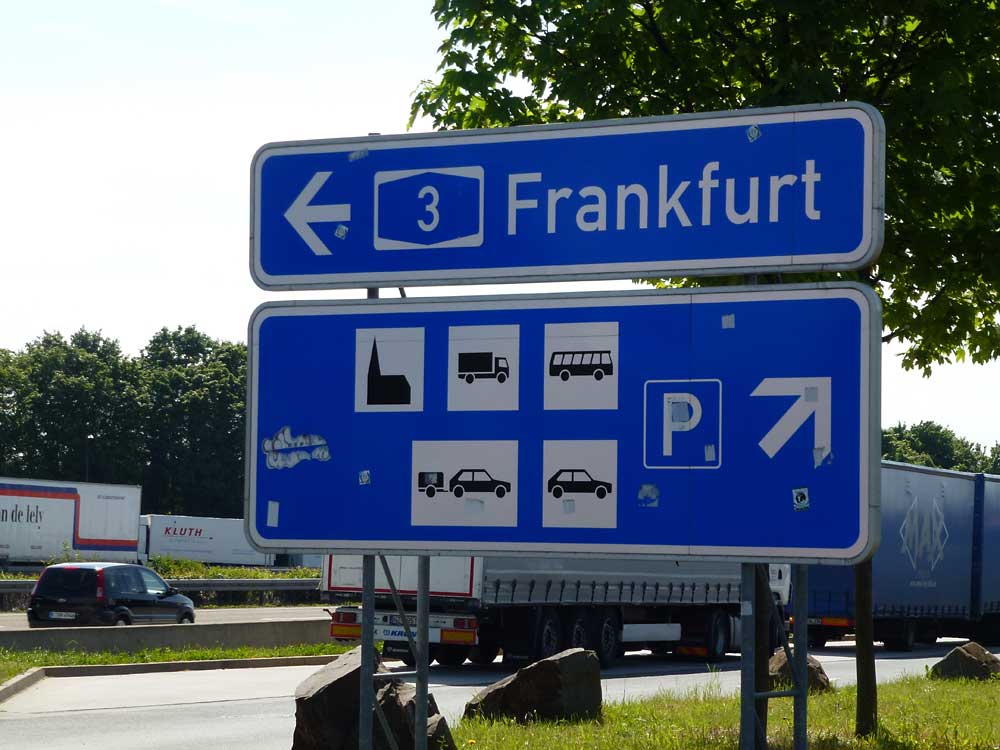
Motorway church/Autobahnkirche

I’ve mentioned Autobahnkirchen before.

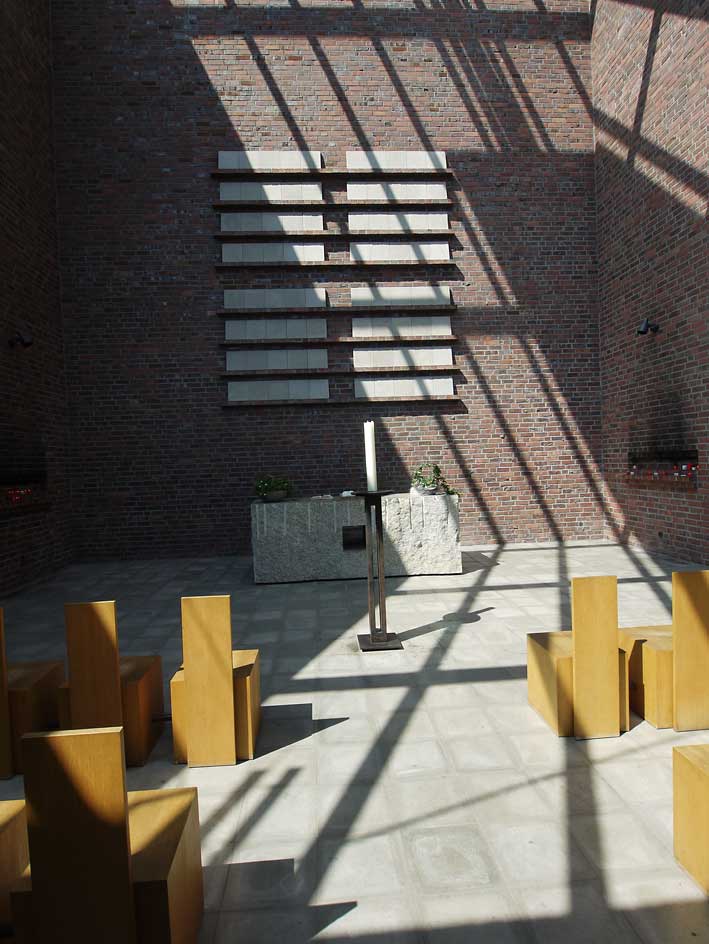
Here’s the one at Medenbach near Frankfurt am Main:

They had a useful brochure showing all the motorway churches in Germany. You can see them here – Medenbach is number 16. I’m sorry I missed the right turn-off for number 20, which I also passed – it’s more impressive than I realized, but also in the middle of the heavy goods vehicle services station, and you can scarcely move for lorries on Sundays and public holidays.

Ascension Day/Christi Himmelfahrt

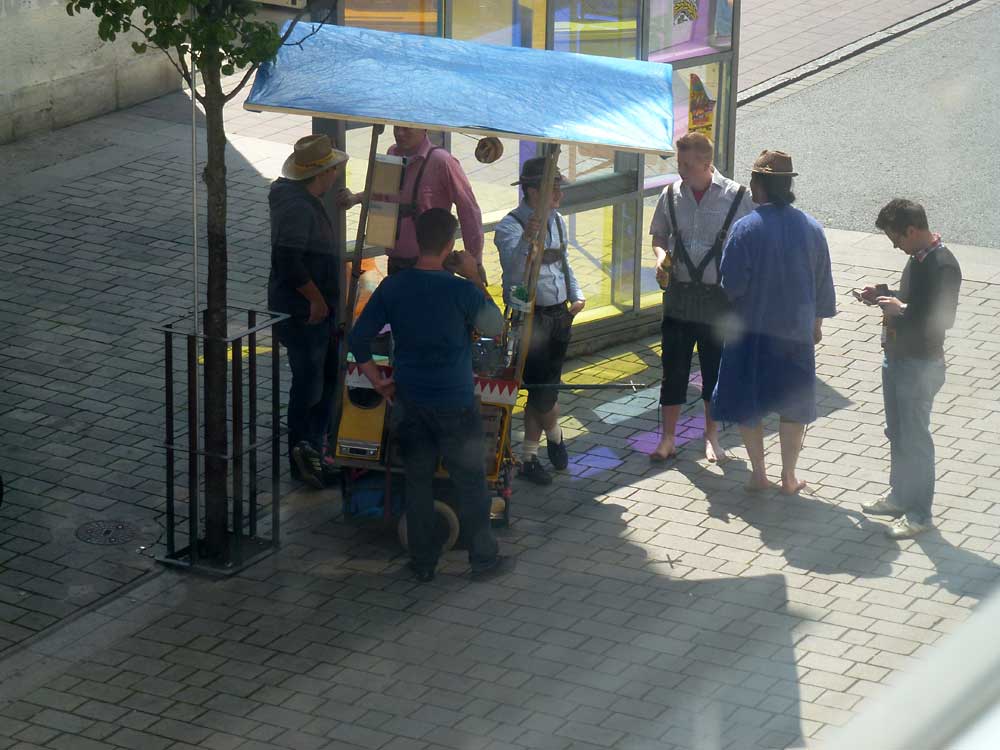
Ascension Day is also Father’s Day in Germany, and Father’s Day is celebrated by groups of men of all ages, including many who aren’t fathers, dragging carts of alcohol around the country.

I even saw these when I arrived back home today, virtually outside my building:

The coloured glass object in the background is unfortunately a work of art, possibly put up to limit traffic entering the pedestrian zone. The red and white triangular pattern on the cart mark it as Franconian.

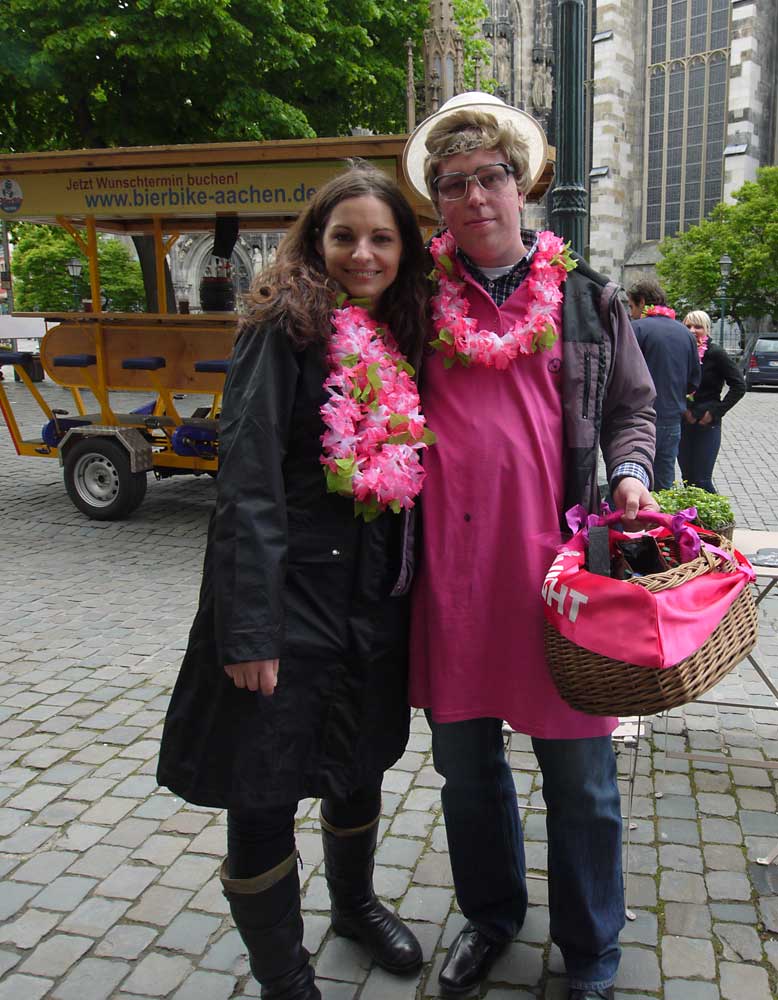
Here are two engaged persons in Aachen yesterday, at least one of whom was preparing to go on a trip of some sort today:

Comments/Kommentare

I don’t get many comments on this site at the moment. This is partly because I accidentally barred all comments for several months when I was dealing with comment spam.

At the moment, comments have been banned for a couple of days but are now released again. This was because the number of spam comments increased to ten an hour. These were the ones that claim to come from Facebook users. None of these spam comments ever appear, but it takes time to remove them from the spam filter. In principle, though, comments are possible. But I will be taking a partial break from May 1st, which means posting will be slow to non-existent, and I may have to close comments down temporarily again.

Kevin Lossner has criticized my captcha, but I don’t have much choice using the current software. I tried it without a captcha – since spammers can now automatically read the captcha, I thought it might make no difference, but no, it was even worse.

Just saying!

Catherine Translates: Questionnaire for fellow translator-bloggers/Fragebogen für Übersetzer/Blogger

A couple of weeks ago, on Catherine Translates, Catherine Jan had a post called 10 questions for fellow bloggers. There are now 44 comments, although not 44 replies. I thought it was interesting. It makes a refreshing change from those weblogs which appear out of nowhere and announce that they’re having a competition for the best (language) weblog, thus ensuring themselves a ton of links.

Psychological test for drivers/MPU

This is just some background information on Germany. The photo is not easy to read, but it says that Traffic Psychologist Wolfgang Roth can prepare you for the Medizinisch-Psychologische Untersuchung (MPU). This is going on all over Germany. It is also known as the Idiotentest.

If you lose your driving licence for drunk driving here, for example, you have to do this psychological test to decide whether you can get your licence back. According to Wikipedia (German – there is an English Wikipedia article too, but it is much shorter), the test takes from three to four hours. It consists of medical tests, a ‘psychological conversation’ and some tests on the computer. I was told once that it included the Rohrschach test, but apparently there are some apocryphal stories about what it contains. It says that in Russia, every driver has to pass a test like this every three years.

People get very exciting about this test – here are some on Toytown Germany:

a) The MPU, or Medizinisch Psychologische Untersuchung, is a scandalous piece of legislation considered extremely suspect by Road safety and Psychology professional alike, and frowned upon by Brussels.

b) There are not hundreds of thousands, there are about 100.000 a year, and there are 50 million people with a license. And about half of the cases are related to drunk drivers having lost their license and have later to undergo examination wether their drinking habits have changed if they want their license back. Anythin wrong with that? Not for me.

Anyway, there was a judgment – a preliminary ruling – of the CJEU on 26 April holding that it’s OK for someone who’s lost their licence for drunk driving in Germany to get a new licence in another EU country. This is probably the decision (Case C‑419/10).

I got the impression from surfing the Web that a company in the Czech Republic is already offering a new driving test, and even one with a ‘positive MPU’ – that is, you cannot fail the MPU.

Trivia: Wikipedia has pictures of the first German driving school in 1906. Further investigation indicates that the first British woman to pass a driving test did so in 1900. She had to go to France – there was no driving test in Britain till 1935.

Here’s a site (in German) where you can get assistance and more information on the subject.