Internet miscellany/ Vermischtes aus dem Internet

1. Try out mobile phones / Handy ausprobieren bei TryPhone (more models to be added). via Lifehacker

2. I know why I’d be worried about a referendum on the EU Treaty in the UK: it’s the British media. The Economist blog, Certain ideas of Europe, does a good job of showing them up, on the basis of a Sun article copied elsewhere, that refers to European judges as ‘unelected’ as if English judges were elected and places the ECJ in Luxembourg.

3. Audio: During the German train strike, rob-log produced a spoof ICE announcement to passengers (in German, but with a very authentic-sounding attempt at a brief English message at the end): …bitten wir kurz um Ihre Aufmerksamkeit…

The future of patent translation / Patentübersetzung nach dem Londoner Übereinkommen

Gemäß dem Londoner Übereinkommen, das 2008 in Kraft tritt, sollen weniger Übersetzungen für Patente anfallen:

Die Vertragsparteien des Übereinkommens verpflichten sich, auf die Einreichung von Übersetzungen europäischer Patente in ihre Landessprache ganz oder weitgehend zu verzichten. Für die Praxis bedeutet dies, dass Inhaber europäischer Patente künftig keine Übersetzung der europäischen Patentschrift vorlegen müssen, wenn das Patent für dem Londoner Übereinkommen angehörende EPÜ-Vertragsstaaten erteilt ist, in denen eine der EPA-Sprachen Amtssprache ist. In allen anderen Fällen ist eine vollständige Übersetzung der Patentschrift in die Landessprache nur dann vorzulegen, wenn das Patent nicht in der von dem betreffenden Staat bestimmten EPA-Sprache vorliegt. Die Einzelheiten sind in den Artikeln 1 und 2 des Übereinkommens ausgeführt.

Mit diesem Übereinkommen ist ein Durchbruch in der Sprachenfrage erzielt worden, der das europäische Patent künftig deutlich kostengünstiger machen wird.

The London Agreement is to come into force in 2008 and provides that fewer translations will be needed to register patents:

The Parties to the Agreement undertake to waive, entirely or largely, the requirement for translations of European patents to be filed in their national language. This means in practice that European patent proprietors will no longer have to file a translation of the specification for patents granted for an EPC Contracting State Party to the London Agreement and having one of the three EPO languages as an official language. Where this is not the case, they will be required to submit a full translation of the specification in the national language only if the patent is not available in the EPO language designated by the country concerned. For more details, see Articles 1 and 2 of the Agreement.

This breakthrough on the language issue will significantly reduce the cost of European patents.

RWS Holdings, a global translation company that does a large amount of patent translation, is not too concerned about this, according to the Scotsman:

The company added that an expected £1m hit from a new agreement aimed at reducing the translation costs of patents granted under the European Patent Convention, due to come into force in spring next year, would be offset by the company’s strong performance in the next financial year.

The IPKAT reports this with a dry remark (and further links):

A recent story in the Scotsman reports that RWS plan on taking a £1 million hit when the agreement kicks in, but don’t see this as being much of a problem with a turnover in excess of £46 million. The future is bright, apparently, and the loss of a few German and French translation jobs is nothing to be worried about.

Version 3 German GAAP taxonomy released / Deutsche GAAP-Taxonomie zweisprachig veröffentlicht

Robin Bonthrone reports:

Version 3 of the XBRL taxonomy of German GAAP dated 1 December 2007
has now been released. The taxonomy is available in German and
English. You can either download the native XBRL format files from
XBRL Deutschland’s website at:

http://www.xbrl.de/downloads/taxonomies/de-gaap-ci-and-gcd-2007-12-
01.zip

or view the complete taxonomy in an online viewer at:

http://www.abra-search.com/ABRASearch.html

Select “German GAAP Version 3, GAAP module” in the list box and then
use the drop-down box to choose between German and English. You might
find it easier to have both language versions open in separate windows.

A premium quality resource brought to you by the team at XBRL
Deutschland’s Taxonomy Working Group, including F&B.

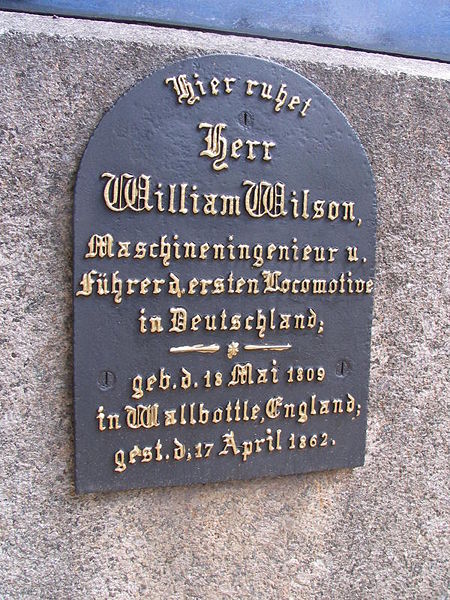
William Wilson

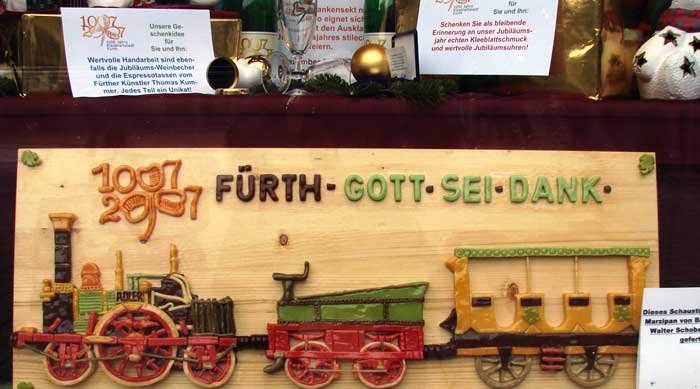
William Wilson was the first train driver in Germany. According to the German Wikipedia, he was born in Aberdeen. He came to Germany to drive the first train from Nuremberg to Fürth in December 1835. On the first trip he wore a top hat and tails. He was an employee of Stephenson and intended to stay for only a few months, but for some reason or other he stayed. He died in 1862 and is buried in Nuremberg.

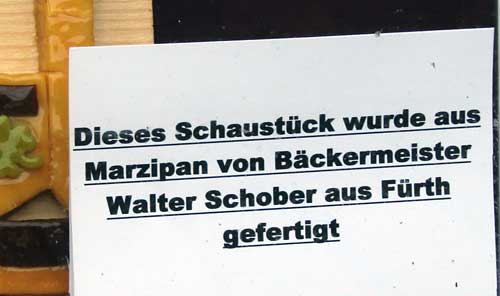
So presumably this is him in marzipan:

You may wonder what the words Gott sei Dank are doing here. They are the cry of someone whose computer has no audio ability when clicking on the link to what I fear is the official Fürth jubilee song, Hier bin ich zuhaus.

(Unfortunately discovered via zonebattler’s homezone)

Strange parking tickets book / Britische Strafzettel gesammelt

In The Parking Ticket Awards: Crazy Councils, Meter Madness and Traffic Warden Hell, Barrie Segal (described by some as Britain’s leading expert on traffic tickets) collects odd parking tickets.

amazon.de link:
The Parking Ticket Awards: Crazy Councils, Meter Madness and Traffic Warden Hell

Examples in this article:

Robert McFarland’s horse was given a parking ticket under the heading, “Vehicle Description: Brown Horse”.
A motorist who received a ticket in an NCP car park, despite returning to her car an hour early, was told the attendant had fined her because he had “reasonable cause to think she would stay longer than the four hours for which she had paid”.

Here’s a picture of a British parking ticket (not my car):

Segal also runs a website helping people to fight parking tickets.

www.strafzettel.de looks considerably more strait-laced.

(via Legal Juice)