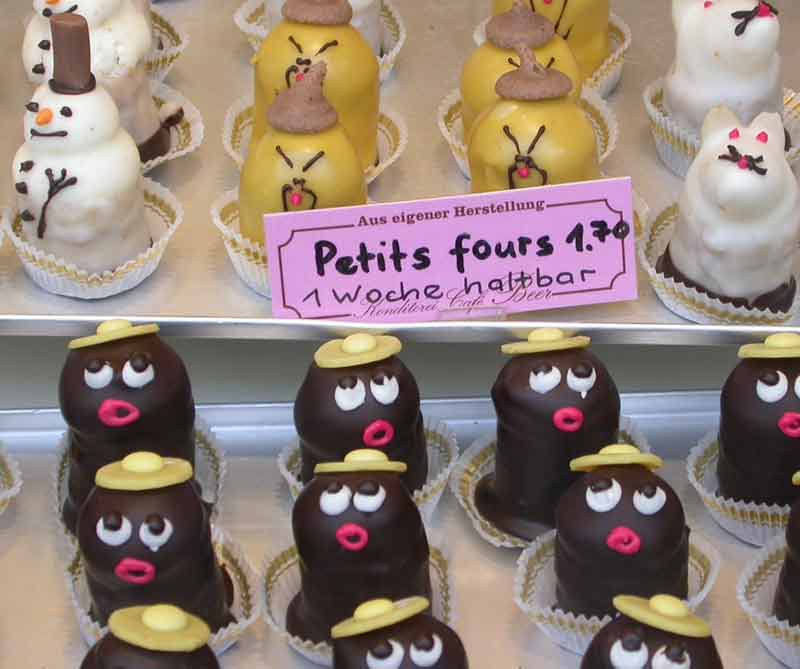
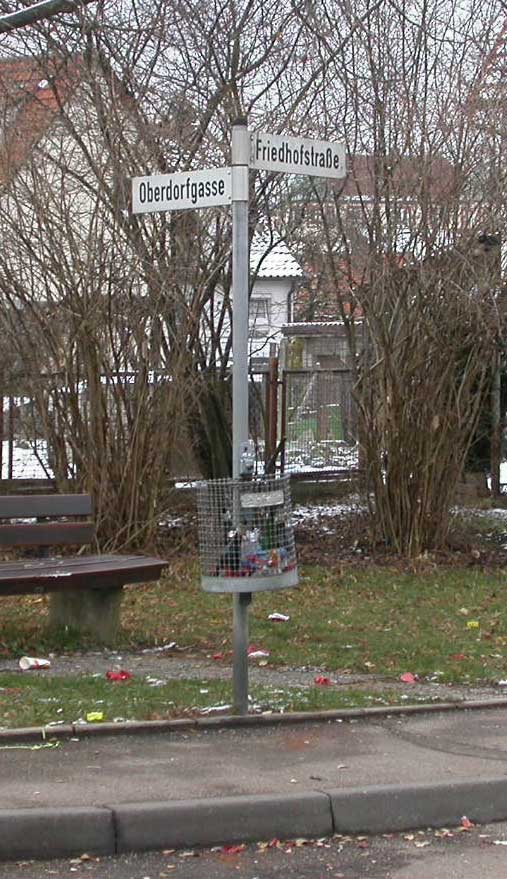
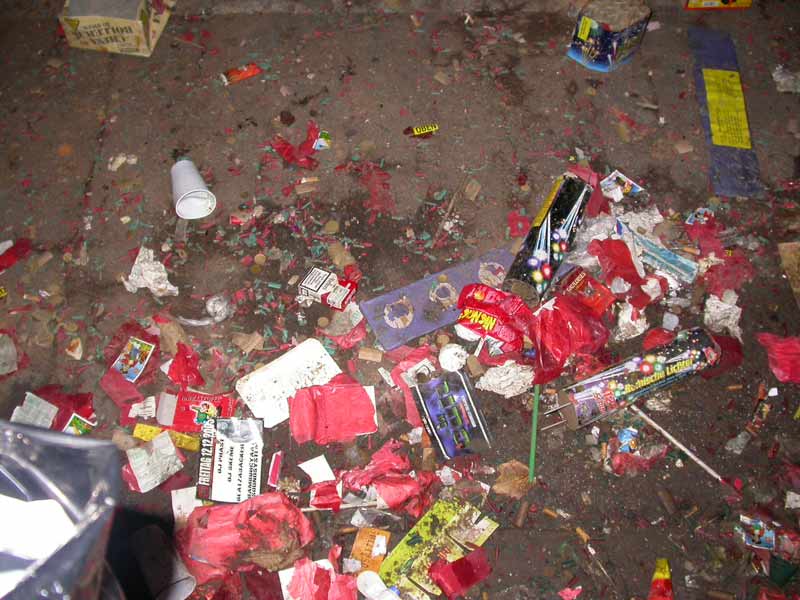
I sometimes wonder how PC the German New-Year selection is (and the coolie hats look more like cowpats):
(Breite Straße, Nuremberg)
(Following a reminder from Handakte WebLAWg): This is for those outside Germany who haven’t heard about ‘Dinner for One’.
Every year, on December 31st, millions of Germans, on several TV stations, watch a sketch called ‘Dinner for One’ by Freddie Frinton, who was a fairly well-known English comedian in the 1950s and 1960s and probably earlier. (May Walden is the stooge). The sketch is virtually unknown in Britain. There is a page of information with videos on the NDR site (a German TV station). The whole text in English can be found here. Here’s a Guardian article dated December, 2002.
bq. Norddeutscher Rundfunk (NDR), the Hamburg-based channel which first recorded and broadcast Dinner for One in 1963, will show it no less than five times during the course of the evening in various versions – in the Plattdeutsch dialect of northern German, the original black-and-white and a computer-generated colour version produced two years ago in Hollywood.
The article reports that Frinton actually had to pay for the rights to the sketch, which dates from the 1920s and whose authorship is unknown. The sketch has also been sold to other countries on the Continent, but it hasn’t been sold in the UK. I do think it’s odd to select one sketch as special. Apparently the German TV station ZDF sent someone to Blackpool in the early 1960s, and after two weeks spent watching stand-up comics, this sketch was selected as the cream of the cream. A few years later, Frinton went to Germany (not his favourite country, if I remember right) to record it in the studios.
LATER NOTE: Here’s adirect link to one of the three video versions on the NDR site (this is the full-length sketch).

The Guardian today links to an article at the University of Toronto website about the myth that the Eskimo language (Inuktitut) has 200 words for snow.
Other researchers have noted that Whorf originally focused not on how many words for ‘snow’ there were, but instead on the fact that there was no single word equivalent to the broad meaning of English ‘snow.’
There are no specific words for fish, bear or people either, only for specific kinds of them. The Guardian adds:
the real gem here is the inclusion of the Labrador dialect word meaning ‘I thought I would never go to jail’: pannanaitsimavilialautsimaniagasugilautsimalaungilanga.
Via Carob (not a blog):
The International Trademark Association has a list of trademarks to help authors know when to capitalize things and how to punctuate them. This could be useful. I particularly like the possibility of getting generic terms.
Here’s a bit (hmm, where’s ‘Google’?)
Gold Top mantles for lanterns
Golf automobiles
Goobers chocolate covered peanuts
Good Housekeeping Seal of Approval certification Good Humor ice cream
Good & Plenty candy
Goodyear tires, blimp
Gordon’s gin and vodka
Gore-Tex water repellent fabric, outerwear
Gorham china, silverware, stemware, crystal
Got Milk? Milk Association slogan
Graduate Record Examinations tests, educational software (also GRE)
Graduates toddler foods
Grand Marnier cordials
GrandMa’s cookies
Grand Ole Opry country music program
Grape-Nuts cereal
GravyMaster seasonings
I suppose it’s only the ones used in English. After all, for example, Tippex in German is always capitalized. Is it purely US, with no British examples? It says 170 countries belong.
I will probably not be blogging until the new year now. Unlike some, however, I do have a good chance of experiencing some snökaos, both German and English.