
Strafbefehle must be translated – CJEU

Udo Vetter at lawblog reports that the CJEU held that a Strafbefehl must be translated if the defendant doesn’t speak German. Here’s the decision of October 12 2017.

Directive 2010/64 on the right to interpretation and translation in criminal proceedings (you can call up a bilingual version here too). The relevant bit is recital 30:

Safeguarding the fairness of the proceedings requires that essential documents, or at least the relevant passages of such documents, be translated for the benefit of suspected or accused persons in accordance with this Directive.


Zur Gewährleistung eines fairen Verfahrens ist es erforderlich, dass wesentliche Unterlagen oder zumindest die maßgeblichen Passagen solcher Unterlagen für die verdächtigen oder beschuldigten Personen gemäß dieser Richtlinie übersetzt werden.

A Dutch national, Frank Sleutjes, was charged with leaving the scene of an accident and served the Strafbefehl (order of summary punishment) in German – only the details on how to appeal were translated. The Düren local court did not translate the order itself – normal practice nowadays. The European court finds that the Strafbefehl is an essential document.

I last discussed the subject here (the language of the court is German). We used to translate these all the time and presumably local courts will now be obliged to have them translated again.

There is not (yet) an English translation of the decision online, but there is an English translation of the Advocate General’s opinion. I see they translate Strafbefehl as penal order. I am not convinced by Tagessätze as daily penalties. More on the English perhaps later.

There is an amusing exchange in the comments on lawblog.
Bin mir nicht sicher wie ich das sehen soll.
Auf der einen Seite müssen die Leute den Text verstehen können, schon klar.
Auf der anderen Seite, woher weiß ich die Sprache die die Person spricht und wo nehme ich die Übersetzer her?
AFAIK gibt es etwa 7000 Sprachen weltweit. Und für die soll man nun immer Übersetzer vorhalten?
Klingt irgendwie nicht so gut durchdacht.

There’s a nice reference to the defendant (Beschuldiger) as “der Delinquent”.

Articles by Geoffrey Perrin (and Margaret Marks)

Many years ago, when I was teaching legal translation in Erlangen, I found some articles by Geoffrey Perrin which were very useful to me. Geoffrey let me put them on my website, but for some years after a move of the site they were not available. Now I had added a page with three of them, and also an old article by myself on translating German court names into English.

Geoffrey Perrin was at one time in the language department of the German Federal Ministry of Justice, then in Bonn, and later at the Bundessprachenamt at Hürth. The articles are on the many words for ‘copy’ in German, which unlike English prefers specific terms like Abdruck, Ablichtung, Abschrift and at least ten others; on how to translate ‘Rechtsverordnung’ (not necessarily as ordinance), and on the terminology of the juvenile criminal law – although the German terminology may change over the years, the article is still useful.

The link to the page Articles can be found in the column on the right.

Jurtrans blog

In connection with the Words to Deeds Conference 2017 I discovered a legal translation blog by John O’Shea, who does Greek to English translation. The latest post lists upcoming legal translation conferences, of which there are a few:
Round-up of forthcoming legal translation events
There are interesting links on the site too.

Also a fuller report on the conference by Jennifer Whitely on her blog Lakesidelinguist’s Blog. This probably does not refer to our local Lakeside Thurrock though:
Reflections on theWords to Deed Conference #W2D2017

Universities and translators

At the Words to Deeds Conference it struck me how many academics are writing about legal translation nowadays, and the texts they sometimes deal with are more what I think of as real-world translation texts, rather than bilingual Canadian statutes, for example. These texts sometimes even have the names of the parties blacked out, just the way I used to use real divorce documents with blacked-out names with my students in 1982 (before legal translation was a thing).

I chose a table workshop entitled Managing conceptual differences across legal systems. Our discussion made me think of Juliette’s mantra Building Bridges Between Academia and Practice, which I see has now been extended to include & Between Translation, Interpreting, and Legal Practitioners. Academics actually need non-university legal translators, and non-university legal translators would like to see their research. But maybe academics are mainly interested in building up their list of publications, and those publications appear online on sites which are very expensive to access – unless your university provides them. So that is my first problem about building bridges: what is the toll charge?

The day before the conference I was looking at the speakers’ bios and I found an article, just published online and downloadable free of charge, by Dr. Paulina E. Wilson, one of the speakers and heading our table. This is where I got it: Interjural incommensurability in criminal law. I just skimmed it – I don’t do Polish – and found it clear, comprehensible and containing a nice diagram of the definition of going equipped in English law. Now as some of us agreed on the table, it would be great to have access to all the material on comparative law being produced with translation in mind. Because a difficult legal translation requires more hours of research than a client is likely to pay, we are keen to at least see the work done by others. I could imagine collecting a database of articles, not even book chapters necessarily, that I could mine when I needed it. But there is a paywall around a lot of academic research.

Is there a list somewhere of all the sites which charge high fees for downloading? I am sure I’m being naive, because copyright and research funding require materials to be protected. But then what bridges are we going to build?

Words to Deeds Conference 2017

The Words to Deeds Conference, subtitled Legal Translation to the Next Level, was held in Gray’s Inn last Saturday. Many thanks to Juliette Scott for organizing the whole thing so elegantly and thoughtfully.
I have no intention of reviewing the conference. I did, when I first started this blog, review the ATA legal conference in New York, and I realized afterwards that it was a bad idea – you would never have time to analyse and describe all the contributions, you would be bound to leave something important out, and if you did produce something of the appropriate detail, it would be so long that nobody would read it.

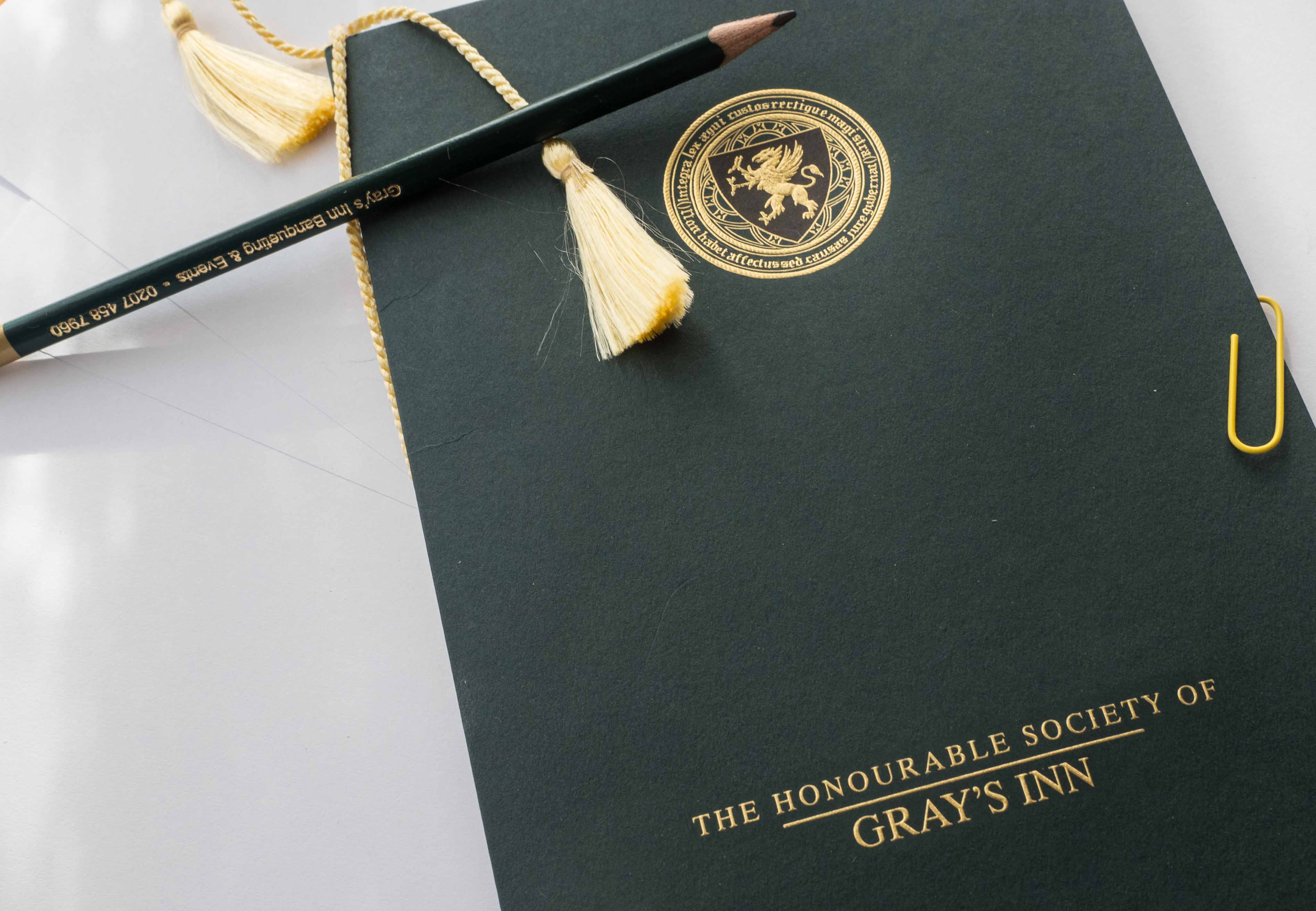
Please note in my photo how tasteful the stationery was, and what you probably can’t see: all the pencils were sharpened by hand. You will find video clips on Youtube on how to sharpen a pencil by knife.

However, I will write something about some thoughts I had in discussions, in a following post.

Legal translation hub to be launched

Legal Translation hub

Institute of Modern Languages Research
and
Institute of Advanced Legal Studies

An array of activities in the next few days will launch the Legal
Translation hub – a cross-institute initiative by the Institute of
Advanced Legal Studies (IALS) in collaboration with the Institute of
Modern Languages Research at the School of Advanced Study.
The hub will host regular events such as seminars and discussion panels,
and an annual Legal Translation Day. A unique LLM in Legal Translation
is launching in October 2017, and a dedicated library section has been
established within the IALS library.
The hub engages with practice – both legal translators and lawyers – and
with professional bodies and institutions. Additionally, it undertakes
outreach projects.
The inaugural events include three talks at the Russell Square
headquarters of the Institute of Advanced Legal Studies on 3 February:

* Machine translation and national
security (3 February, 2–3 pm):
Dr Henry Liu, president of the International Federation of Translators,
based in New Zealand and a leading interpreter in English, Chinese and
French, will discuss issues that have implications for UK’s
international reputation and domestic security. He believes British
citizens are being placed at unnecessary risk by a lack of
accountability and absence of quality control in intelligence gathering
operations.
* A practical workshop: using Corpus Linguistics for
Law (3 February, 3.30–5.30pm):
Dr Gianluca Pontrandolfo, a Trieste-based practising legal translator
and academic, will use examples to explain how new technologies can be
used to gain insights into the language of legal texts. Dr Pontrandolfo
worked on the English translation of The Italian Code of Criminal
Procedure and is also the author of a groundbreaking work on compound
terms in criminal law.
* EU legal translation: past, present and
future? (3 February,
5.30–7.30pm): Professor Łucja Biel, from the Institute of Applied
Linguistics, University of Warsaw, Poland and leader of several
international language projects will provide a practically oriented
overview of major challenges and quality parameters in institutional
legal translation in EU institutions.

The launch programme concludes on 6 February at the Québec Government
Office, 12.30–2.30pm, with Louis
Beaudoin, an eminent jurilinguist from Canada, who will explain Québec’s
unique ‘co-drafting’ model to an international audience of legal
translation practitioners, representatives of leading law firms based in
London, researchers and members of the public.

See also at IALS.