German Deli – Huh?

gdeli1w

It looks as if German Deli is waiting for the next Olympics.

germandeli2w

huhw

They do have a special offer on Limburger cheese, best before date 28th July. I’m not a great eater of Limburger cheese, and am surprised it has a best before date at all. Also an offer on Halberstädter Wurstsoljanka. It is also the place to get your Sahnesteif, or indeed the Great German Bake-Off Hamper (don’t think Paul and Mary would think much of this one) and pseudo Currywurst pack.

There is apparently also a shop here at Stratford.

Bavarian invention hits the big time abroad

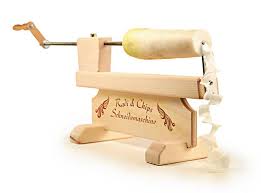
One of the curiosities of Bavaria, and more specifically of beer festivals, is the (mooli/daikon) radish cutting device, which you can see and hear explained on YouTube here.

radi

I am now shocked at the rise of the spiralizer in the UK. Apparently it makes it easier for you to get your ‘five a day’.

Transform your 5-a-day into spaghetti-style spirals to make meals healthier and convert everyone into a curly fruit and vegetable fan. Perfect for preparing coleslaw or salads, the Spiralizer is also great for getting the most out of your vegetables with the latest in food trends: vegetable spaghetti. Feed in raw courgette, carrot or aubergine and it produces fine, looping strands which can be cooked in next to no time so that vegetables retain their vitamin content and act as a quick-cook substitute to pasta.

Telegraph: The best spiralizers, tried and tested

They claim it was a Japanese invention, but I gather some Germans have had spiralizers in the family for decades.

Pease pudding nearly banned from hand luggage

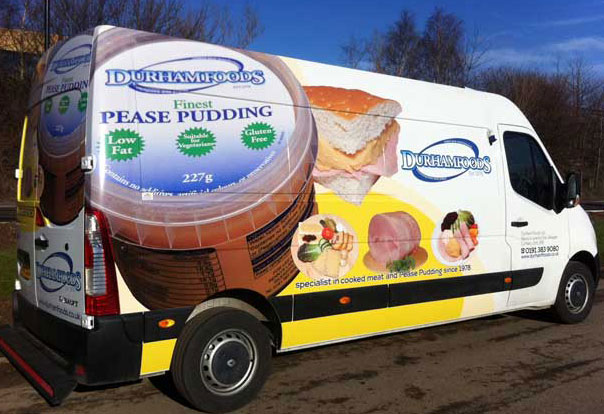
ppvan

This is perhaps off topic, but I was surprised to read about this EasyJet case:

Geordie passenger stopped by airport security staff after pease pudding mistaken for Semtex

After being told that the consistency of the pudding could see it ‘technically’ classed as Semtex, he offered to let security taste it to prove it wasn’t.

The pease-pudding lover was allowed through with his snacks and simply warned to pack them in hold luggage the next time he travels.

He said: “I was very glad that they allowed me to keep them in the end. It is quite hard to get your hands on pease pudding down south.”

Since when is pease pudding hard to get ‘down south’? We always have boiled ham and pease pudding on Christmas Eve. And when we moved to Romford in about 1952, my mother was at Romford Market one day and went to sit down in the churchyard to have a rest, where she found two women eating saveloys and pease pudding out of newspaper. And now I read that these are a northern delicacy! And what is a ‘tub‘ of pease pudding?

Or does the actor not like the brand Foresight, which is the usual one down here? I think all the big supermarkets sell it. Well, maybe Foresight is too southern. And it appears that in the north east they eat pease pudding on its own in sandwiches, which is certainly strange.

It does elicit discussion.

English language curiosities

On reading this headline in The Local:

Merkel to meet Putin in January over Ukraine

I wonder whether anyone will shoot them down. However, the earlier headline about the blazing ferry has been improved (Flaming ferry counted 18 German passengers).

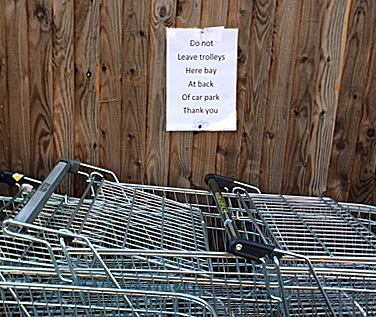
In the following, what role was played by Microsoft Word capitalizing words at the beginning of a line?

trolleys

but maybe the locals can’t read.

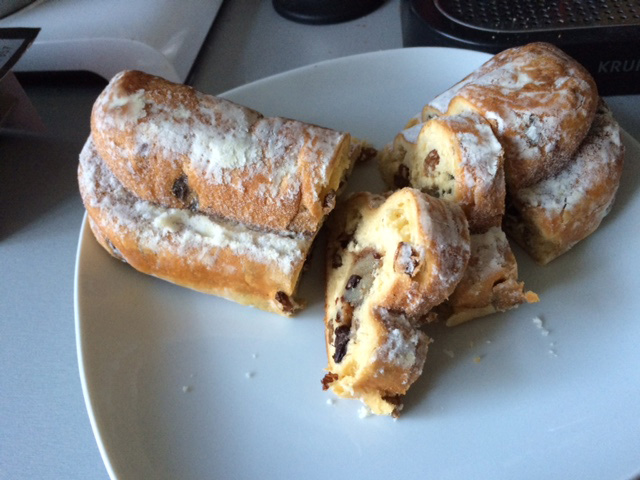
On a different subject, there is probably a law against this kind of thing in Germany:

stollen

stollenslice

Heston also created his own kind of mince pies, which were OK except they weren’t really mince pies, more like Linzer Torte. They had the tangerine-flavoured sugar too.

Legendary German bakers

It seems that the adjective legendary is applied to German bakers and pastry chefs. Actually, legendary pastry chef is a thing. Although even legendary translator gets a few ghits.

Konditor and Cook (thanks, Trevor!) have been around for a while and have a book.
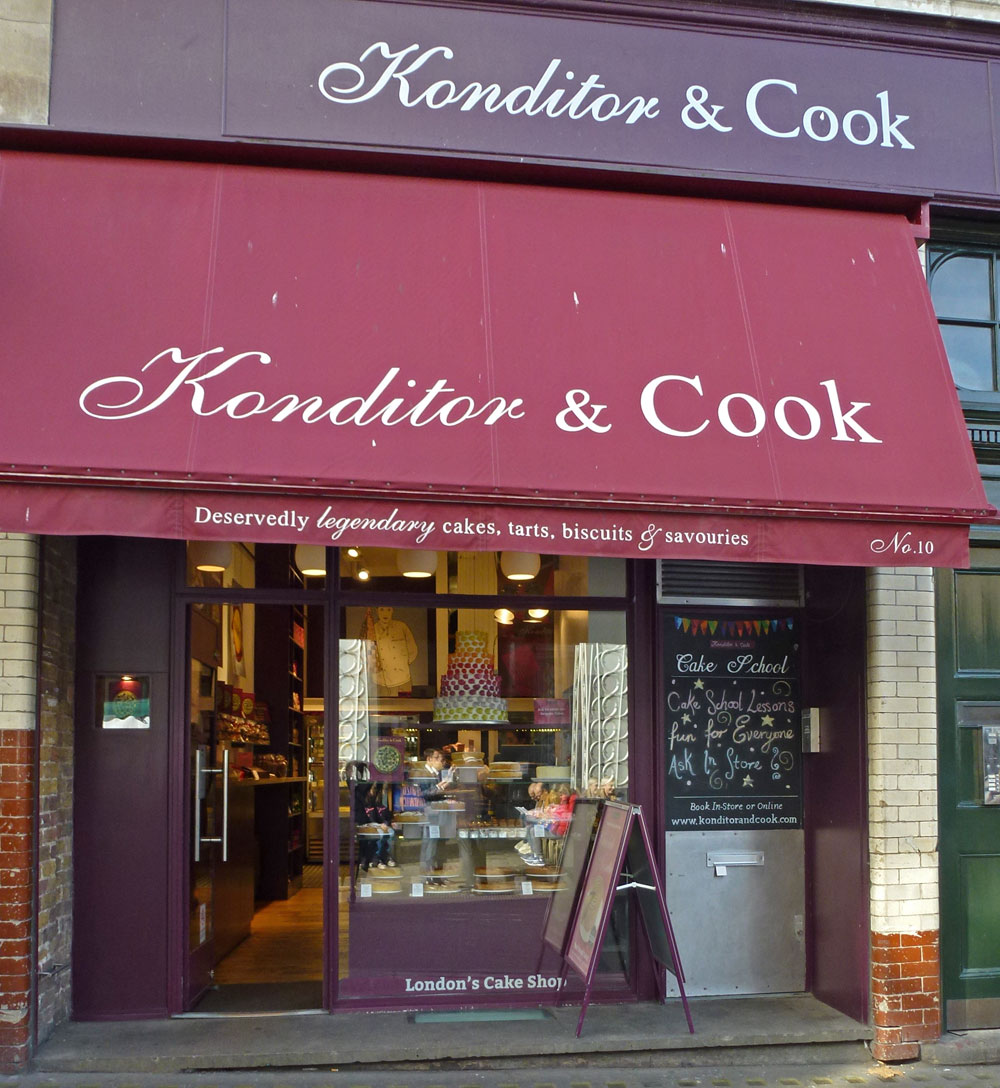
kondcookw

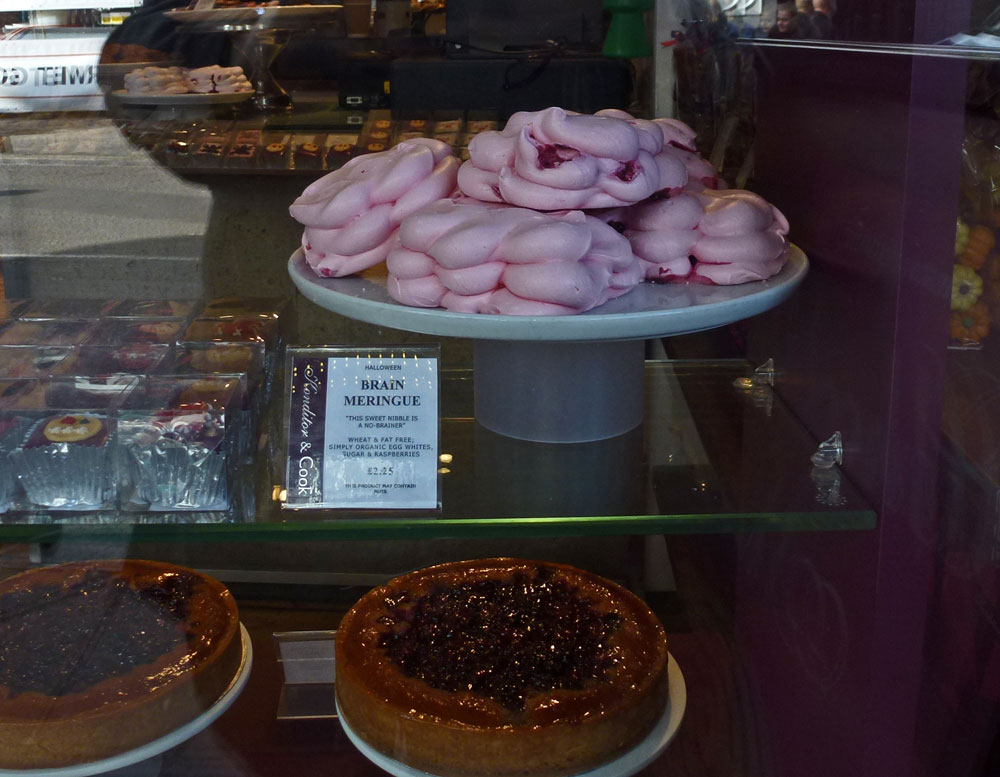
Here is a brain meringue which I didn’t try:
kond-brain-meringuew

The best-looking thing in the window was a home-made Victoria sponge. The Spectator writes:

Konditor and Cook (Ebury, £20, Spectator Bookshop, £18) is the book of an Anglo-German cake shop, which, given the excellence of German cakes, is oddly rare on the scene here. Gerhard Jenne is notable for his quirky decorations and humorous take on fondant fancies and you get a fair share of jolly stuff here, but there are also things like plum streusel in the German fashion. It’s all delicious, but I should warn you that some of the cake bases are quite dense, the cooking times aren’t always geared to domestic ovens and there’s a variation on a Victoria sponge (extra egg yolk, added crème fraiche) which comes squarely into the category of gilded lilies.

There’s another legendary German Konditormeister in Edinburgh, Falko Burkert. Stern borrows heavily from the Observer:

Jeden Monat kämpft er um die Zutaten für seine Kuchen. Er räumt den Supermarkt leer, sollte der ausnahmsweise mal Quark haben. Gehobelte Mandeln muss er aus Deutschland kommen lassen, Briten kennen nur gehackte und gemahlene Nüsse. Auch das echte Marzipan mit dem traditionellen Zweidrittelanteil Mandeln lässt er liefern. Die meisten britischen Varianten enthalten höchstens 30 Prozent. Er zahlt fast ein Drittel mehr für ungesalzene Butter (gewöhnliche Butter ist auf der Insel stets gesalzen) und muss aufpassen, dass er reines Mehl erhält und nicht solches mit Backpulver (“self raising flour” genannt).

Down here in London we pay the same for salted and unsalted butter, but perhaps it’s different when you’re bulk-buying. There’s plenty of marzipan with 30% almonds in Germany. In fact I seem to recall that 54% is the best I could get. It actually says here that Lübecker Marzipan by Niederegger has 70% Marzipanrohmasse, but then the Rohmasse already contains sugar, so that doesn’t mean 30% almonds, does it? And Falko should be capable of asking for plain flour rather than self-raising.

Joanne Blythman wrote:

For a 37-year-old, Falko is curiously old-fashioned in his instincts. He is both passionate and inspiring in his belief that time-honoured, labour-intensive, artisan skills can never be replaced by machines. He elevates taste over aesthetics. ‘I want to eat cakes, not look at them,’ he says. ‘A cake should not look like an overdecorated Christmas tree.’

His style is all about restrained amounts of sugar and subtle flavours. He will have no truck with the technological armoury used by most modern bakers, refusing, for example, to use a proving machine to speed up the making of his breads and insisting that all sponges are raised by hand in the orthodox German manner by beating air into the eggs, not with the addition of raising agents.