Essigbrätlein, Weinmarkt 3, Nürnberg
Mittagsmenü, Samstag 20. März 2010
Amuse-Gueules

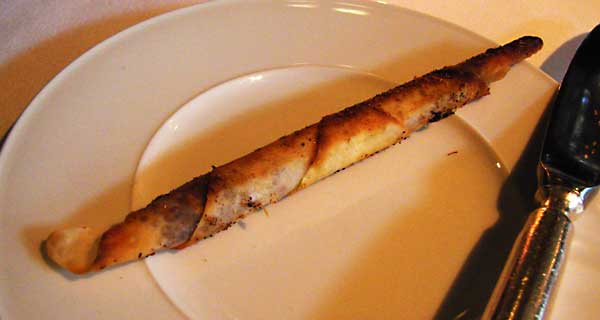
Teigröllchen gefüllt mit Rotkohlcreme, außen “unsere 5-Gewürz-Mischung” (wahrscheinlich Nelken, Kassia-Zimt, Fenchelsaat, Sternanis und Szechuanpfeffer, geröstet und gemahlen)
Pastry cigars with creamed red cabbage filling and the restaurant’s five-spice powder on the outside (probably cloves, cassia cinnamon, fennel seed, star anise and Szechuan pepper, roasted and ground)

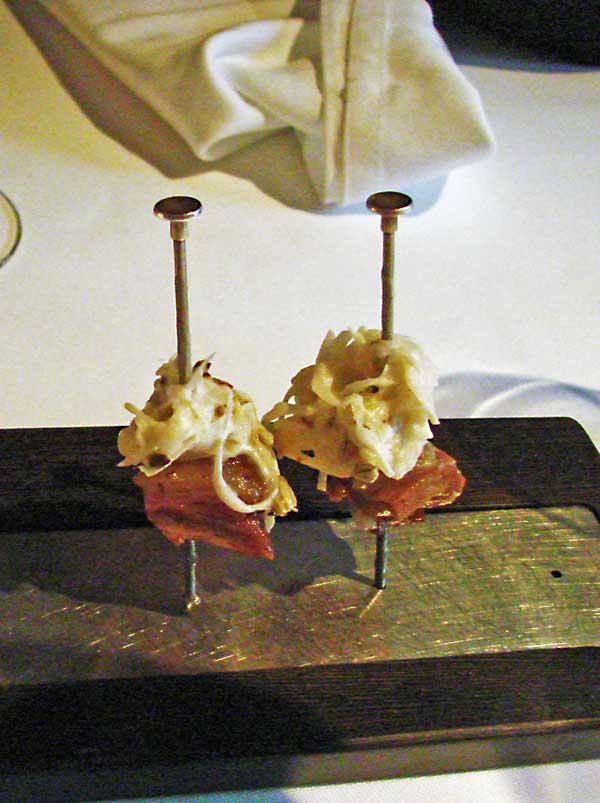
Paprika-Würfel – Paprikabrot getränkt in Paprikasaft, mit Parmaschinken umwickelt und frittiert
Red pepper cubes – red pepper bread with red pepper juice, wrapped in Parma ham, with paprika crust

Kleine Scheiben Kalbskopf mit Sauerkraut (Knoblauch und Fenchel)
Little slices of calves’ head with sauerkraut (garlic and fennel)

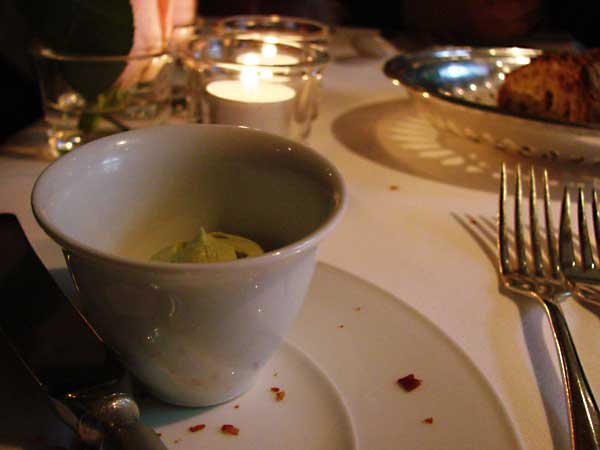
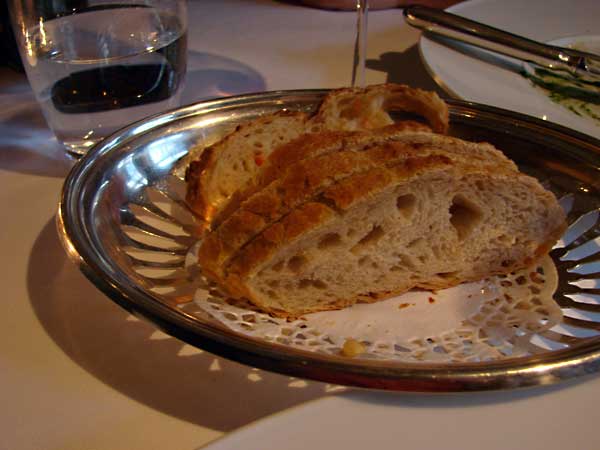
Brot (noch warm) mit Karotten und Oliven, Bohnenbutter
Bread (still warm) with carrots and olives, green bean butter
Fischgang:

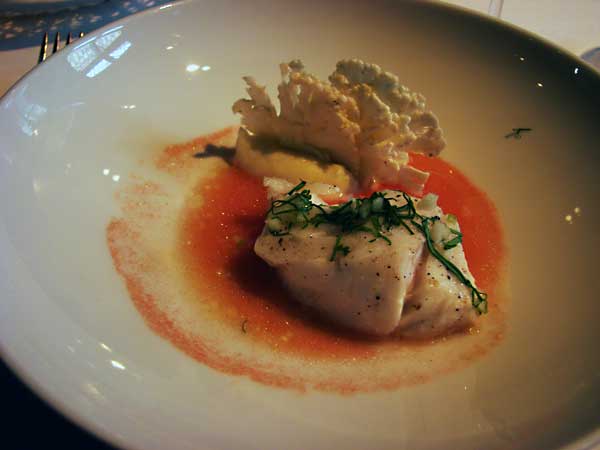
Kabeljau mit Koriander auf Tomatenessenz mit Zimtöl, Blumenkohlpüree und gehobeltem Blumenkohl
Cod with coriander on tomato essence with cinnamon oil, cauliflower puree and shaved slices of cauliflower

Kürbisquadrate, in der Mitte ausgehöhlt, mit Kürbissaft, Dill, Petersilie und Grapefruitzesten, auf Haselnusscreme, mit Orangenmarmelade
Pumpkin squares, hollowed out to hold pumpkin juice, dill, parsley and grapefruit zest, on hazelnut cream, with orange marmalade

Zweites Brot
Second bread
Rotwein La Fuissiere (Cote de Beaune, Maranges), Spätburgunder, Thomas Morey, 2007
Red wine 2007 Marange premier Cru La Fuissière, Pinot Noir, Thomas Morey, 2007
Hauptgang:

Zweierlei Lamm: einmal geschmort, einmal kurz gebraten, Kapern mit Birnenchutney, auf grünen Bohnen mit Spinatcreme, an Apfelessenz
Two kinds of lamb: one braised, the other briefly fried, capers with pear chutney, on green beans with creamed spinach, with apple essence
Nachtisch:

Rhabarber, Rahmeis, Estragon/Minze/Kerbel (mit Salz und Zucker), Brunnenkressepüree
Rhubarb, cream ice-cream, tarragon/mint/chervil (with salt and sugar), watercress puree
Schokolade
Chocolate

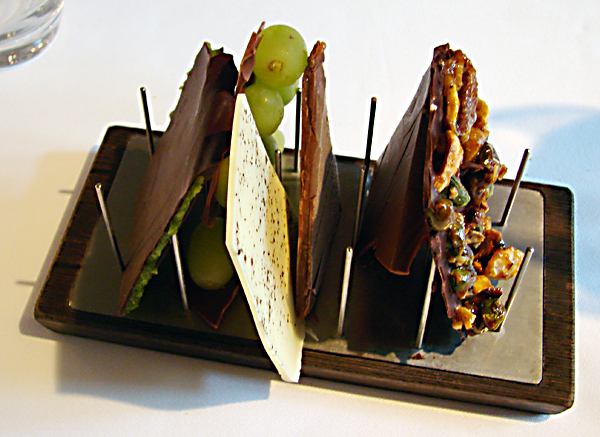
Schokolade: dunkel, mit Pistachiencreme, Vollmilch mit Trauben, Himbeeren, Karamell, kandierten Nüssen, weiß, mit Pfeffer
Chocolate: dark, with pistachio cream; milk with grapes, raspberries, caramel, candied nuts; white, with pepper
Comments: I don’t usually go to two-star restaurants, but have been here before.
The menu is very simple, not pretentious, so we spent the whole time writing down the details to see what we’d eaten!
Yes, I was full, but can’t imagine ordering just a single course, which is theoretically possible. My companion could have eaten ten times as much of the rhubarb.
The best things were the red pepper toasts, the fish course (cauliflower mash scrumptious, fish perfect, cinnamon oil in the tomato essence also wonderful) and the lamb (especially the slow-roasted bit slightly larger than a postage stamp). The only two bad things were the wine (I know 2007 wasn’t a good year – I didn’t take the chance of changing the choice after tasting it – it tasted like a Beaujolais Nouveau to me, not a Burgundy – and I didn’t know Spätburgunder was German for pinot noir, but never minded the grape before) and the very creamy ice-cream which tasted a bit UHT to me (a lot of German cream is heat-treated).
Yesterday, Cheese and Biscuits blogged a visit to the Fat Duck, which reminded me to post this.
LATER NOTE: menu outside