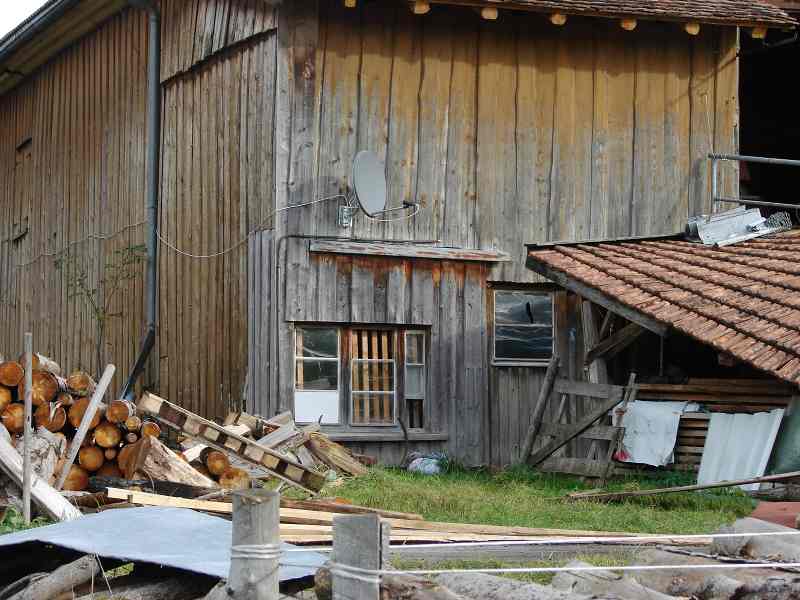
Bavarian cowshed (or similar):

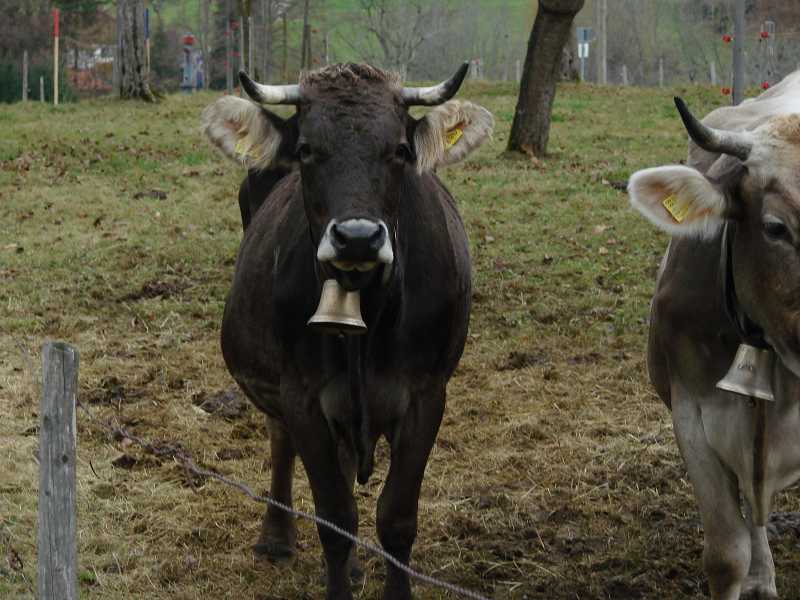
Bavarian cows:
Bavarian satellite dish:
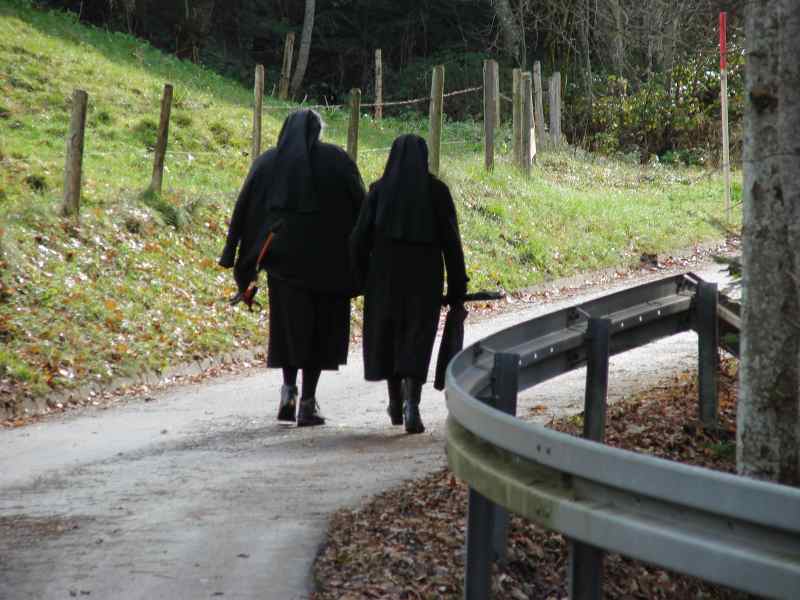
Two Bavarian nuns carrying Nordic walking poles:
Old and new:


Bavarian cowshed (or similar):
Bavarian cows:
Bavarian satellite dish:
Two Bavarian nuns carrying Nordic walking poles:
Old and new:
Sascha Stocker Legal English Dictionary – you might have seen this mentioned in a comment to an earlier entry. Sascha Stocker is a Swiss lawyer who has just started putting a DE-EN-DE dictionary of Swiss legal language online. I haven’t had much time to look at it so can’t say much (I am being subjected to various therapies in Teletubby country near Lake Constance). Contributions are possible and will be vetted by the author. Today there are 545 terms in the dictionary, but it is growing, and there’s a forum there too.
It would be great to have such a dictionary, although a German-Swiss one would do just as well. I use a variety of books – see earlier entry on Swiss German dictionaries.
I am just looking at the very beginning: Absicht and Vorsatz both translated as intention. That is quite correct. However, there are times in criminal law where a distinction has to be made. Vorsatz and intention are very wide terms, whereas Absicht is like the English specific intention. That’s why legal German (not just Swiss) has two terms – because they have two meanings. You might be convicted of murder under English law although your intention (mens rea) was developed only a second before the act, in a fight. But if you planned a murder, it would be a case of specific intention / intent.
That’s not really a criticism, just a comment.
Henry Porter in the Observer, under the heading I love Europe, but I despair of the EU – yet another journalist gets it wrong.
When the European Court of Human Rights announces a ban on crucifixes in Italian schools, you can either celebrate the liberal march of secularism or deplore the illiberal attack on religious expression and national tradition.
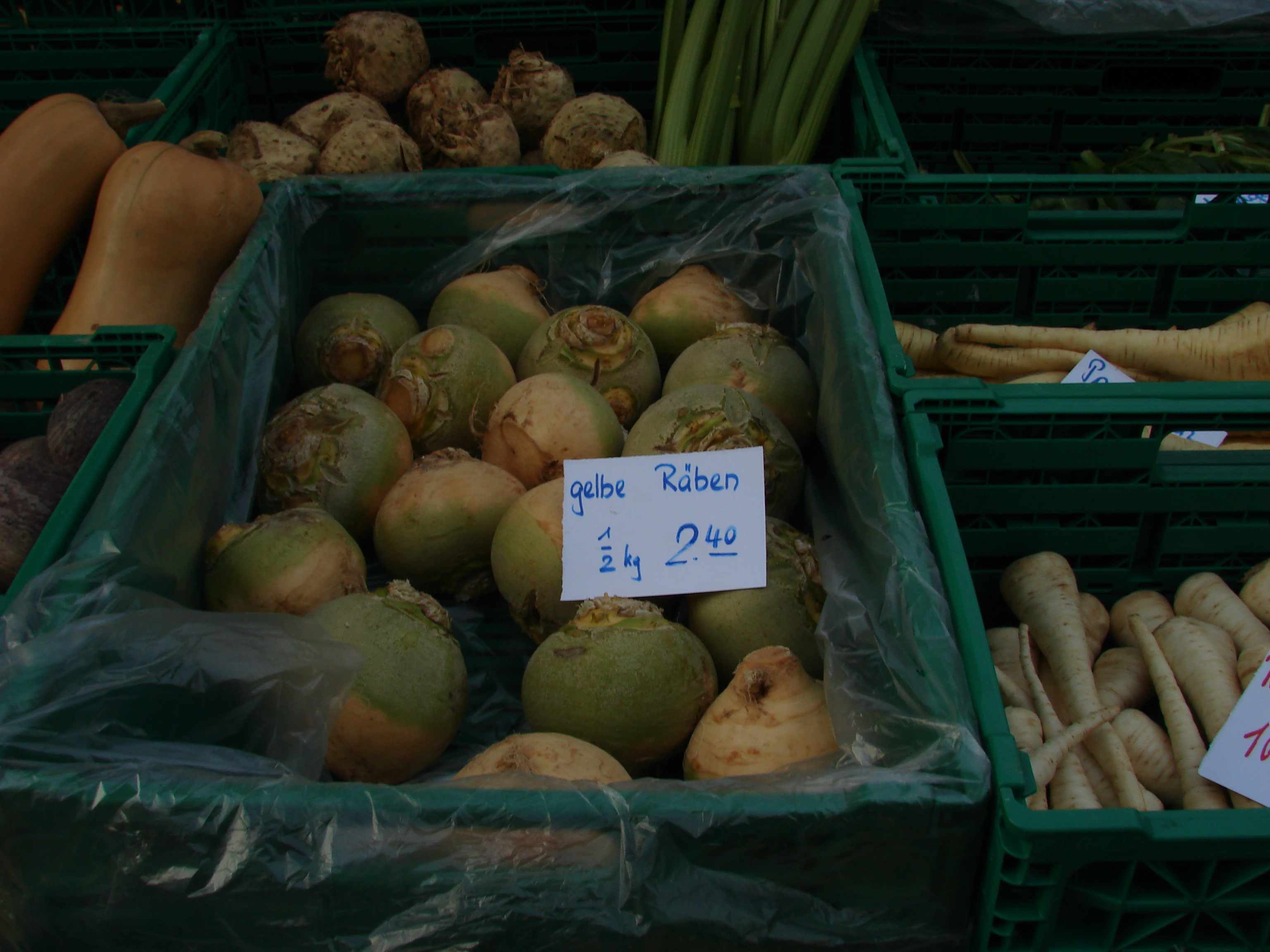
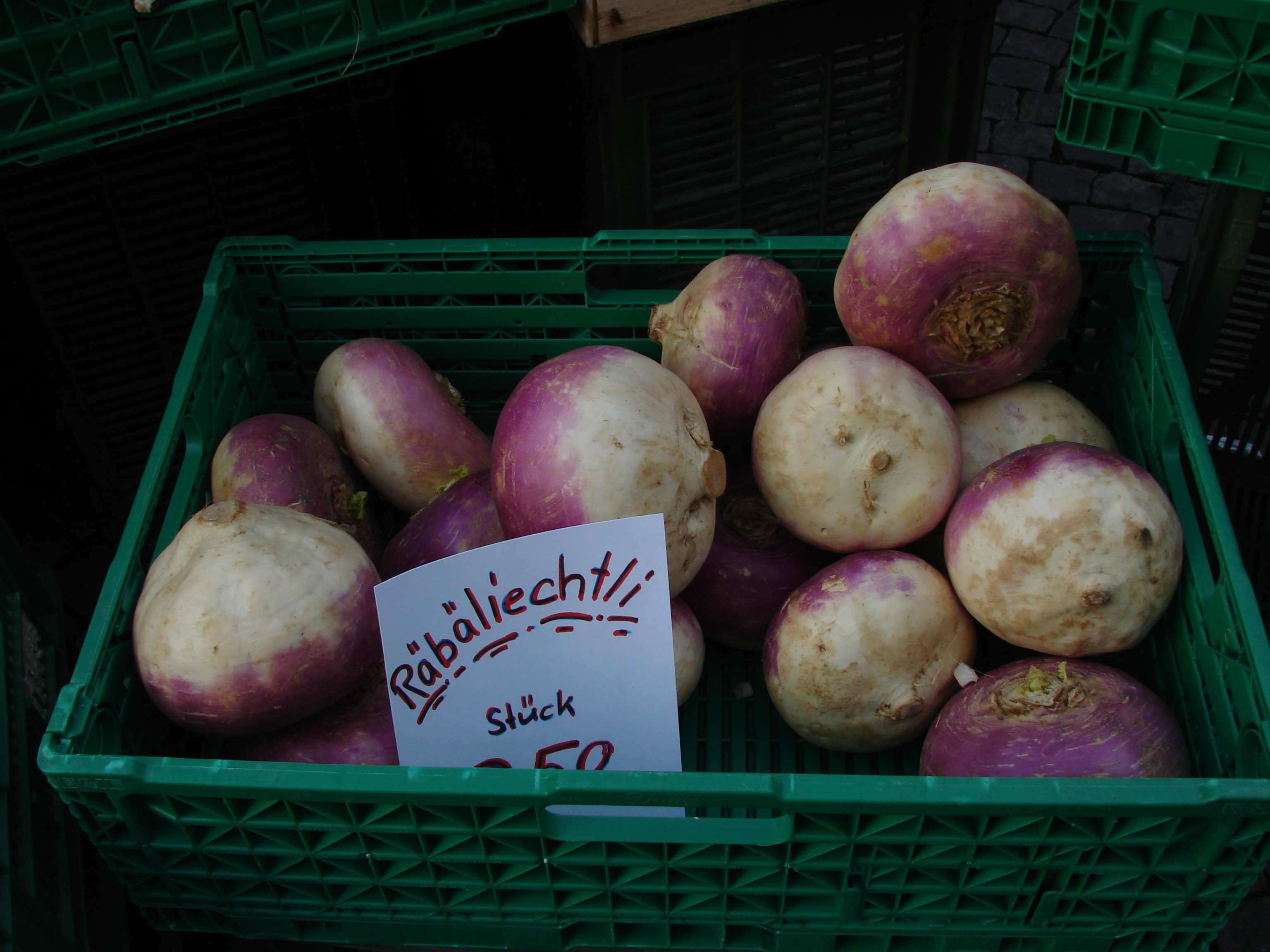
The first one is clear – yellow turnips or beets (Rüben).
The second one means ‘turnip lights’, because they aren’t eaten, but hollowed out by children as lanterns.
See the very nice pictures on flickr. Procession is on St. Martin’s Day, November 11.
Or so I was told in St. Gallen. I also saw a copy of something I think I’ve seen in a book before – a very early diagram of an ideal monastery, the St. Galler Klosterplan (website in German and English).
Things are likely to be quiet here for three or four weeks, although I gather UMTS does reach the Allgäu.
Falls jemand diese Raben kaufen will, sie sind um einiges billiger über amazon.de zu kaufen. Porto käme natürlich noch dazu. Genau welche der amazon-Angebote in der Gustavstraße mit Unterschrift des Künstlers (es ist ja eine Kunst, 3 Euro für seine Signatur zu bekommen) oder gelb angemalt zu sehen sind, weiß ich nicht, aber auf jeden Fall haben sie einen ausziehbaren Stab, mittels dessen sie aufgehängt werden können. Fliegende Raben gibt es auf amazon.de auch.
See my later note on the earlier Ravens entry.