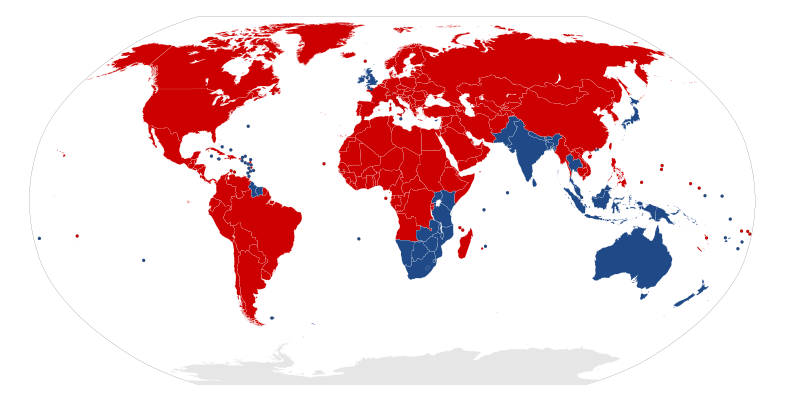
A commenter on an article on clothes sizes is angry about the UK use of stones to refer to a person’s weight:
I really do wish you Brits would stop using this bizarre measure of weight the stone. You do realize that nobody else in the rest of the world knows what the hell this means. I’ve lived 30 years in foreign countries, speak 3 foreign languages fluently, am at home in both the metric and non-UK imperial systems, and can convert effortlessly between a dozen different currencies, but I throw up my hands at this stone nonsense. Even looking it up and learning that 1 stone equals 14 lbs doesn’t make it any more comprehensible. Do you people really tell each other that your 183 lb body weighs 13.07 stone, or is everything rounded off to the nearest 14 lbs?
Reactions vary.
Is everything OK in other areas of your life Zerosum?
Zerosum,
It’s seems that I’m the only person that understands you.
The issue here isn’t stones or pounds.
What’s important for people to know is that you speak three languages, fluently, . lived for 30 years in foreign countries and can effortlessly convert 20 different currencies at one time.
Later note: here’s an American review of the Ottolenghi cookbook from amazon.com:
I bought this book as a gift for my wife. She’s a former professional chef and caterer, and now a superb home cook. These recipes are sensational across the board. Especially notable are the chicken w/ sumac, za’atar & lemon, as well as the marinated turkey breast w/ cumin, etc. However, there is a challenge for us Americans because the measures are metric and the temps are in celcius. This book is published in England. Didn’t the Brits invent our system of standard measure? Anyhow, it’s worth the trouble for me to convert these recipes for her because these dishes are outstanding.
Yes, it should have been converted if it was a US publisher. But I find this some compensation for the irritation I always feel on reading recipes measured in CUPS. A cup of butter! I certainly hope they didn’t get that from us.
Still later note: I have heard that Americans don’t usually possess scales. Amy describes some here:
I use a digital kitchen scale practically every day. If you’re serious about baking or developing recipes, it’s a necessity. You may notice some of the more professional baking cookbooks show the weights of ingredients. It’s a much more accurate way to measure than by using cups and spoons. When I develop a recipe using an ingredient like fish or chicken, I specify the weight because it makes a big difference in cooking time and also in terms of servings. For example, a salmon steak could be as small as 6 ounces or over a pound.