A list of German law blogs has cropped up in a comment on an old post of mine. The site is Blog-Trainer, run by Karl-Heinz Wenzlaff.
Another site is jurablogs. I don’t think I’m on jurablogs any more because I’m not lawyerly enough.

A list of German law blogs has cropped up in a comment on an old post of mine. The site is Blog-Trainer, run by Karl-Heinz Wenzlaff.
Another site is jurablogs. I don’t think I’m on jurablogs any more because I’m not lawyerly enough.
Roll on Friday has named Streck Mack Schwedhelm as the bonkers law firm of the day
Before putting pen to paper, get to know the recipients better. Each lawyer is allotted a space in which to recall “My path to Streck Mack Schwedhelm”. One partner reveals, “Excel is my passion“, but instead of therapy, “I looked for a law firm in which I could exercise this passion“. She found spreadsheet heaven at Streck Mack Schwedhelm. Another declares that the firm embodies “Enthusiasm/fantasy/commitment”, and in such a crucible is it any wonder that “tax law for me came to have a thrilling legal aura which didn’t let me go“.
The site is in German too.
As they’re tax lawyers, their logo is based on the tithe.
I can understand German lawyers wanting to jazz up their websites. The culture in which they are seen is rather formal. I have translated four different ones and the desire was always to keep the English formal too. After all, the website isn’t directed to a UK or US readership.
The photos are rather fascinating here. I can see what the photographer was trying to do. He often has blurred movement in the background instead of normal bokeh, the lawyers are painfully in focus and heavy shadows show how much lighting was used (a bit like Dougie Wallace shots).
This is not a review, and I think dictionary reviews are difficult anyway. But I’d like to say that I’ve had a look at the second edition of Karin Linhart’s law dictionary (DE>EN, EN>DE, 2017) and it really does look greatly changed and improved from the first edition (2010).
I wrote about the first edition here.
Karin Linhart is German, which I hadn’t realized. She has a page in the German Wikipedia, Karin Linhart, with links to other sources and a list of publications. Meet Karin Linhart: A Law Library of Congress Patron has a photo of her with three Library of Congress librarians.
Here are the publisher’s details for the new edition.
One feature of this dictionary remains that its strongest point is the EN>DE part, with a preference (I still feel) for AmE. There are boxouts (those little additional glossary boxes), which Beck Verlag seems to love – I’m not sure who reads them – mainly in that section, but in the DE>EN section too. Their number has decreased. There are definitely English as well as US terms.
The foreword states that the dictionary has been newly designed, expanded and updated, and it is oriented mainly towards foreign students at German, Austrian and Swiss universities, but it is also for German students studying abroad, for lawyers, judges, and although it is written more from a lawyer’s point of view than a translator’s (what on earth does this mean?) it may be of use for translators and interpreters too.
A lot of the end materials have gone. including the amusing advice for German lawyers speaking English abroad and the US and South African constitutions. There is now only a specimen letter of application and CV for Germans applying in the USA.
The new edition is said to have Austrian and Swiss terms in it. So I checked the term Herabsetzungsklage – Herabsetzungsurteil came up as a query on a mailing list this week. And it is in there:
Herabsetzungsklage (CH) ErbR
“(in Fällen, in denen die Anordnungen in der letztwilligen Verfügung den Wert übersteigen, über den nach Berücksichtigung der Pflichtteile noch verfügt werden kann) action in abatement – Art. 475 chZGB.”
This is excellent. The term is also in Tom West’s Trilingual Swiss Dictionary, of course, there citing Art. 522, which is equally appropriate, but without the definition.
One thing that strikes me on my cursory review is that there is an emphasis on terminology, especially nouns, from statutes, rather than, for example, conjunctions and turns of phrase – this is not surprising in a small dictionary, and it is what I would go to Romain for. But my Romain is falling apart and there is no help on the horizon – this might be what is meant by saying it is a dictionary conceived for lawyers rather than translators.
There are a large number of cross-references, necessary to save space in a small dictionary.
Noted in flicking through:
lucidum intervallum is translated as clear moment, rather than the usual lucid interval.
Lockvogel Strafr. agent provocateur (stool pigeon? decoy? not a very common word)
Arglistige Täuschung is followed by = List (A), that is, the Austrian equivalent is introduced after the German term – very useful. Other examples are Sorgerecht, (A) Obsorge
The English claimant for Kläger is there, but other new terms like statement of case are not.
mens rea is cross-referenced to criminal state of mind, which is the main headword and a very oddly phrased one, but I suppose it is hard to give a brief definition.
Anyway, this is just a brief reference. I will probably come back to the dictionary. I wish I had made a list of words to check all legal dictionaries for.
I must say I believed the story that barristers’ gowns had a pocket on them because they were not allowed to sue for fees and some money could discreetly be put in there by the client. However, it appears that that story was an invention and the pocket (known as a liripipe) is the remnant of a mourning hood assumed on the death of King Charles II in 1685.
See The junior barrister’s gown on Sir Henry Brooke’s site Musings, Memories and Miscellanea.
As I have frequently posted – e.g. here -, the image of a gavel is often used in British and German newspapers to illustrate a court judgment. But UK and German judges don’t use gavels. Judges in the USA use them. In the UK, the gavel or hammer is what an auctioneer uses.
I don’t suppose everyone would understand how irritating it is to keep seeing this totally inappropriate image. But one site that does is Inappropriate Gavels. They tweet at @igavels too, and there’s no lack of examples in the press.
It strikes me that the gavel is a good image to use – stock image companies are full of them. alamy reports 28.294 images of gavels. So we need an alternative image.
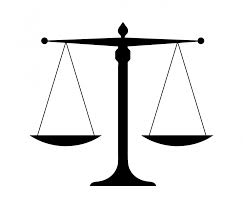
The only commonly used image for a court decision apart from gavels is the scales of justice, sometimes held by a woman. alamy seems to have 6,937 of those. Maybe we should be encouraging good images of the scales of justice if we are to eradicate the gavel.
Here’s a Guardian article on Inappropriate Gavels, with comments, from the year 2015: Gavel bashing: why banging in court on TV is a serious factual offence.
In Sclater Street:

WARNING
STREET ART TOURS ARE ILLEGAL
YOU COULD BE ARRESTED FINED & OR IMPRISONED
UNDER ANTI-TERROR LAWS*
*OR OUR GENERAL MODUS OPERANDI THAT
IF WE DON’T UNDERSTAND IT WE’LL SHUT IT DOWN ANYWAY
JUST IN CASE
(UNLESS YOU’RE A MEDIA MOGUL OR HAVE SOMETHING ON US OR BOTH)
METROPOLITAN POLICE
Because you just can’t be trusted