
Trainee solicitor a crap job/Englisches Rechtsreferendariat kritisiert

Buch (in Oktober erscheinend) beschreibt Rechtsreferendariat (trainee solicitor) als sechstschlechtesten Job in England.
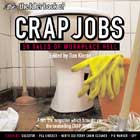
crapjobs.jpg

The book ‘Crap Jobs’, edited by Dan Keiran, is to be published in October. ISBN: 0553816896. If it’s like his earlier ‘Crap Towns’, it is humorous but not totally divorced from reality.

According to Roll on Friday, being a trainee solicitor is the sixth-worst job in Britain:

bq. The book describes a trainee who accepted a job at a high street firm for the Law Society minimum wage. He found himself being given a succession of menial tasks by an irritable partner (surely not?), including repairing photocopiers, washing cars, cleaning shoes and spending a month “fighting spiders the size of my head” in archives. His only litigation experience seems to have been apologising to an irate judge after the partner failed to turn up in court.

I quite enjoyed my articles (as the traineeship was called in those days), especially litigation and conveyancing (I was working for a building society where the mortgagors were represented by licensed conveyancers, or maybe they were unlicensed in those days, but at all events things used to go wrong), and also wills. I did work for one partner where all I could really do was carry his briefcase around and buy sandwiches, but he was quite amusing. And for another partner whose work mainly revolved around exchange controls, which no longer exist, and which even he knew was too complex for anyone else to understand. And then for a partner whose in-tray, or perhaps his last-but-three in-tray, had a pile three feet high in it.

On-Time Updates weblog closed/Übersetzerweblog On-Time Updates beendet

The translation weblog On-Time Updates, which always looked promising, has closed.

Steve Maas writes that he has been finding writing more of a chore than an enjoyment. He says his website will be continuing in other areas.

I wish Steve all the best (he’s disabled commenting because of spam). Of course, many of the weblogs I link publish very rarely and some are probably defunct, but I like the idea of making a statement to inform your readers. Maybe Steve will come back to blogging at some future time.

Myself, I find I’m not writing what I originally intended to write, nor am I taking much time to polish my English. If I took more time, I could write shorter and more elegant entries. I did two exemplary posts in the early days: one was a story (the layout is a bit heavy), and the other was a summary in outline form. I have written less on specific problems of translation than I intended to (I should keep a list of the terms people search for in my blog). But there is always something to report about translation or law or weblogs.

EPO may use machine translation/EPA wird vielleicht maschinelle Übersetzung einsetzen

Andrew Joscelyne at Blogos reported recently that the European Patent Office is thinking of using machine translation to cut costs. Apparently it costs a lot more to file a patent with the EPO than elsewhere in the world, because patents have to be filed in English, French and German.

I must say the mind boggles somewhat. Why not computer-assisted translation? Repeated headings could be automatically translated but long sentences would be left for human translators (or as the Germans say, Humanübersetzer).

German leasing and factoring blog/LeaseFacts

LeaseFacts ist ein Blog des Leasing- und Factoringrechts, von Bernd Helming (via Law-Blog).

LeaseFacts is a weblog on German leasing (in the sense of financial leasing) and factoring law, by Bernd Helming.

A very nice feature is the introduction of terms that are then collected alphabetically (a feature I’ve thought of introducing myself but not got around to). I’ll quote one in full (September 9th entry), but I won’t translate it at this time of night.

bq. Fungibilität
Die Fungibilität hat mit Pilzen oder Pizza nichts zu tun. Vielmehr geht es dabei um die Verwendbarkeit des Leasingobjektes durch Dritte, sei es im Fall der vorzeitigen Kündigung des Leasingvertrages oder nach Ablauf der regulären Vertragsdauer. Die Drittverwendbarkeit ist Voraussetzung dafür, dass das Leasingobjekt im wirtschaftlichen und rechtlichen Eigentum des Leasinggebers bleibt und dem Leasinggeber steuerrechtlich zugeordnet werden kann; ist das Leasingobjekt ausschließlich für die Belange des Leasingnehmers verwendbar, spricht man auch von Spezial-Leasing.