Neudeutsch 2

pinckelw.jpg

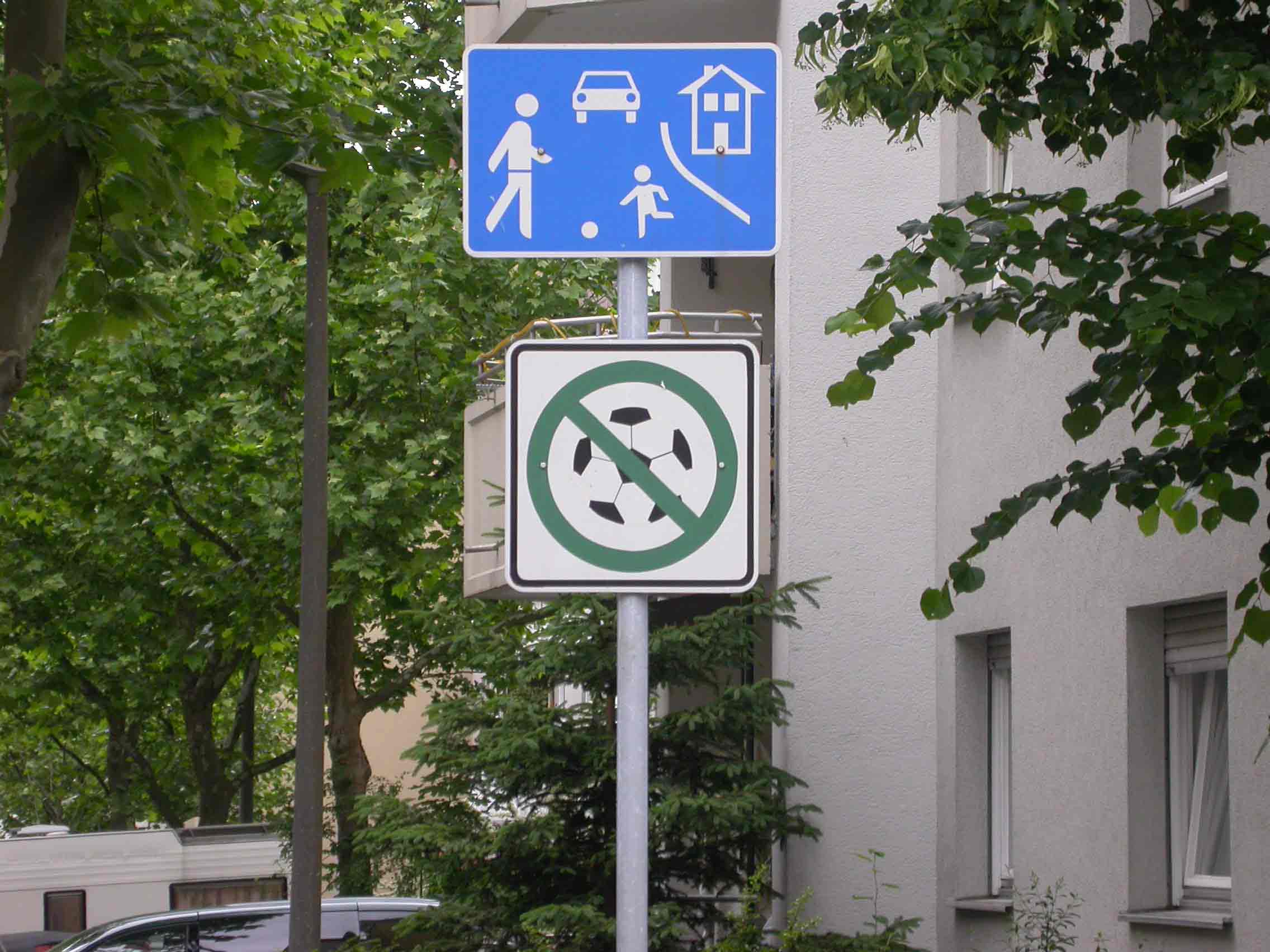
I am posting some pictures from a walk here in Fürth yesterday (click on image to enlarge).

Since the German spelling reform, we are approaching something like the 17th-century freedom to spell in whatever way we feel like spelling. I like the word pinckel, although I don’t think it’s logically spelt. I don’t like the punctuation, although at least there are never more than three exclamation marks.

This picture may be evidence that this kind of German is used by speakers of German as a second language themselves sometimes, and not only by Germans when talking to foreigners. Continue reading

MT / MÜ Auschwitzlüge case

Professor Lenz mentioned a discussion of a German case:

bq. Today the Criminal Law Society of Japan held a workshop I attended. We discussed German law, the decision of the Federal Court of Justice of December 2000 that said Australian citizens need to obey German penal law when posting on a website in Australia, in English.

I thought there might be discussions of this case in English on the Web. I haven’t got time to translate it myself at the moment, but I did find a machine translation of it – machine translation is useful only to give a rough impression of a newspaper article or website, but a decision by the German Federal Court of Justice? Here is a quote, for the benefit of any lawyers who think they should jazz up their websites by the addition of machine translations into several languages:

bq. Guiding principle

bq. If a foreigner places to expressions written by him, which fulfill the facts of the incitement of the masses in the sense § to 130 exp. of the 1 or § 130 exp. the 3 StGB (“Auschwitzluege “, on a foreign server into the InterNet, which is
accessible to InterNet users in Germany, then a success belonging to the facts
steps (§ 9 exp. 1 3. Alternative StGB) in the inland, if these expressions are
concretely for the disturbance of the peace in the inland suitable. Continue reading