The cost of translation

Mark Liberman at Language Log mentions a translation company that offers Latin – German translations.

They’re called 24 hour translations and were in the UK, but apparently have relocated to Austria. Mark comments on their prices:

bq. But it was something else that caught my eye. They offer “Latin Translations from only $16!” and what they mean by this is that “you can order a translation of 20 words or less between English and Latin (as used by the Romans). The cost of this service is £10 GBP / $16 USD / €16 EUR, and the translation will be ready within 24 hours – we’ll even include a simple guide to pronouncing the Latin phrase”.
This seems pretty expensive. I guess it’s within an order of magnitude of standard commercial translation rates, which tend to run in the range of US$0.10-$0.40 per word, depending on the nature, size and urgency of the job. But if all you wanted to know was what the Romans meant by quoting Hannibal to the effect that “inveniemus viam aut faciemus”, you’d be paying $4.00 per word. (Since 24 Hour Translations says that “Due to problems encountered in the relocation of our office to Austria, we have had to suspend normal trading until further notice”, I’ll tell you for free that Hannibal meant “we will find a way, or we will make one”).

For the benefit of those who don’t work as freelance translators but possibly have a salaried university job, translators normally have minimum rates. $16 dollars seems a low minimum rate to me. Consider that even for an email translation, there’s some administrative work involved for a one-off transaction. Other short translations can involve even more, by way of layout and delivery.

A typical short translation job into English here would be the certified translation of a German birth certificate – something I try to avoid doing, but it wouldn’t really be worth my while translating, say 15 lines and charging a normal line rate. One could add something for the certification, but time goes in talking to the client, and normally the client comes to the office both to bring and to collect the original document. German birth certificates are really short, but it takes time to format them, it even takes time to start a new job, and you might spend two hours earning 15 euros if you charged what the client thinks the job is worth.

Fortunately, German register offices will issue six-language international birth certificates, or at least they are supposed to, but that isn’t always feasible.

Anyway, we translators owe it to ourselves and even to others to stay in business, and that means earning a certain hourly rate – a rate that has to take into account the fact that you don’t spend all your work hours translating.

I should think a reasonable minimum rate would be a great deal more than $16. I wouldn’t charge it to regular customers. But $16 seems to me a reasonable minimum rate for twenty words or less.

Mark ends with examples of how to look up Latin on the Web – not something everyone is capable of doing. He says if you looked up twenty words (if I counted right) you’d have saved $48 dollars. Actually, he says earlier than twenty words or fewer cost $16, so I don’t know how he gets of $48. But that’s probably part of the problem.

In any case, I doubt any agency would make a living from tiny jobs. Of course, they do appear to have suspended trading. But their German rates don’t look quite so bad. 6 euros per 100 words in 3 days is not the sort of money you get rich on.

Software for less plain English

The program WhiteSmoke will ‘enrich’ your English. The demo on the site shows how you can start with a simple sentence like ‘I admire your work’ and finish with a strangely un-English one like ‘I greatly appreciate your complicated work’.

It’s been awarded stars by various software magazines, but then computer freaks like to see software doing something and perhaps care less about the real-world effects of what it does.

(via spam in sci.lang.translation, and via grammar_whores)

Truffles found in Schleswig-Holstein

One of the effects of climate changes. Via Mosaikum: Deutschlandfunk reported on August 17th that real truffles have been found in Schleswig-Holstein. The man who dug it up thought it looked like a potato, but he hadn’t planted any there, so he sent it to be examined. After various offices had inspected it, a mycologist eventually found it was a white truffle called Tuber borchii, never seen in Germany.

bq. Die Trüffel ist die weiße Trüffel, Tuber borchii, eine äußerst seltene Art und überhaupt in Deutschland, hier bei uns überhaupt noch nie gefunden. Die Trüffel sieht ähnlich aus wie eine zerklüftete Kartoffel, etwa 3 bis 6 Zentimeter groß. Wenn man sie durchschneidet erinnert sie an sehniges Fleisch. Sie ist also mit weißen Adern durchzogen und der Schnitt ist etwa fleisch-braun.

I must go to bed. I think I’m making this stuff up.

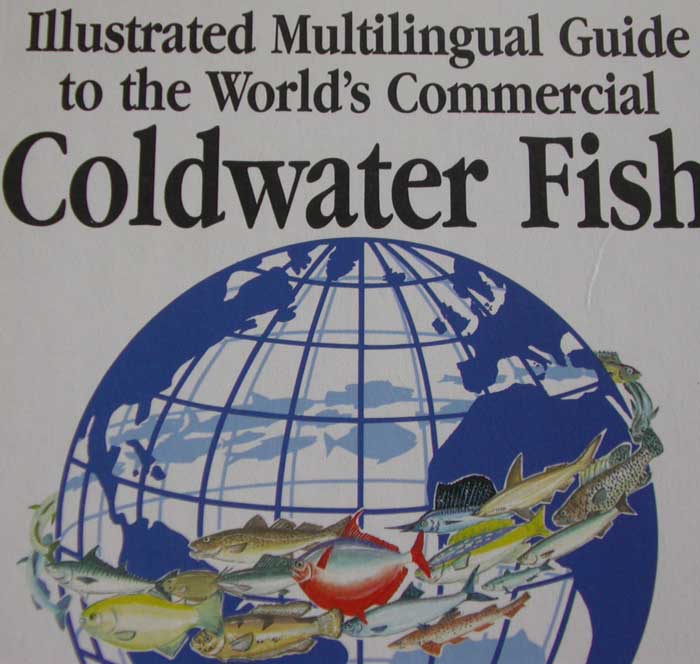
“Hippoglossus hippoglossus & chips twice please, luv” / Clupea harengus schon wieder?

The Bild Zeitung (August 18th 2004)
(via BILDBlog)

bq. Deutschlands Fischhändler brauchen jetzt ein Lateinlexikon!
Der Grund: Laut einer EU-Verordnung (Fischetikettierungs-Gesetz) sollen Fische mit ihren lateinischen Namen ausgezeichnet werden.
Erste Fischhändler haben schon auf die Sprache der alten Römer umgestellt (Pflicht ist das nur für Großhändler).

follows the Sun (September 5th 2001), quoted at
Euromyths

bq. Chippies could be forced to sell fish by their ancient Latin names – thanks to the craziest European ruling so far. If barmy Brussels bureaucrats get their way, baffled Brits will have to ask for hippoglossus hippoglossus instead of plain halibut. … Takeaways, restaurants, fishmongers and supermarkets are all set to be BANNED from using names that have been around for centuries.
The Sun, 5 September 2001, page 3

bq. Fact:
Claims that the EU is planning to ban the English names of fish and force retailers to replace them with Latin names on food packaging are completely untrue. The European Commission has proposed clearer labelling on the packaging of fish products to ensure that consumers are properly informed about what they are buying. Labels would include the exact name of the fish, how it was produced and where it was caught.

Euromyths is a lovely site, with a Glossary of Eurosceptic beliefs and a Keyword index of Euromyths (some of which are about banning corgis, curved bananas, straight cucumbers, the egg that dare not speak its name, and a 75ft. milk pipeline for Caerphilly cheese).

The equivalent German site has EU-Mythen of relevance to Germany.

Translators know, of course, that you can’t get far in translating the names of fish – or plants, or insects, or birds – without pinning down the scientific name.

fish1w.jpg

fish2w.jpg

Punctuation patent Question comma and exclamation comma

patentoftheweek.com reports (via IPKAT) that a patent application has been filed for two new punctuation marks, the question comma and the exclamation comma. It was filed by the suspiciously German-sounding Leonard Storch, Ernst van Hagen and Sigmund Silber.

I can’t find anything on the website – perhaps the patent came via the mailing list – so IPKAT’s account is all I have to go on.

bq. The IPKat has only one thing to say: ?&$%*!

Oh, just a minute – I’ve found them, and the gentlemen are from the USA:

Patent number WO9219458

bq. Abstract
Using two new punctuation marks, the question comma and the exclamation comma: and respectively, inquisitiveness and exclamation may be expressed within a written sentence structure, so that thoughts may be more easily and clearly conveyed to readers. The new punctuation marks are for use within a written sentence between words as a comma, but with more feeling or inquisitiveness. This affords an author greater choice of method of punctuating, e.g., to reflect spoken language more closely. Moreover, the new punctuation fits rather neatly into the scheme of things, simply filling a gap, with a little or no explanation needed. Also, the interabang comma if the interabang is available. An example of usage follows. Readers encountering their first question comma in print may silently remark: “Clever! funny I never saw one of those before”.

There are other instances, but I think they are the same patent for different jurisdictions.

The question comma just has a comma at the bottom instead of a full stop / period, and similarly the exclamation comma.

Translator still wondering

In the last entry, I mentioned – inter alia – non-native speakers of English correcting my grammar.
This has been met by a couple of rants about Germans writing English.
I do feel like ranting against Germans correcting English myself sometimes, but not always.

One correction: non-native speakers of English who know the subject area can be very useful and perfectly good revisers. It’s very useful for me to have a reviser. And I recognize good revision when I see it, much as I hate to admit mistakes.
Conversely, anyone who wants the opinion of a native speaker of English on a publication should get one who’s experienced in dealing with texts and/or publication.

Usual scenario: Translator translates for German lawyer.
German lawyer may speak English but has no time to translate.
Translator may have questions.
Sometimes there’s an odd term. I ask for a definition in German.
Reactions: 1) Omit it
or 2) I will rephrase the original
or 3) This is what it means in German:
or 4) Let me see, I’m not sure if I can tell you how to say that in English (I don’t like this, and it shows the client doesn’t realize translators simply need a German rephrase, that is, they need to understand the source text)

Less common: T translates a church or castle guide
Author may be a much-published historian – usually no problem
Author may be a little-published historian at the beginning of his or her career, and very ambitious – can be difficult
Author may be an amateur who sees the building and guide as his or her life’s work – can be difficult
Author may have time on hands
Usual reaction to translation: 10 or 20 corrections or queries
Occasional reaction: call in a “specialist” in English.

More examples in the continuation. Continue reading