Changes in legal terminology

If a legal concept changes slightly, a new term may be introduced to replace the old.

For instance:
enduring power of attorney (EPA) up till September 2007
lasting power of attorney (LPA) from October 2007

These are the common powers of attorney you might take out for an aged parent while they are still compos mentis and have registered later. There are definite differences so the distinction is necessary.

But what about family-law terms like
custody > residence
access > contact

See John Bolch, A matter of terminology:

Perhaps the best known example – one that still catches out lay people (and some older lawyers) – is the new names given to the two main types of children’s order by the Children Act 1989. Out went the old terms ‘custody’ (which, incidentally, is still understood throughout the English-speaking world) and ‘access’. In their place came ‘residence’ and ‘contact’. I acknowledge that ‘residence’ has a different meaning to ‘custody’, but is a ‘contact order’ really that different to what an ‘access order’ used to be?

See that article for more on: child arrangement, ancillary relief > financial remedy, Divorce Registry > Principal Registry, registrar > district judge, child mnaintenance > child support > child maintenance, absent parent/person with care > non-resident parent/parent with care > paying parent/ receiving parent > parent who pays/parent who receives

As John writes about custody and access, these are terms familiar throughout the English-speaking world. It’s all quite a pain for translators out of English, and also into English, especially if they don’t translate from German for one specific jurisdiction.

In a later post, also on Marilyn Stowe’s family law blog, (Are the terms ‘custody’ and ‘access’ really degrading?). John Bolch writes that the terms custody and access are still sometimes used but some regard them as degrading. This sounds as if the change in terminology was regarded as a move towards PC.

My personal bugbear is the replacement in England of plaintiff by claimant. There was no change of meaning that might have justified this: it was purely done because the hoi polloi were not expected to understand it. But the term remains used in Ireland and hence in the EU, in the USA, Canada, Australia, New Zealand and elsewhere. When I translate into English for German clients my translations are not just for England so I always write plaintiff.

Translators and copyright

HC0114287

Translation and intellectual property rights is a brochure/PDF prepared for the EU by Bird and Bird LLP. It is only available in English (a bit Franglish).

The brochure considers the law in the EU and in a number of countries (Belgium, France, Germany and the UK). It considers it both from an upstream point of view (is the original text subject to copyright?) and a downstream one (is the translation subject to copyright?).

Whether one’s translation might be copyright is one of those topics that translators’ mailing lists get heated about every year or so.

Copyright usually attaches to literary and artistic works. But what about other types? For example, are statutes copyrighted? One hopes not. They should be freely distributed. Thus it’s interesting that the EU does not exclude EU publications from copyright, but at the same time the Commission’s policy is to increase their use:

In this respect, the status of European Union publications is not very clearly regulated. On the one hand, there is no legal provision at the European Union level, as it is the case under national laws, which stipulates that legal texts such as Regulations or Directives fall within a category of works are deprived of copyright protection. The “Legal notices and copyright” contained within the “Information Provider’s Guide”40 and the section related to copyright in the Interinstitutionnal style guide”41 (these two documents emanate from the European Union institutions) both tend to go in the opposite direction: they provide for that the European Union owns a copyright on all official publications of the Union institutions or bodies. It does therefore not seem that the official texts of the European Union are legally excluded from copyright protection. That being said, the reuse policy of the European Commission42 aims at increasing the use and the spread of the European Union information, also to foster innovation. Hence we believe that the official texts of the European Union fall under that policy and should be easily and freely reused despite their possible copyright protection, in accordance with the provisions laid down under Decision 2011/833/EU, hence, among other things, under reservation of the
exclusive rights of third parties.

There is a comparison of how the four countries treat works created by an employee in the course of employment.
Exceptions to copyright, e.g. for educational use, are discussed, and this is also related to the problem of machine-aided translation (where your database might contain elements from copyright works). The law as it stands would appear not to protect machine (-aided) translation, and the authors would welcome ‘full compulsory harmonization’.
Another aspect considered is how various legal systems treat translations carried out without the original author’s consent.

I was particularly interested in the protection of official translations of official texts.

It derives from the situation created by the Berne Convention that a distinction must be made in most Member States between the following three types of works: (i) official texts/acts; (ii) official translations of official texts/acts; and (iii) non-official translations of official texts/acts. For the first two categories the regime is rather straightforward: no copyright protection. …The situation is more complex with respect to non-official translations of official texts/acts. Scholars consider that the wording of article 2(4) in fine indicates a contrario that a contracting party of the Berne Convention “cannot deny protection to non-official translations of these texts – presumably translations made by private publishers”.

(Is in fine a French Latinism for the German am Ende? haven’t seen it in English before).

There is more, of course, including information on database rights and recommendations for contracts with translators – I have just skimmed the 146 pages. There’s a bibliography and case references too. Recommended.

Where has the Centre for German Legal Information gone?

www.cgerli.org seems to have vanished from the radar.

Here’s my post introducing it in 2008.

It had links to all sorts of translations of current German statutes and many other documents too.

I hope it is just being updated and has not been removed altogether.

There is a site with links to ‘official’ translations, Gesetze im Internet, but there are many more statutes out there in translation, good or less good, that can be useful to translators and lawyers.

New Seven Stars cat; You and Archbold

Easter Sunday was a good day to watch the new cat at the Seven Stars in Carey Street taking a stroll, albeit rescued from a dog at the end:

seven stars

7stars-cat3w

7stars-cat5wcrop

He is not as magnificent as Tom Paine.

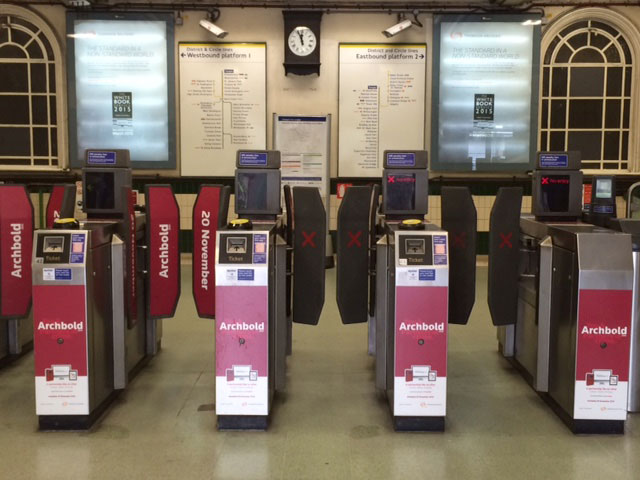
At Temple Station, the barriers carry an advert for You and Archbold, partners in crime:

archbold2w

archbold1w

The two big illegible ads in the background are for The White Book (as we know from elsewhere, anything else is a pale imitation).

Germans and privacy law

There was an article in The Times on March 31: German obsession with privacy let killer pilot fly. The Times is not available free online but here is a link for those who can get it: Times article.

The article is by the Times Berlin correspondent David Charter and it argues that the crash could have been prevented if it weren’t for the confidentiality of German doctors.

German politicians have called for an overhaul of privacy laws that ­required doctors treating Andreas Lubitz to keep the killer co-pilot’s medical details secret from Lufthansa unless he obviously posed an “imminent danger”.

But that doesn’t mean that UK doctors would not be in the same dilemma.

It’s true that privacy law is stronger in Germany, as indeed the article goes on to say.

Under a German law that was passed in 1907, giving “the right to your own picture”, personal images may not be circulated or put on public display unless the consent of the ­person portrayed is given, which ­explains why the newspapers often pixillate some faces, and have not published pictures of Patrick Sonderheimer, the Germanwings captain, or members of Lubitz’s family.

General personal rights enshrined in the constitution lie behind the strict protection of individual identities in the German media, with many publications still referring to the co-pilot as Andreas L.

Andrew Hammel writes about the way German newspapers are loth to name Lubitz, whereas they were quick to name the Charlie Hebdo attackers in Paris: Respect our Privacy, say Germans About Germans. He links to a Washington Post article on the same subject:

Crash challenges German identity, notions of privacy

But at least by American standards, many Germans are expressing neither a strong sense of moral outrage nor a clamor to point the finger of blame.
The reason may lie in the sense that the crash is suddenly challenging some of the fundamental tenets of German life: that its titans of industry do not make mistakes. That well-thought-out rules — including those severely limiting the sharing of medical data — are things to be trusted in and strictly enforced. That in a country where Edward Snowden is nothing less than a folk hero, personal privacy must trump all else.