German Parmesan/’Parmesan’ als generischer Begriff

Die deutsche Regierung besteht darauf, dass das Wort ‘Parmesan’ ein generischer Begriff ist, der für Käse aus Deutschland verwendet werden kann. (Spiegel Online).

Since 1996, the term ‘Parmigiano Reggiano’ has been protected under EU law and restricted to cheese made in the area around Parma. But Germany has continued to use the German translation, ‘Parmesan’, for cheese made elsewhere. Report from Desbladet.

I wonder what they use it for. A lot of Parmesan is sold ready-grated in little cardboard boxes with holes in the top. Not surprisingly, it doesn’t have much flavour. I wonder if most of the German stuff goes into these boxes.

The term ‘Camembert’ is apparently not protected.

Germany has quite a penchant for German versions of foreign cheeses: deutscher Camembert, Allgäuer Emmentaler, Deutscher Gouda.

Sending large files / Große Dateien verschicken

Große Dateien (bis zu 1 GB) können kostenlos versendet werden über Yousendit.

You can use Yousendit to send files up to 1 GB in size, free of charge. Files are checked for viruses. Yousendit have a more ambitious system that they charge for.

Handakte WebLAWg, via Akademie.de. law blog points out that as the files remain online for 7 days, you could use it as a temporary backup, in the knowledge that your backup of a sensitive document will be deleted soon. The file could be encrypted and you could download it from another computer if you needed to.

Akademie.de is an interesting site for freelancers in Germany for many other reasons. It offers online information and courses on the professional use of the Internet and IT in firms, business, startups and more (‘Softskills’???)

bq. akademie.de startete 1996 mit Themen rund um die professionelle Nutzung von Internet und IT in Unternehmen. Später kamen die Themen Business, Existenzgründung und Softskills hinzu. Diese Themen werden derzeit ausgebaut. Zugleich wird der Themenkreis erweitert.

St. Laurence in Nuremberg and organ tea

With Easter approaching, I was drawn to a church: St. Laurence (Lorenz) in Nuremberg. It was really my new fisheye adapter that made the decision. I think I need to visit some more churches.

lorw.jpg

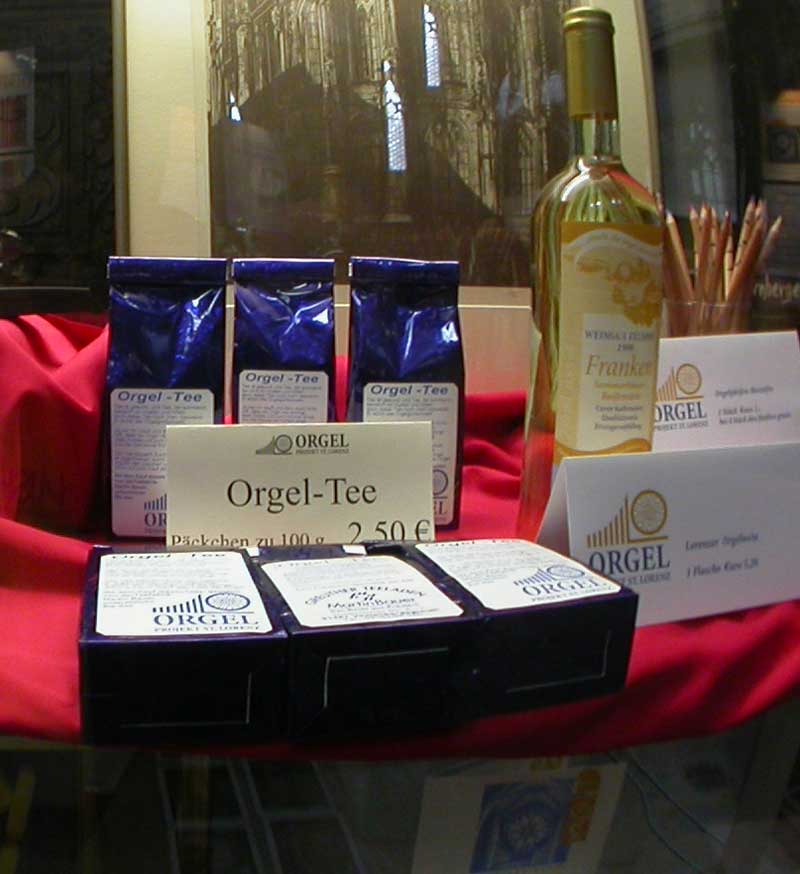
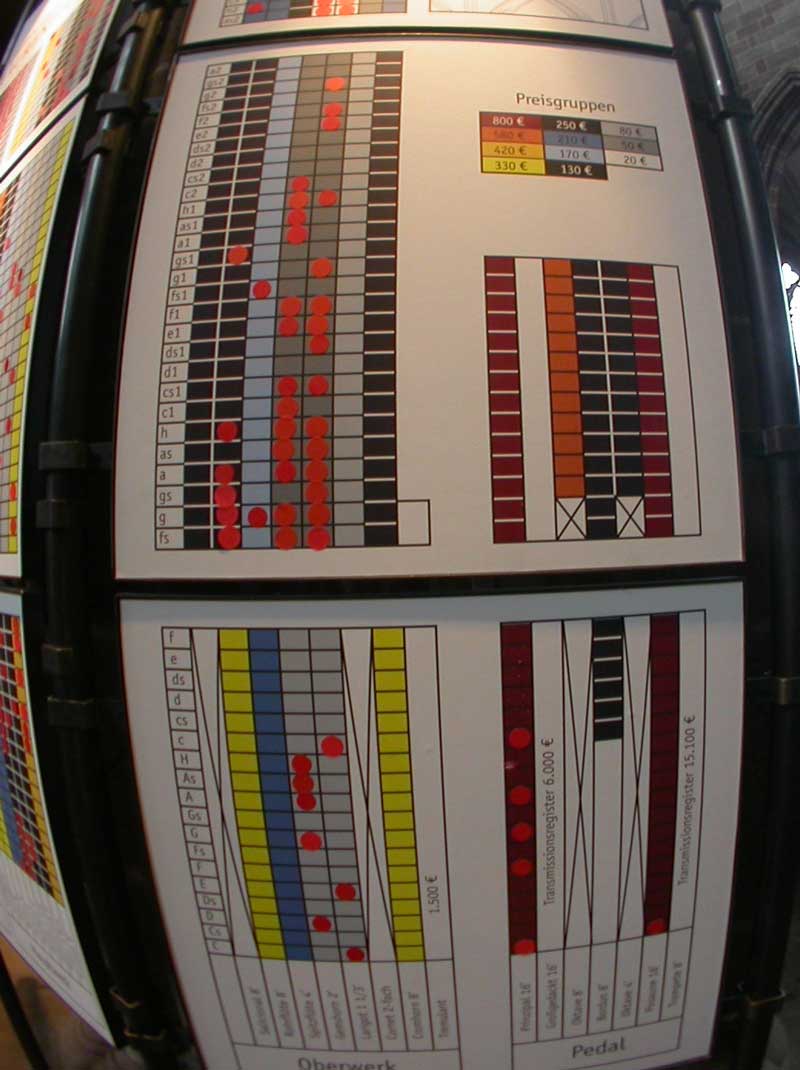
They seem to be collecting for the organ. This can be seen on the church’s website. The acoustics are so difficult that they need three organs. I had heard of healthshop infusions such as Blasentee (bladder tea), Hustentee (cough tea) and Magentee (stomach tea) – see this chemist, for example – but not Orgeltee (organ tea). I didn’t check the ingredients. It’s probably black tea.

orgteew.jpg

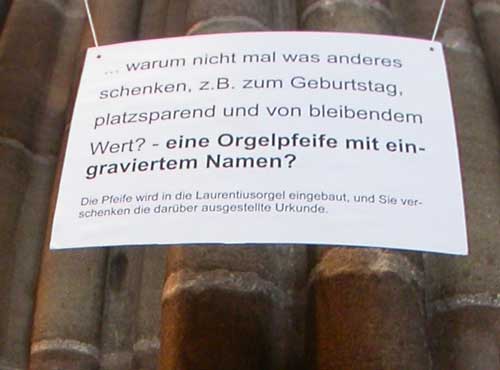
There is also a birthday present for the person who has everything: a pipe on the organ, engraved with the giver’s or receiver’s name. It doesn’t take up any space, because it stays in the organ, and it also has the benefit of anonymity because I suppose nobody ever sees it.

org2w.jpg

org1w.jpg

American spelling

There has been a heated discussion about spelling going on in the FLEFO forum at Compuserve. It’s been alleged that some British members have suggested that American spelling is ‘inferior’. One strand of this thread discusses whether there are advantages in British spelling: for instance, is it useful to have the distinction between verb and noun (license/license, practise/practice – I suppose advise/advice doesn’t count because the spelling and pronunciation difference are there in American spelling too)? One argument against that is that the distinction is not there in the spoken language.

The thread is headed ZED. I do not think American spelling is inferior, nor do I get very heated about spelling, but I did enjoy this message, from Jim Elliott to Stephen G. Brown – both Americans, I think):

bq. (Quote:) American spelling wasn’t invented in 30 minutes by idiots with one eyebrow.
(Reply:) How long did it take them?

Dear Sir or Madam/Anrede

Sheherazade asks how to address a mixed-sex or purely female group in correspondence or email:

bq. I have occasion fairly often to send emails or letters that open with the greeting “Gentlemen:” and I must say I do like the sound of it — somber, well-mannered, a little old-fashioned. But in the same deals when I get correspondence back that begins “Ladies and Gentlemen:” the connotation for me is that of a circus ringmaster, about to announce a perilous and amazing stunt by a trapeze artist. And what if there were a deal where all those involved were women? Would “Ladies:” be an appropriate opener?

I have often followed discussions on whether one should write ‘Dear Sirs’. One possibility is ‘Dear Sir or Madam’. But this case is different – she knows she is writing to a group. Commenters suggested ‘Counsel’. OK, maybe they are all lawyers. That would be OK in the USA.

In Germany it has long since been the practice to write ‘Sehr geehrte Damen und Herren’, and in British English, it was customary to use ‘Dear Sirs’ at a later date.

Here’s a discussion on Leo.