Exciting crime in Fürth/Baumfrevel

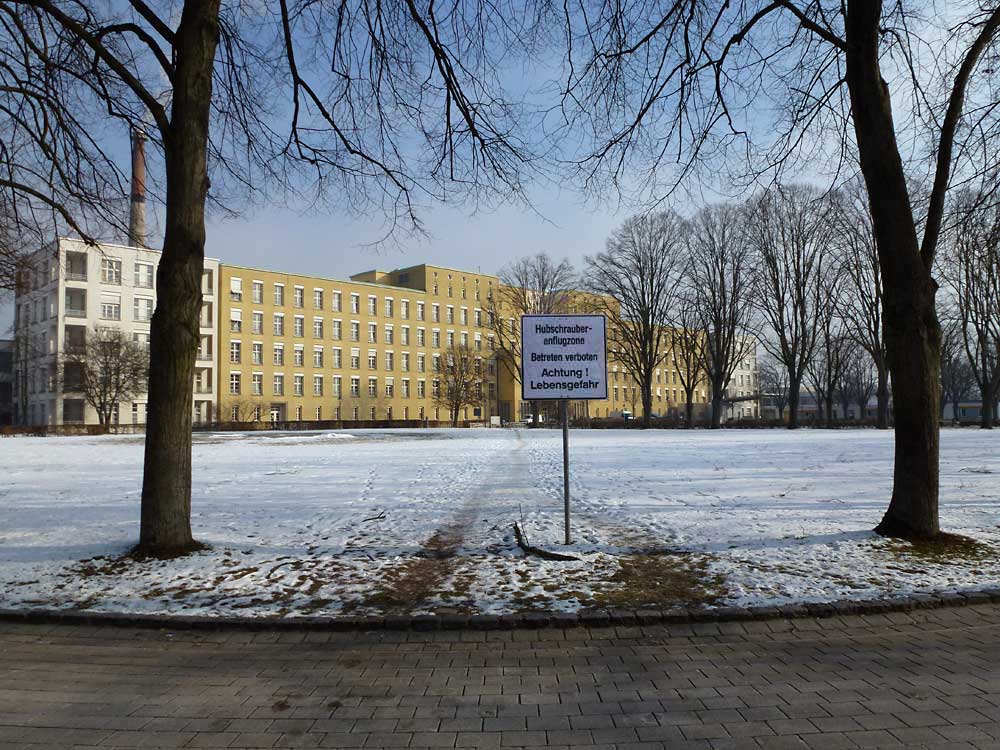
In case anyone’s missed it, a tree attacker has been at work in this area – in four areas in fact – partially sawing through about sixty young trees in December – which has now come to light. The tool used was apparently a Japanese hand saw, which makes slender cuts. In Germany you can see the contribution on the quer TV programme, where a number of people were interviewed in the Stadtpark, and one town worker speculated that anyone who killed all these trees probably hates trees because his or her family members were killed by trees falling on them. More convincing was the forensic psychologist’s idea that it was possibly someone who worked for the town(s), possibly with responsibility for the trees, was then sacked and feels powerless, compensating by damaging trees.
Picture and commentaries on the quer blog (one of the commenters even remembers someone who was moved from a position in Nuremberg after a public outcry following a removal of trees on the Wörder See).

Indirect speech in judgments/Indirekte Rede in Urteilen DE>EN

There was a query on Proz this week on a topic I remember once discussing on u-forum: when you translate a judgment from German to English, how do you indicate that part of it is in reported speech?

I basically agreed with the solution in this case, although it wasn’t quite what I would do (using words like ‘allegedly‘ was one of the points, and I find that a bit negative). I must say that the suggestions and discussions on Proz are often extremely helpful to me. Proz has this weird system called Kudoz, whereby you get points if you help someone to answer a question. This seems to force people to put effort into their answers, because they get even more points if their answer is selected, although sometimes the asker doesn’t select the best answer. There are discussions on Leo and dict. cc too, which tend to be more time-consuming to consult.

So here’s the problem: German uses the subjunctive for reported speech. It is absolutely clear from the verb itself that this is reported speech, even without the reporting verb. Here is a sentence from a judgment of the Bundesgerichtshof:

Nach Auffassung des Berufungsgerichts hat die Klägerin einen Anspruch darauf, dass die Beklagte die Bezeichnung der Klägerin als “Terroristentochter” unterlässt (§ 823 Abs. 1, § 1004 BGB analog). Die Bezeichnung verletze die Klägerin rechtswidrig in ihrem allgemeinen Persönlichkeitsrecht.

The judgment quotes another court. It is a vital part of the meaning that this is a quotation. In the second sentence, the verletze
is subjunctive, so clearly indirect speech, without any introductory verb or ‘Nach Auffassung’ and so on.

In English, it is essential to make this reporting clear. If the reporting verb is in the past tense, the reported verb is backshifted, but this is not always enough to show reported speech: it could mean ‘verletze’ or ‘verletzte’.

English reported speech rules are not terribly well understood in Germany, partly I think because students are expected to adhere rigidly to the backshift whereas we don’t backshift every single verb if it’s clear. Still, here is a summary:

Reporting verb in present tense or ‘According to’ etc: no backshift
Reporting verb in past tense: backshift

Canoonet has a nice summary of the German practice.

In the German example above, the first sentence has ‘Nach Auffassung des Berufungsgerichts’ and no subjunctive, the second sentence has subjunctive.

In English, the reporting phrase ‘In the opinion of the Higher Regional Court (Oberlandesgericht)’ would also be followed by a present tense, and the second sentence would remain present tense too.

Techniques of showing it is reported speech: you may replace ‘in the opinion of the court’ by ‘the court held’, followed by a backshift.
You may pepper the translation, as it continues with a big block of reported speech in the subjunctive, with more reporting verbs and ‘in the court’s view’ – these may not be there in the German, but they convey the subjunctive.
Another help is that if a whole paragraph is quoted, the layout alone may make it clear that is the case. This is the approach taken by an online translation of this very judgment.

Here’s a block of judgment (for reference see below) with the reported verbs marked. Note that the last sentence turns to the opinion of the present court, the Bundesgerichtshof, which is no longer subjunctive:

Entscheidungsgründe: I. Nach Auffassung des Berufungsgerichts hat die Klägerin einen Anspruch darauf, dass die Beklagte die Bezeichnung der Klägerin als “Terroristentochter” unterlässt (§ 823 Abs. 1, § 1004 BGB analog). Die Bezeichnung verletze die Klägerin rechtswidrig in ihrem allgemeinen Persönlichkeitsrecht.

Die Äußerung “Terroristentochter” stelle eine Tatsachenbehauptung dar.

Ein durchschnittlicher Leser verstehe den abstrakten Aussagegehalt der Bezeichnung dahin, dass jemand die Tochter von Terroristen oder eines Terroristen sei. Durch den Bezug zu Ulrike Meinhof sei für den durchschnittlichen Leser klargestellt, dass die Bezeichnung im Sinn von “Terroristin-Tochter” gemeint sei.

Es könne dahingestellt bleiben, inwieweit die Klägerin grundsätzlich dulden müsse, dass auf ihre Abstammung von Ulrike Meinhof hingewiesen werde.

Selbst wenn sie dies hinnehmen müsse, dürfe ihre familiäre Abstammung von Ulrike Meinhof nicht durch das eindringliche Schlagwort “Terroristentochter” zum Ausdruck gebracht werden. Zu familiären Beziehungen als Teil der Privatsphäre hätten andere grundsätzlich nur Zugang, soweit er ihnen gestattet werde. Die Klägerin habe keine Einwilligung erteilt, die familiäre Beziehung zu ihrer Mutter und ihre Abstammung darauf zu reduzieren, dass sie eine “Terroristentochter” sei. Sie müsse die Bezeichnung daher nicht dulden.

Etwas anderes gelte auch nicht deswegen, weil die Klägerin mehrfach über Ulrike Meinhof und den RAF-Terrorismus veröffentlicht und dabei auch offen gelegt habe, dass sie die Tochter von Ulrike Meinhof sei. Die Klägerin sei als freie Journalistin tätig. Im Rahmen der in Art. 5 Abs. 1 Satz 2 GG garantierten Pressefreiheit habe sie das Recht, Art und Ausrichtung, Inhalt und Form ihrer Veröffentlichungen selbst zu bestimmen. Der Ton, in dem sie ihre Artikel verfasse, sei Teil der Meinungsfreiheit. Dass sie die Grenze zur Schmähung überschritten habe, werde nicht vorgetragen.

Die Bezeichnung “Terroristen-Tochter” sei rechtswidrig. Zwar habe niemand einen Anspruch darauf, so gestellt zu werden, wie er sich selbst sehe, wohl aber darauf, zutreffend und nicht verfälscht dargestellt zu werden.

II. Die Ausführungen des Berufungsgerichts halten einer revisionsrechtlichen Überprüfung nicht stand.

And here are a couple of ways of translating the beginning:

Grounds: I. In the opinion of the Higher Regional Court (Oberlandesgericht), the plaintiff has a claim for the defendant to cease and desist from referring to the plaintiff as ‘Terroristentochter’ (terrorist’s daughter; section 823 (1), section 1004 with the necessary modifications, German Civil Code (Bürgerliches Gesetzbuch)). The court finds that the term unlawfully violates the plaintiff’s general right of personality.

Grounds: I. The Higher Regional Court … held as follows: that the plaintiff had a claim…The term unlawfully violated

The expression ‚terrorist’s daughter’ was a statement of fact.

In the translation by Raymond Youngs online, the layout makes it obvious that the whole block is indirect speech. This works here. Youngs uses a past tense, ‘infringed’, without an introductory reporting verb to justify it, but I doubt a reader would normally notice that.

7 In the appeal court’ s view, the claimant has a claim for the defendant to desist from describing her as a “terrorists’ daughter” (¿¿ 823 para 1, ¿¿ 1004 of the BGB by analogy). The description unlawfully infringed the claimant’ s general right of personality.

8 The expression “terrorists’ daughter” represented an assertion of fact.

BGH, Urteil vom 5. 12. 2006 – VI ZR 45/05; OLG München (Lexetius.com/2006,3371)

Raymond Youngs translation on the University of Texas site: Case: BGH VI ZR 45/05, Bundesgerichtshof (Federal Supreme Court), 6th Civil Senate
VI ZR 45/05

University of Texas Institute for Transnational Law

Grant and Cutler dictionaries/Rechtswörterbücher

I recently received an indirect query from someone studying legal translation in the UK who wants to buy a German-English law dictionary. There was a list of the dictionaries currently available at Foyles, into which Grant & Cutler has now been integrated (I remember Grant & Cutler near Embankment Station, before it moved closer to Oxford Street and now to Foyles). Here’s the link, but it may change in time.

Title: Author: Description:
Recht Fachwörterbuch Kompakt. Law concise dictionary.: German<>English Bugg, S. G. & Simon, H. Approx. 28.000 terms and more than 50.000 translations. With short German and English introductions to the German, British and American legal system.

Rechtsenglisch: Deutsch<>Englisches Rechtswörterbuch für jedermann Köbler, G. approx. 25.000 entries, 485 pages.
Dictionaries: Specialist & Technical: Legal. Published 2007. Price: £19.95

Wörterbuch Arbeit, Recht, Wirtschaft. Dictionary of Labour, Law and Business terms. Horstenkamp, C. Approx. 5,000 terms.
Dictionaries: Specialist & Technical: Legal. Published 2006. Price: £25.95

Wörterbuch Recht German<>English Bachem, W. & Hamblock, D. Approx. 56,000 terms.
Dictionaries: Specialist & Technical: Legal. Published 2008. Price: £42.99

If you click on the first entry, it says the book and CD ROM are temporarily out of print but cost £52. The paperback (I didn’t know about this) is available and costs £30.

In response, I was taken aback at the absence of Romain and Dietl, but on reflection think they may be unavailable and about to be published in new editions.

I’ve written about small law dictionaries before (here and here). I understand why the publishers like them: because they can sell them to German law students. But they are just not big enough to be much use. If the budget doesn’t run to more, I would advise against the Köbler, although I don’t know its latest edition. The editions I have seen have all been based on a standard and peculiar shortish word list, originally created in German and put into English or whatever other language is involved. Of the others, I slightly prefer the Bachem and I don’t find the extra material in the Langenscheidt much use, but if possible you should compare the two yourself.

The Horstenkamp was unknown to me so I bought a copy. It is out of print but can be got second-hand. I actually got a new copy, but I don’t think it’s that easy to find. This dictionary of labour, law and business terms was done by a colleague. It is actually a set of seven glossaries EN>DE and seven glossaries DE>EN. This disqualifies it for me even if it were bigger, as I don’t want to spend so much time leafing through it. True, there are two global indexes in the back, which somewhat helps. The areas are:
Labour – Arbeit
Business – Wirtschaft
Education/Training – Bildung/Ausbildung
European Union – Europäische Union
Law – Recht
Politics – Politik
Health and Safety – Arbeitssicherheit

The labour part looks OK, but in particular the EU and law sections are very small and it looks more like an interpreter’s private glossary. It also has things like
sich schuldig bekennen – plead guilty (looks like a reverse of an EN>DE entry)
vorsätzlich – wilful; premeditated (Vorsatz is intention, not premeditation)
Pflichtverteidiger – duty solicitor (again, was this generated from EN>DE?)
Gewohnheitsrecht – common law (should be custom)