Listed buildings in Fürth/Denkmalstadt Fürth

Signs on the autobahns in Germany like Medizin- und Universitätsstadt Erlangen or Fränkisches Seenland are called Unterrichtungstafeln. Fürth will be getting one of these along the lines of Denkmalstadt Fürth: the city of listed buildings.

But a few unlisted buildings have been sneaked in. The electronics chain Saturn (‘shoebox architecture’ according to the Stadtheimatpfleger Dr. Alexander Mayer) is coming, despite the heroic stand of a law firm who have long leases on four parking spaces around which Saturn is having to build.

The Zonebattler refers to the latest excitement. Here is the drawing (picture pinched from Fürther Nachrichten, but it isn’t originally theirs afaik):

20061101_4c_fue_modell_big.jpg

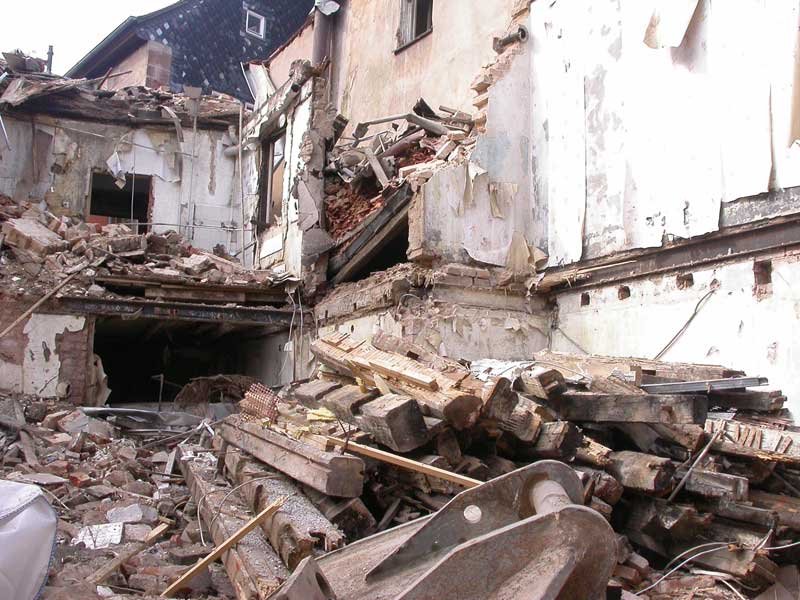
It may well be that at least at ground level it doesn’t look so bad, but I find it amazing that the Oberbürgermeister calls the demolished buildings ein Schandfleck (an eyesore, but the German term sounds even more derogatory). There’s a photograph of these harmless, unlisted buildings here, and here’s one I took in August:

20060826fue1w.jpg

It may be that the eyesore was what the public couldn’t see – behind the façade:
20060916fue01w.jpg

Petitions against the building can be signed in the Ganesha shop opposite (Ludwig-Erhard-Straße). They are merely symbolic as protests should apparently have been made earlier.

(Thanks to Ralph for the tipoff).
The Special Translation Tool/Die Besondere Übersetzungshilfe

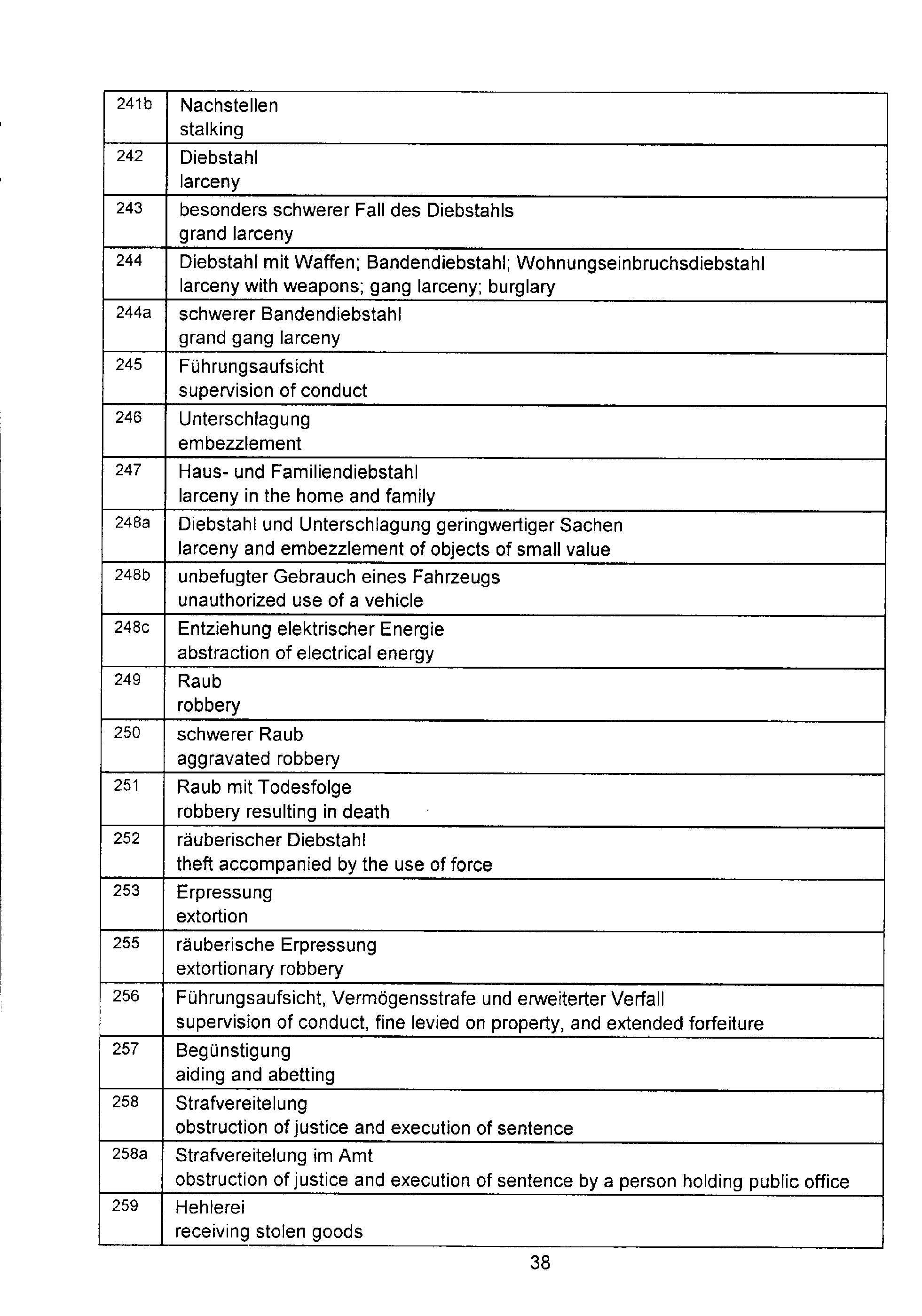
I’ve mentioned Jerry (Gerold) Harfst’s book Die Besondere Übersetzungshilfe before , but now I can present some pages from it to show what it’s like.

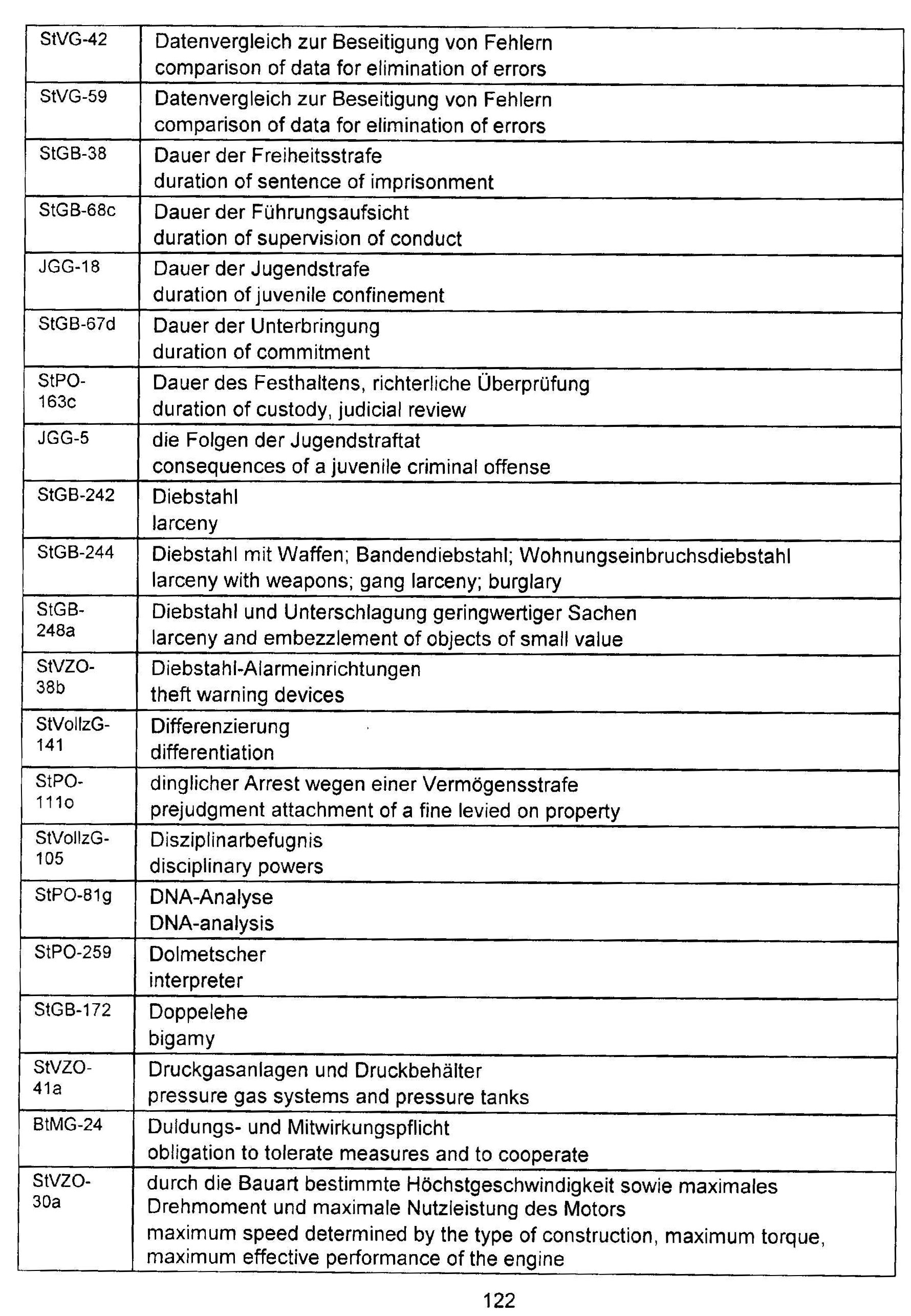
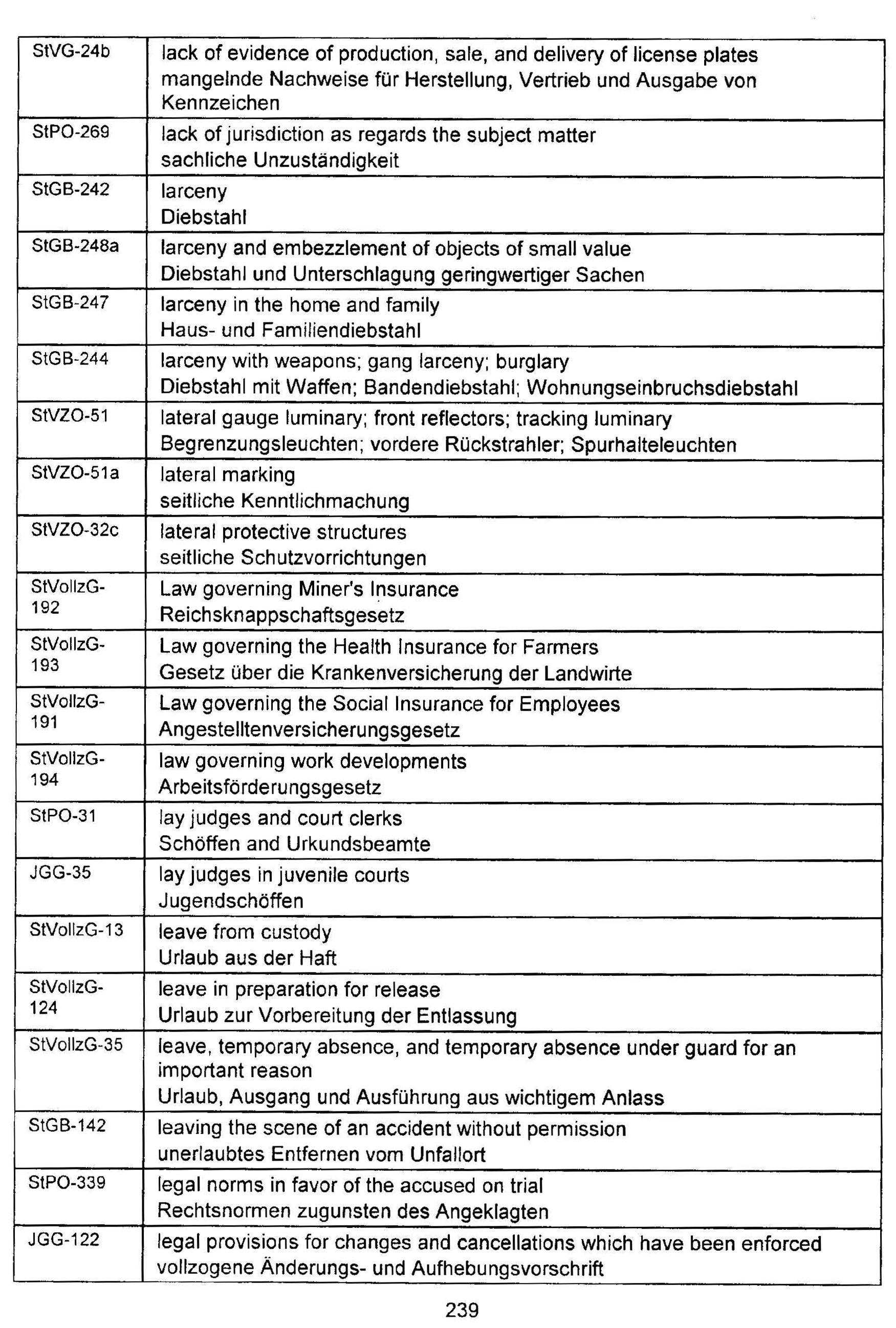
The book is a criminal law glossary divided into three sections: in the first, the German terms are arranged by order of paragraph number: that is, first comes the Betäubungsmittelgesetz with entries from 1 to 39, then the Jugendgerichtsgesetz, Ordnungswidrigkeitengesetz, Strafgesetzbuch, Strafprozessordnung, Strafvollzugsgesetz, Straßenverkehrsgesetz, Straßenverkehrsordnung, and Waffengesetz.

Second comes a German-English glossary, and third an English-German glossary. In each of these, the section numbers are given in the margin.

Thus an interpreter in court might want to use the section arranged by paragraph numbers, for instance in a case about drugs.

Example:

P. 38: StGB 242 Diebstahl: larceny (the US term for theft)
p. 122: Diebstahl: larceny (StGB-242)
p. 239: larceny: Diebstahl (StGB-242)

Click on pictures to enlarge:

harfst38w.jpg

harfst122w.jpg

harfst-239w.jpg

The quality of the printing is good, unlike my scans, which are reduced to make smaller files. More information and ordering here.

English divorce law/Englisches Scheidungsrecht

(Warnung: vereinfachte Darstellung – der Rest lässt sich ergoogeln!).

In England wurde die Ehescheidung früher modernisiert (1969) als in Deutschland (1977), und daher wirkt es etwas merkwürdig. Eine Ehe wird geschieden, wenn sie zerrüttet ist – der einzige Grund – aber dieser Grund muss durch eine von fünf Tatsachen bewiesen werden.
1. Ehebruch – adultery (must be intolerable for other spouse)
2. Unzumutbares Benehmen “unreasonable” behaviour
3. Böswilliges Verlassen – desertion
4. 2-jährige Trennung und Einwilligung des Antragsgegners – separation and consent
5. 5-jährige Trennung

Da 2 Jahre eine lange Zeit ist (bei Trennung), ist es üblich, sich auf Grund von Ehebruch oder unzumutbares Benehmen zu scheiden. Das kann auch fast alles per Post und ohne Anwalt gemacht werden, solange es keine minderjährige Kinder gibt. Der “schuldige” soll nicht finanziell oder im Zuspruch des Sorgerechts benachteiligt werden. Trotzdem kommt es in schlimmen Fällen vor, dass ein richtiger Streit anfängt.

The Daily Mail and other papers got hold of what are apparently Heather Mills McCartney’s divorce papers – more specifically, it looks as if Paul petitioned for unreasonable behaviour and Heather decided to defend the divorce, cross-petitioning for unreasonable behaviour too. The papers are full of her accusations (and of self-questioning as to whether they should have published), but we don’t know what he accused her of. This reminds me of my time as an articled clerk. It’s really a waste of the court’s time to cross-petition, but no doubt we only see the tip of the iceberg.

Here’s the end of the document quoted:

THE RESPONDENT THEREFORE PRAYS:
1. That the prayer of the Petition may be rejected.
2. That the marriage may be dissolved.
3. That she may be granted such ancillary relief by way of maintenance pending suit, periodical payments, secured periodical payments, lump sum or sums, property adjustment orders and pension sharing orders for herself and/or for the said child of the family Beatrice Milly McCartney as may be just.
4. That the Petitioner may be ordered to pay the costs of this suit.

The lawyers.

LATER NOTE: The Sunday Times later established that this leaked document was an earlier draft of the cross petition later filed at court.

Kansas’ or Kansas’s?

Where a noun ends in s and needs a possessive s, I used to tell students they could write/say either Prince Charles’ ears or Prince Charles’s ears – some people think the latter sounds ugly.

At LegalTimes.com, Jonathan Starble comments on a Supreme Court case, Kansas v. Marsh.
Majority opinion (ThomaS, RobertS, Alito, Kennedy, Scalia): Kansas’ statute
Dissenting opinion (Souter, Breyer, Ginsburg and StevenS): Kansas’s statute

Souter boldly began his Marsh dissent as follows: “Kansas’s capital sentencing statute provides . . .” This dramatic and gratuitous use of the possessive was an obvious attack on Thomas, who, as one of three s-ending members of the Court, is viewed as a role model for the millions of children who grow up with the stigma of grammatical ambiguity attached to their names.

What I don’t understand is why they didn’t just say the Kansas statute. But there is more:

Yet in other parts of the opinion, Scalia added only an apostrophe to form the words Stevens’, Adams’, and Tibbs’. Based on this, it would seem that he believes the extra s should be omitted if the existing s is preceded by a hard consonant sound.

Who actually does the final polishing to these decisions? I can’t believe the Bundesverfassungsgericht would allow such discrepancies through.

Finally, Starble concludes that the only proper form, at least in American English, is Kansas’s:

By a margin of 7-2, the strict anti-s view appears to be the clear preference of the land’s highest court. Yet experts on American usage overwhelmingly agree that Souter’s approach is the only one that is proper. As explained by Bryan Garner, author of A Dictionary of Modern American Usage, most authorities on the subject recognize only two types of singular nouns for which it is acceptable to omit the additional s: biblical or classical names, such as Jesus, Moses, or Aristophanes, and nouns formed from plurals, such as General Motors or Legal Times. (Journalists are often more liberal in excluding the additional s, but that is typically based on the pragmatic goal of conserving print space rather than on any ideological grounds.)

I really find that odd. I would avoid Kansas’s for euphony, unless it would be ambiguous. And on top of this, the issue is actually one of spoken English too: what did the justices actually say? And Starble does have a subheading ‘What about Arkansas?’ – since the last S in Arkansas is not pronounced, the problem doesn’t arise.

(Thanks to the Forensic Linguistics mailing list)

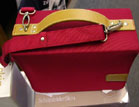
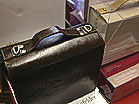
SchönfelderSkin

Seen at zeiser+büttner (does that mean there’s been an amalgamation with Zeiser + Ress? yes, apparently so) in Nuremberg:

20061017nuew3.jpg

20061017nuew2.jpg

A great Christmas present for the law student who has everything. Law students have to have the looseleaf Schönfelder, to take into exams. In this way they can also keep orthopaedic doctors in work in future years when they get problems with their shoulders. Outside Germany you could probably even use it as a handbag. Also works with Sartorius.