Nugatory / Richtersprache

A translator was wondering recently how to translate the word nugatory into German. A judge had used it, saying that it didn’t really matter whether a decision was made on appeal or not, since there would be no money to be got – the decision would be nugatory.

It’s typical of judges in English and in German to use this kind of word. I wonder if it’s used at all outside legal language. I decided to search at Bailii – the new judgments rather than the old ones. Some examples:

THE USE OF THE COMPLAINTS PROCEDURE UNDER ARTICLE 90 OF THE STAFF REGULATIONS IS NUGATORY WHERE A DECISION IS MADE BY A BODY SUCH AS A SELECTION BOARD FOR A COMPETITION , WHICH ADJUDICATES IN COMPLETE INDEPENDENCE AND WHOSE DECISIONS CANNOT BE AMENDED BY THE APPOINTING AUTHORITY . (ECJ 1981)

The second main ground for the application is that if matters are allowed to proceed next week then the appeal will be rendered nugatory. (Court of Appeal, 1996)

In such situations as Vafi, where a change in circumstance would render the substantive hearing nugatory, requiring the matter to go to substantive hearing before having the proceedings struck out would result in the parties incurring unnecessary additional costs. (Irish Law Reform Commission, 2003)

In our view, the Sheriff misdirected himself by not expressly taking all these matters into account when exercising his judgment as to whether or not the mere appearance of “bias” on his part was sufficient to render the first four days of the proof entirely nugatory and to necessitate a fresh start. (Court of Session, Scotland, 1998)

Here it seems quite often to relate to appeals. I also find legal dictionaries defining it as meaning ‘being without operative legal effect (held that such an interpretation would render the statute nugatory)’ (Merriam Webster). Things are often rendered nugatory. (‘He misdirected himself’ is another nice legal expression).

Muret-Sanders says ‘besonders juristisch: unwirksam, nichtig’. This won’t work for the appeal, though. I once found unbeachtlich being used in this way, but that won’t always work either.
Linux for translators / Linux für Übersetzer

An interview with Marc Prior, who has been advocating the use of Linux for translators for as long as I’ve known him, cam be found at Open Source Update. He answers questions on how he got started with Linux, what his current working environment is, some of his favourite Linux programs, and more.

Here is Marc’s Linux for Translators website (website also available in Dutch, Portuguese, Slovenian, Albanian and probably Serbian in Latin script), for more information on Omega T, the (free of charge) Linux translation memory tool.
(Tip-off from an ITI mailing list)

LATER NOTE: I see Linux is featured in Dilbert today.

(via PapaScott)

Babelizing

Multibabel.
Babelizing means machine translating a text into one language, then back into English, then into another language, then back into English, and so on, until the meaning has been wrung out of it. I hadn’t actually tried it before but here it is:

Original text:

Come round any old time, make yourself at home. Put your feet on the mantelshelf, open the cupboard and help yourself.

Babelized version:

Come around at any time old, dice to form it he it house. If its feet
regulated in mantelshelf, to open the drawer and helped them.

Original text:

Einstein can’t be classed as witless.
He claimed atoms were the littlest.
When you did a bit of splitting-em-ness
Frighten everybody shitless.

(From Ian Dury, There ain’t half been some clever bastards)

Babelized version:

Einstein cannot be classified as stupid. It declared atoms was the
minor. When you it gave form to a small conclusion of the copiatura
of, the sustentation frightens shitless everything.

(Thanks to Ekkehard)

The Special Translation Tool/Die Besondere Übersetzungshilfe

I’ve mentioned Jerry (Gerold) Harfst’s book Die Besondere Übersetzungshilfe before , but now I can present some pages from it to show what it’s like.

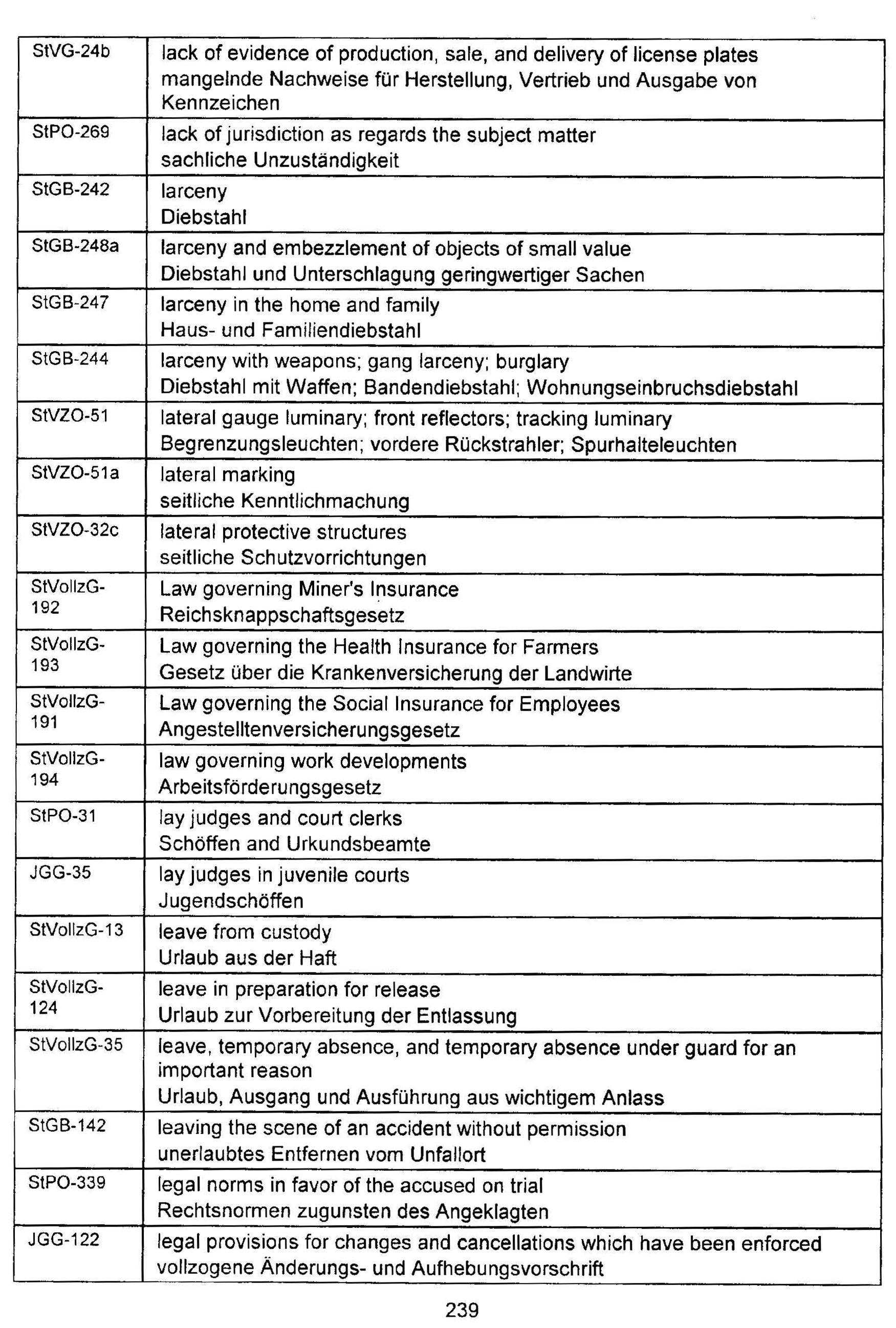
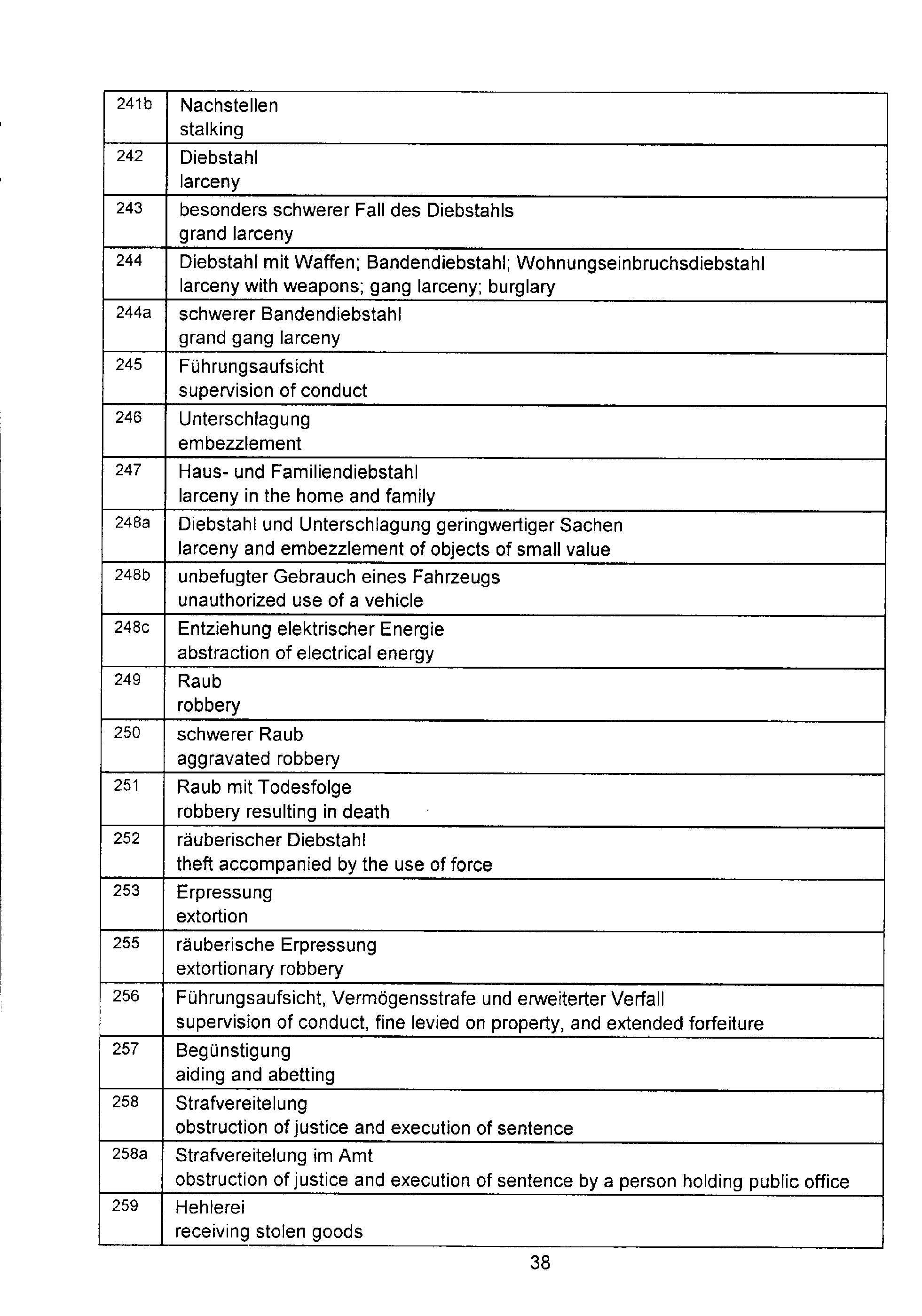
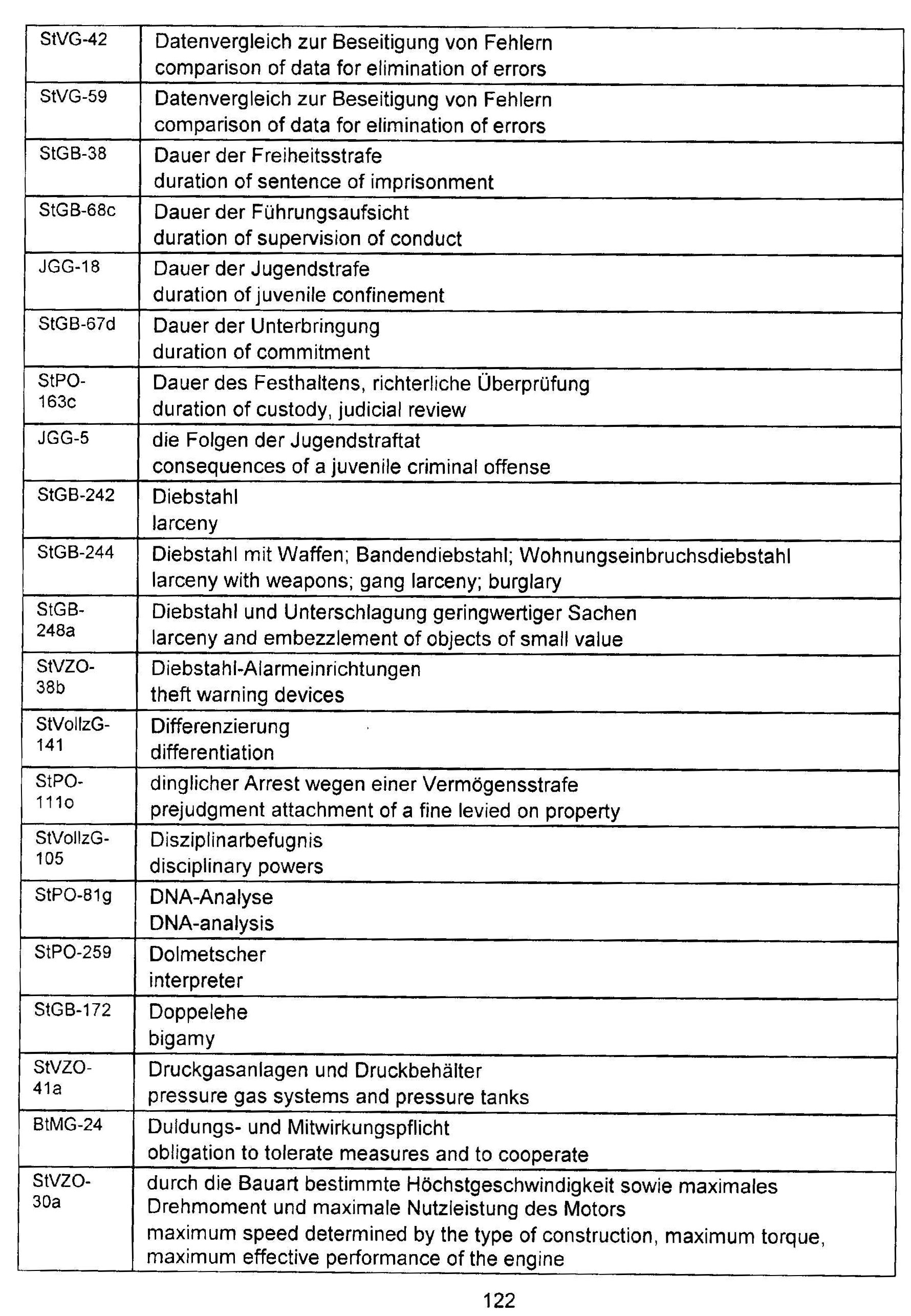
The book is a criminal law glossary divided into three sections: in the first, the German terms are arranged by order of paragraph number: that is, first comes the Betäubungsmittelgesetz with entries from 1 to 39, then the Jugendgerichtsgesetz, Ordnungswidrigkeitengesetz, Strafgesetzbuch, Strafprozessordnung, Strafvollzugsgesetz, Straßenverkehrsgesetz, Straßenverkehrsordnung, and Waffengesetz.

Second comes a German-English glossary, and third an English-German glossary. In each of these, the section numbers are given in the margin.

Thus an interpreter in court might want to use the section arranged by paragraph numbers, for instance in a case about drugs.

Example:

P. 38: StGB 242 Diebstahl: larceny (the US term for theft)
p. 122: Diebstahl: larceny (StGB-242)
p. 239: larceny: Diebstahl (StGB-242)

Click on pictures to enlarge:

harfst38w.jpg

harfst122w.jpg

harfst-239w.jpg

The quality of the printing is good, unlike my scans, which are reduced to make smaller files. More information and ordering here.

Translation weblog Oversetter

I have just discovered that Nick Rosenthal of Salford Translations Ltd. has a weblog called Oversetter.

Nick was once the Jerry Pournelle of the ITI, with his column Nick’s Attic (or something like that) in the Bulletin. Let’s hope for many more entries.

I see he actually has a link to Byte, and also one to Chip (described as ‘Germany’s favourite computer magazine’). Where’s c’t, Nick?

(Note to Trevor: I think Nick may be into cycling, although he can scarcely be ‘Fat Nick’ if that’s so, can he?)