Babelizing

Multibabel.
Babelizing means machine translating a text into one language, then back into English, then into another language, then back into English, and so on, until the meaning has been wrung out of it. I hadn’t actually tried it before but here it is:

Original text:

Come round any old time, make yourself at home. Put your feet on the mantelshelf, open the cupboard and help yourself.

Babelized version:

Come around at any time old, dice to form it he it house. If its feet
regulated in mantelshelf, to open the drawer and helped them.

Original text:

Einstein can’t be classed as witless.
He claimed atoms were the littlest.
When you did a bit of splitting-em-ness
Frighten everybody shitless.

(From Ian Dury, There ain’t half been some clever bastards)

Babelized version:

Einstein cannot be classified as stupid. It declared atoms was the
minor. When you it gave form to a small conclusion of the copiatura
of, the sustentation frightens shitless everything.

(Thanks to Ekkehard)
The Special Translation Tool/Die Besondere Übersetzungshilfe

I’ve mentioned Jerry (Gerold) Harfst’s book Die Besondere Übersetzungshilfe before , but now I can present some pages from it to show what it’s like.

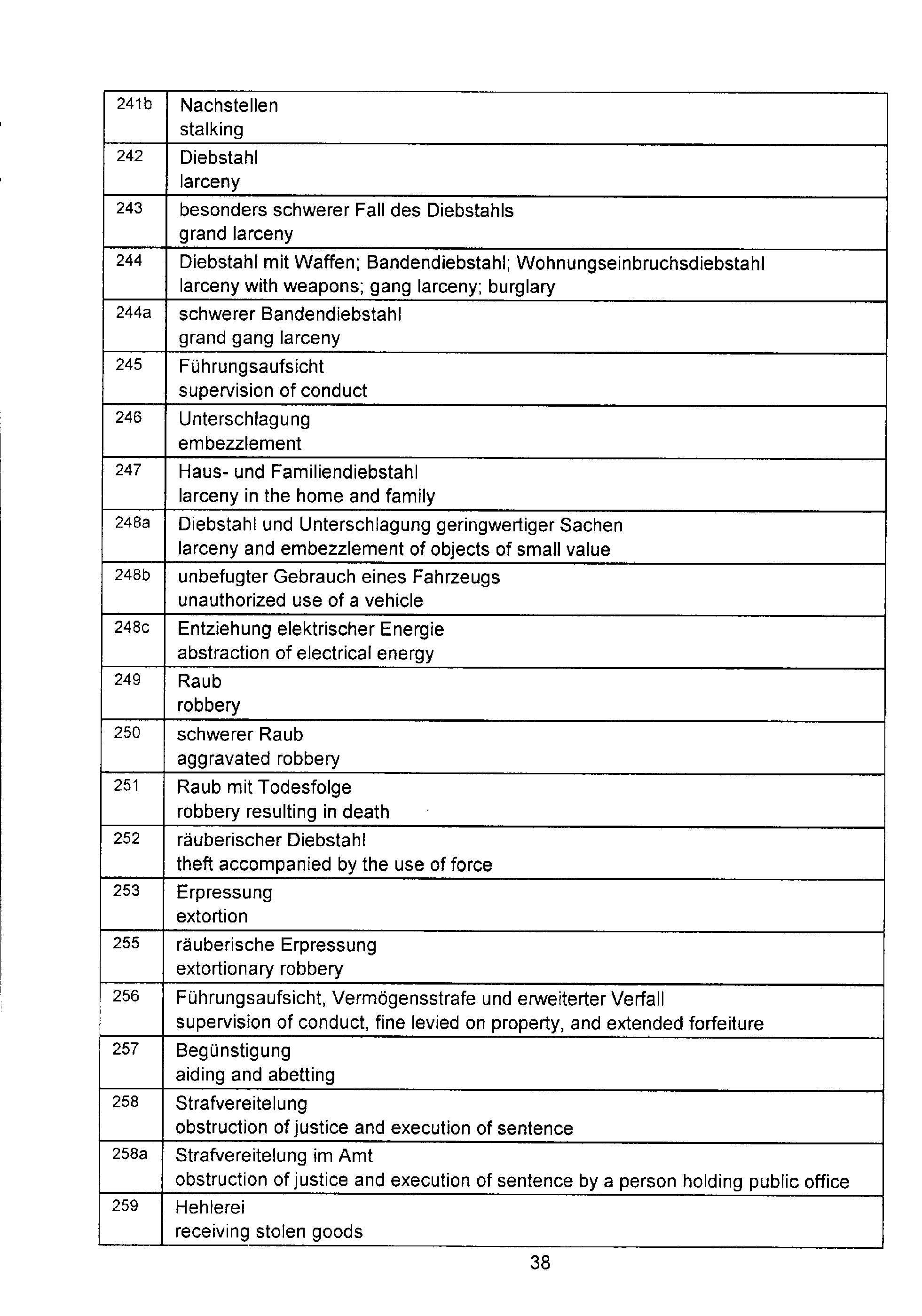
The book is a criminal law glossary divided into three sections: in the first, the German terms are arranged by order of paragraph number: that is, first comes the Betäubungsmittelgesetz with entries from 1 to 39, then the Jugendgerichtsgesetz, Ordnungswidrigkeitengesetz, Strafgesetzbuch, Strafprozessordnung, Strafvollzugsgesetz, Straßenverkehrsgesetz, Straßenverkehrsordnung, and Waffengesetz.

Second comes a German-English glossary, and third an English-German glossary. In each of these, the section numbers are given in the margin.

Thus an interpreter in court might want to use the section arranged by paragraph numbers, for instance in a case about drugs.

Example:

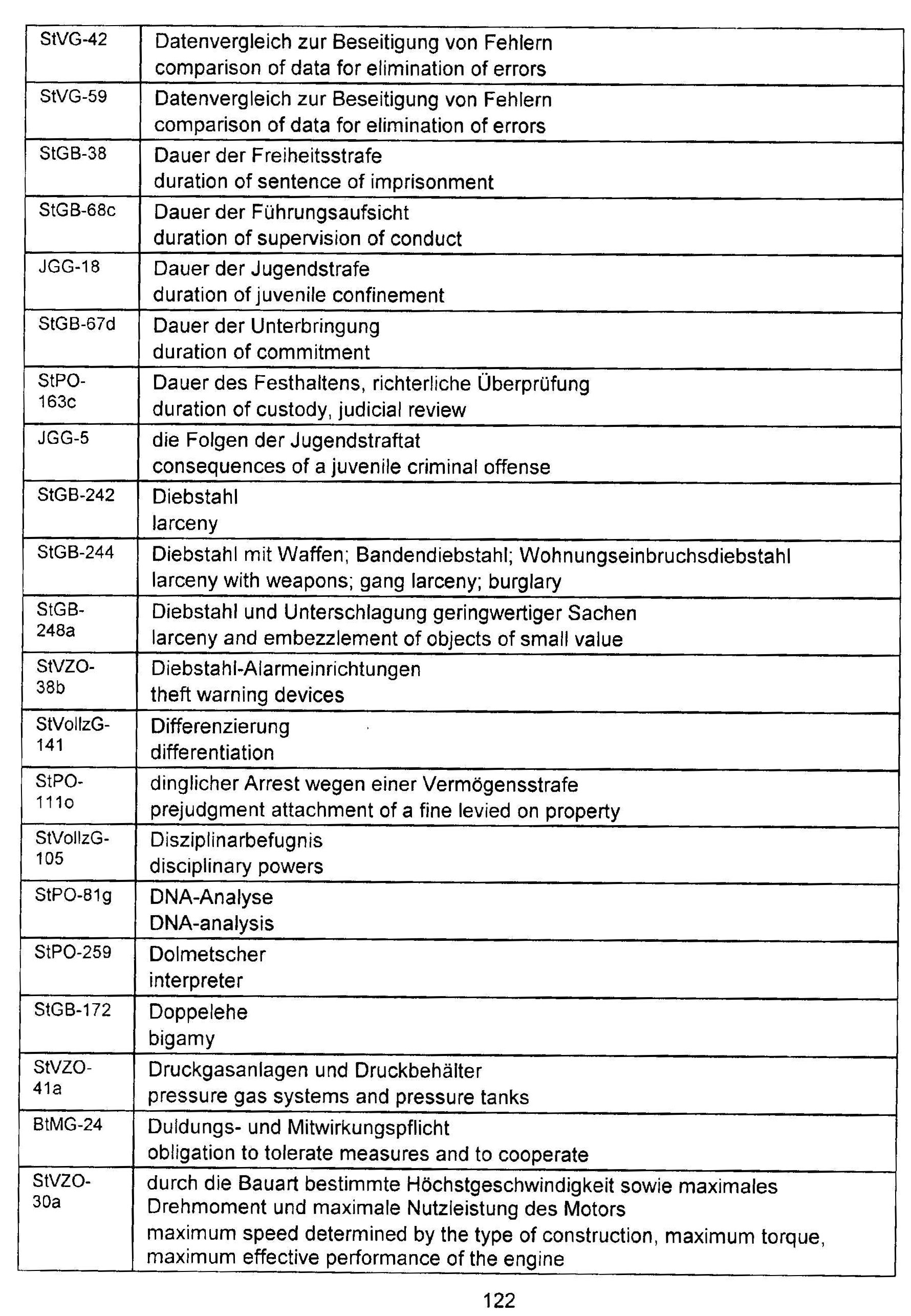
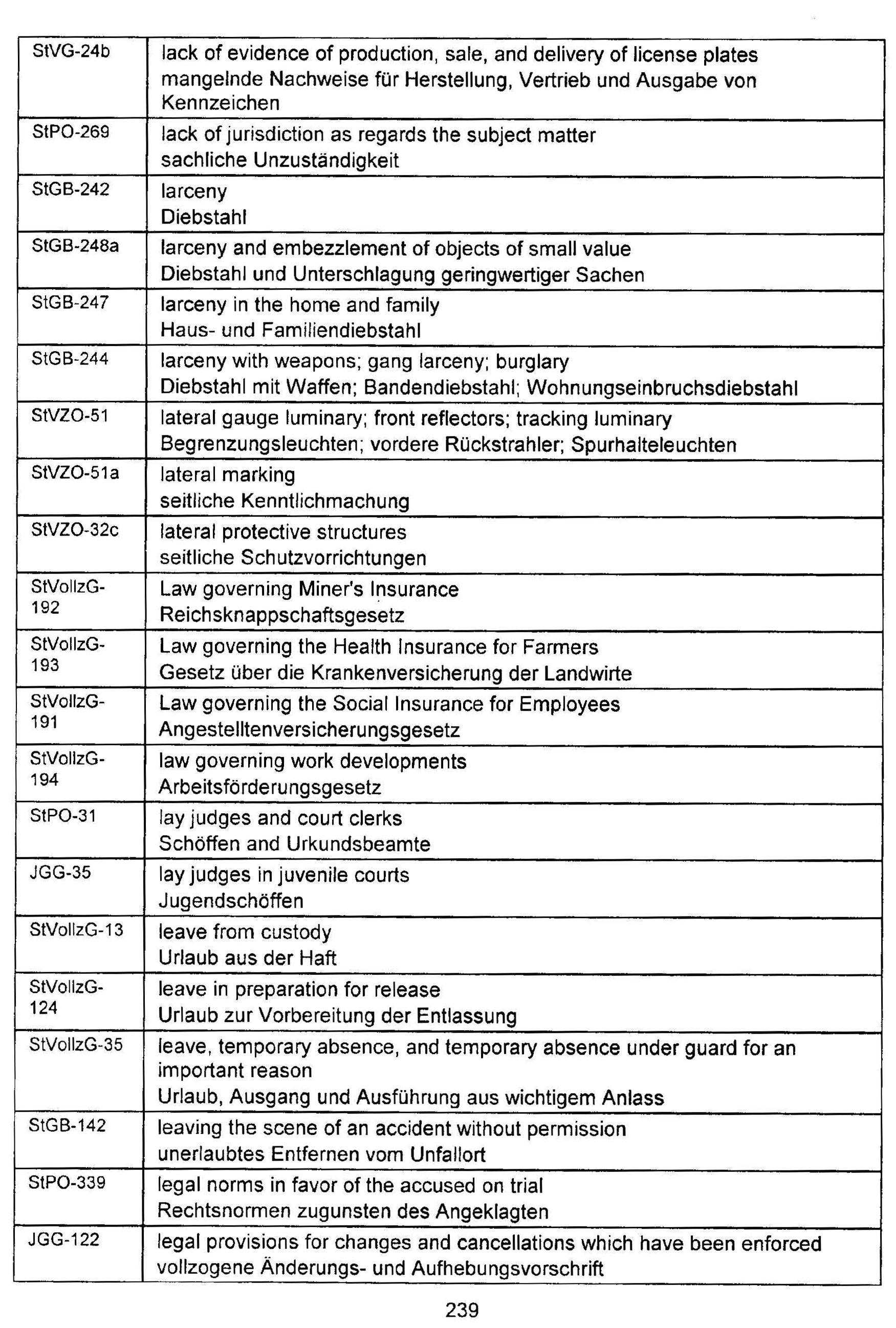
P. 38: StGB 242 Diebstahl: larceny (the US term for theft)
p. 122: Diebstahl: larceny (StGB-242)
p. 239: larceny: Diebstahl (StGB-242)

Click on pictures to enlarge:

harfst38w.jpg

harfst122w.jpg

harfst-239w.jpg

The quality of the printing is good, unlike my scans, which are reduced to make smaller files. More information and ordering here.

Translation weblog Oversetter

I have just discovered that Nick Rosenthal of Salford Translations Ltd. has a weblog called Oversetter.

Nick was once the Jerry Pournelle of the ITI, with his column Nick’s Attic (or something like that) in the Bulletin. Let’s hope for many more entries.

I see he actually has a link to Byte, and also one to Chip (described as ‘Germany’s favourite computer magazine’). Where’s c’t, Nick?

(Note to Trevor: I think Nick may be into cycling, although he can scarcely be ‘Fat Nick’ if that’s so, can he?)

Bells / Glocken

800px-Klosterfuerstenfeldinnen.JPG

I have just been translating this . I decided to call the Raumtor separating nave and choir something like a proscenium arch. When I was reminding myself how to describe bells, I found a nice site with information on spotting bells in Gloucestershire, especially by car:

Charlton Kings, S Mary, 8 bells, Tenor 17-0-13, Grid Ref:SO964204
Parking is available in the lanes which surround the church, and the tower entrance is in the south east corner of the tower, on the outside of the church. The bells go quite well, but are not particularly clear to listen to, and the ringing chamber ceiling is fairly low. They were rehung by the Whitechapel foundry in 1958 in a new frame with new fittings. The fourth bell here was for a long time thought to be by John Palmer of Gloucester. It has been discovered that the founder “IP” that Sharpe and H.B.Walters before him assumed to be John Palmer, was in fact a founder called John Pennington. John Pennington I was casting bells at Monmouth between 1626 and 1665, and his son John II was casting until 1682.

Gives a whole meaning to the term ‘well hung’.

Translator’s desk /Übersetzerschreibtisch

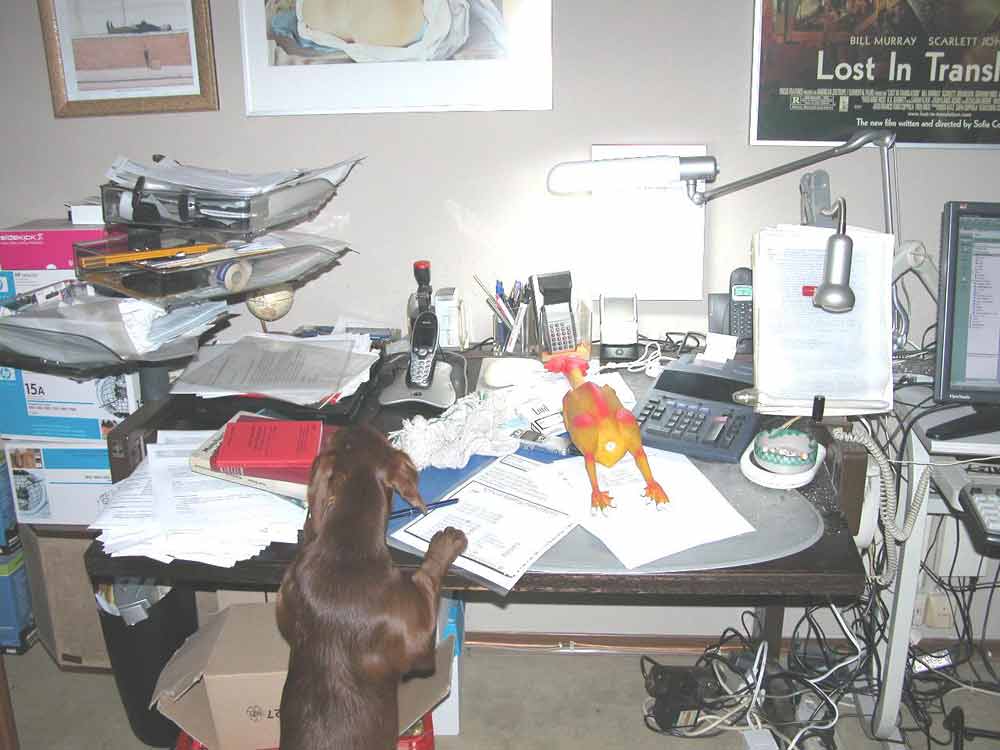
Further to the earlier entry, I am able to present two photos of the desk of a translator not unknown in the comments to this weblog, Paul Thomas in Baden-Württemberg (click to enlarge):

desk2w.jpg

The rubber chicken was not placed there for effect, but thrown there by the office assistant, shown here:

desk1w.jpg

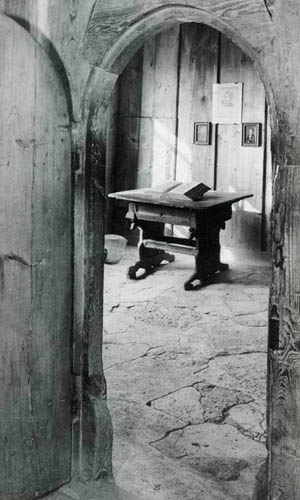
Analysing other people’s desks looks like a future growth area to me. I spotted the globe to the left, and Paul states it was a freebee (Werbegeschenk). We note the monitor is not on the desk itself – this is a procedure with a long tradition: Luther didn’t have his monitor on his desk either:

luthersdesk.jpg

Tidy desk seminar/”Mein Schreibtisch, frei und aufgeräumt”

This is not a description of my desk but the title of the seminar for translators I went to in Munich on Saturday. It was about keeping your desk tidy. Of course, an untidy desk is a symptom rather than a disease.

Here is a picture of a translator’s desk that looks a bit tidier than its title suggests. It’s probably the desk of someone who’s already attended such a seminar. In an ordinary office, we learnt, this pencil stand (Stiftbehälter) would be full of bent paperclips, rusty nails and pencils that no longer write. But I can’t see anything really extraneous, although the wall looks promising.

The trainer was Gunter Meier, who has a company website (more E+E – details there of his book on dealing with email too). People who work in offices have more chance to hear about this kind of thing. It’s a shame so few people attended – apparently there were 30 in Aschaffenburg. Probably there’s just too much else to do in Munich.

There was a list of common reasons why it’s hard to throw stuff away, from trivial to neurotic. I found these interesting for reasons I won’t go into. Also: need for archives; analysis of usual use of office space; how to avoid using post-it notes.

There was a reference to the way that old stuff carries old associations and you can only think new thoughts if you get rid of these ‘anchors’: the same old pictures, objects on desk, cuddly toys and so on. I saw these 10 seriously cool workplaces last week, and this reminded me. I particularly liked the slide to go from floor to floor, but I suppose that wouldn’t make me more productive.